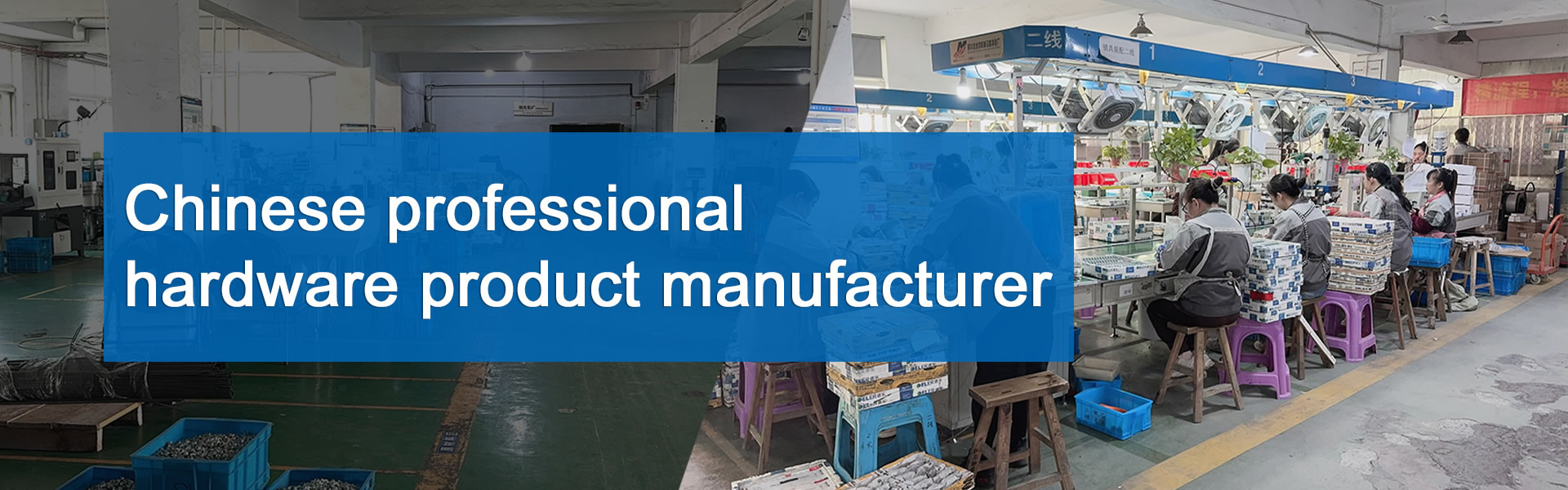
Choosing a reliable industrial hinge manufacturer requires systematic assessment across three areas: qualification certification, production capacity, and quality control. This article provides a complete selection framework. Whether you need a standard heavy-duty hinge or a custom solution, these criteria will guide your decision.
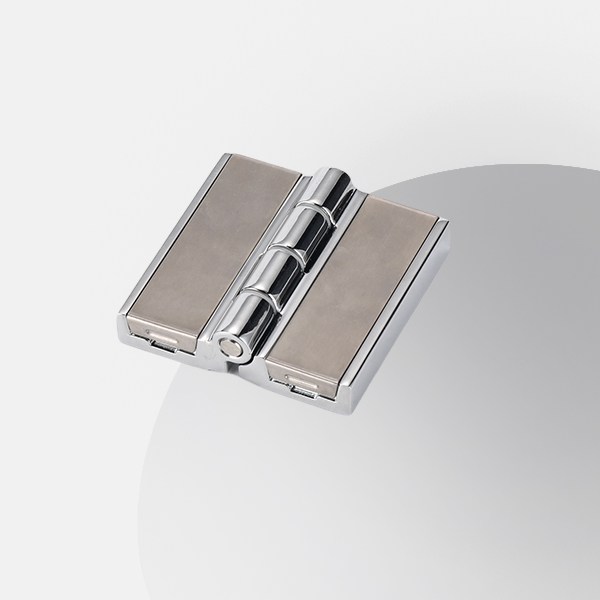
1. Industrial Hinge Manufacturer Qualification and Certification Audit
1.1 System Certifications and Compliance Documents
When evaluating an industrial hinge manufacturer, first verify ISO9001 Quality Management System certification. The certificate must be valid and cover the "hinge manufacturing" category. ISO14001 Environmental Management System certification reflects environmental compliance levels. ISO45001 Occupational Health and Safety certification is a new recommended certification for 2026.
Export products require CE or UL certification. Domestic products must comply with GB/T 38737. Certification certificates must be issued by Notified Bodies or accredited laboratories. Even with low prices, be cautious when choosing manufacturers with incomplete certifications.
RoHS and REACH environmental certifications are essential documents for EU export. ISO 14067 Carbon Footprint certification is an emerging export requirement for 2026. Certification certificates and test reports are both essential, and sample models must match the certificates.
1.2 Production History and Industry Experience
Verify the manufacturer's establishment date and operating stability. Factories with over three years of history and stable customers are more reliable. Review the factory's customer list; factories with more long-term cooperative customers have more stable quality.
Understand the manufacturer's experience in specific application areas. Factories specializing in NEMA-rated enclosure hinges have extensive experience in electrical protection. Manufacturers with over ten years of deep expertise in their specialty are more technically mature.
Industry reputation and customer reviews are important references. Obtain real user feedback through LinkedIn or industry forums. Companies that have received industry awards or participated in standard development for two consecutive years have strong technical capabilities.
1.3 Product Certification and Testing Capabilities
Verify whether the manufacturer's in-house testing laboratory is equipped with hardness testers, tensile testing machines, and salt spray test chambers. In-house testing capabilities mean every batch can be inspected, ensuring quality control. Factories relying on external testing have weaker quality control capabilities.
Coordinate measuring machines are used to inspect dimensional precision. Factories with advanced testing equipment have strong quality control capabilities. Industrial-grade cabinet hinges require high dimensional precision, so testing capabilities require focused attention.
Material test reports, salt spray test reports, and fatigue test reports must be issued by CNAS or CMA accredited laboratories. Sample models in the reports must match the procurement products. Report dates must be within one year to be valid.
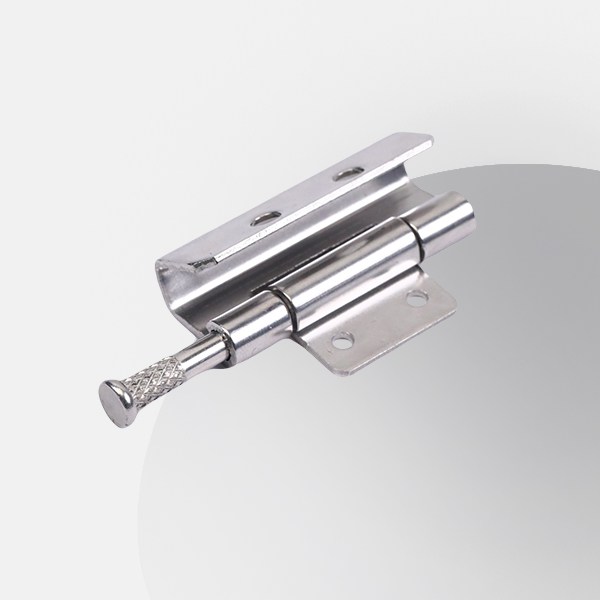
2. Industrial Hinge Manufacturer Production Capacity and Technical Strength Assessment
2.1 Equipment Configuration and Capacity Level
Evaluate whether the industrial hinge manufacturer has CNC punch presses, laser cutting machines, and automated welding equipment. Advanced equipment ensures product precision and consistency. On-site visits or video factory inspections are effective ways to verify equipment.
Heat treatment equipment must be equipped with temperature automatic recorders. Quenching and tempering temperature control precision directly affects pivot shaft hardness. Heat treatment processes without temperature recording equipment have uncontrolled quality.
Surface treatment production lines must have hot-dip galvanizing tanks or powder coating booths. Coating lines should include three complete stages: pre-treatment, powder application, and curing. Understand the factory's daily output and current order backlog to confirm capacity margin meets procurement needs.
2.2 Technical R&D and Customization Capabilities
Manufacturers with independent design teams can participate in customer product development. Design teams can complete solution design and drawing output within three days. Custom mold production cycles are 7 to 15 days with rapid response.
Special materials, special dimensions, and special functions can all be customized as needed. Minimum order quantities are flexible, with small batches of 50 units also accepted. Control box hinges and electrical enclosure hinges customization needs can both be met.
New material applications such as zinc-aluminum-magnesium coating and nitrogen-alloyed stainless steel are first promoted in technologically leading factories. New processes such as powder coating and smart sensor integration are rapidly developing. R&D investment grows annually, with patent counts continuously increasing.
2.3 Quality Control System
Audit whether the manufacturer has established critical control points for key processes. Stamping, heat treatment, and welding processes should have work instructions. On-site observe whether workers follow work instructions and whether process parameters are recorded.
Finished product inspection follows the GB/T 2828.1 standard for sampling inspection. Appearance, dimensions, and function are mandatory inspection items. Non-conforming products should be clearly identified and stored in quarantine areas. Reworked products should be re-inspected and approved before being stored in the warehouse.
Quality statistics and continuous improvement records reflect the effectiveness of system operation. An upward trend in qualification rate indicates effective quality system operation. A downward trend requires corrective actions and effectiveness verification.
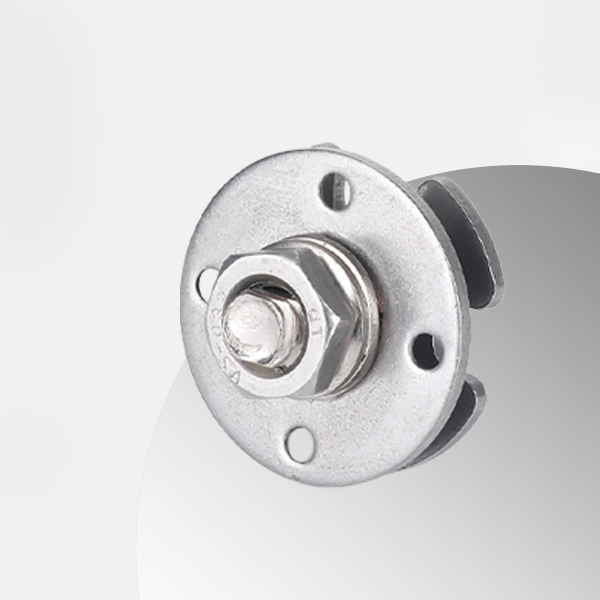
3. Industrial Hinge Manufacturer Product Validation and Sample Testing
3.1 Material and Performance Testing
Request material test reports from the manufacturer. Reports should include chemical composition analysis and mechanical property data. Confirm that material grades match the contract to avoid substandard substitutions. Third-party testing agencies can be commissioned for material re-verification.
Coating thickness gauges verify hot-dip galvanized coating thickness not less than 70 micrometers and powder coating not less than 60 micrometers. Cross-cut testing evaluates coating adhesion, with detachment area below 5 percent considered passing.
Salt spray testing follows application environment requirements. Indoor products require not less than 72 hours, outdoor products not less than 300 hours. 304 stainless steel requires not less than 500 hours, and 316 stainless steel exceeds 1,000 hours. Industrial cabinet hinges corrosion testing standards are consistent with these requirements.
3.2 Sample Installation and Load Testing
Before bulk purchase, request samples for installation testing. Samples must use the same materials and processes as mass production products. Installation testing includes opening/closing smoothness and load capacity verification, observing whether rotation is smooth without binding.
Sample testing should include load application up to 1.5 times the rated value, with deformation not exceeding 0.5 millimeters considered passing. During loading, observe whether the leaf and pivot shaft show visible deformation. Test reports should detail loading methods and deformation data.
After samples pass testing, seal and retain them as the bulk acceptance benchmark. Keep test reports and sample products for future comparison. Manufacturers with non-conforming samples should be eliminated immediately to avoid bulk quality risks.
3.3 Trial Orders and Batch Consistency Validation
After samples pass testing, place a trial order first, with quantity at 5 to 10 percent of the bulk procurement volume. Trial orders verify the manufacturer's batch production consistency and on-time delivery rate. Only after trial orders are qualified should formal bulk procurement proceed.
During trial orders, arrange on-site inspection or third-party inspection. Address issues promptly through communication to avoid bulk rework. Trial order delivery and quality data serve as the basis for supplier evaluation.
After trial orders pass, sign long-term framework agreements to lock in pricing and capacity. Industrial enclosure locks can be purchased together with hinges for compatible integration. Trial orders are an effective means of reducing procurement risk.
4. Industrial Hinge Manufacturer Service Capabilities and Long-Term Cooperation
4.1 After-Sales and Warranty Service
The industrial hinge manufacturer provides 3 to 5 year warranty periods. Quality issues during the warranty period are covered by free replacement or repair. Warranty terms are included in contracts with specified response times, typically not exceeding 48 hours.
After-sales technical teams can provide remote installation and debugging guidance via video. Technical documentation is available in both Chinese and English for the convenience of overseas users. Industrial enclosure hinge after-sales standards are unified with cabinet hinges.
Spare parts are reserved at 3 to 5 percent of procurement volume, with consumable parts stocked in advance. Establish emergency order channels with the manufacturer to ensure shipment within three days. Long-term cooperation can be secured through framework agreements locking in pricing and capacity.
4.2 Communication Efficiency and Willingness to Cooperate
The manufacturer's international sales team has good English communication skills. Email and phone communication are timely and efficient with minimal time zone impact. Professional sales engineers understand product technical details and can quickly respond to technical questions.
Detailed product manuals, installation guides, and selection software are provided. Digital tools support online selection and quotation. Communication efficiency enables smooth project progress with fewer misunderstandings.
Manufacturers are willing to cooperate with customers on product improvement and new product development. Deepened technical cooperation can reduce costs and improve quality. Invite supplier technical teams to participate in new product development; early involvement prevents later problems.
4.3 Supplier Evaluation and Strategic Cooperation
Establish an annual supplier evaluation system covering four dimensions: quality, delivery, price, and service. Quality carries 40 percent weight, delivery 25 percent, price 20 percent, and service 15 percent.
Manufacturers with excellent evaluations for two consecutive years can be upgraded to strategic suppliers. Strategic partnerships provide production priority and price preferences. Strategic suppliers enjoy shorter payment cycles and more technical support.
Sign three-year framework agreements with the heavy-duty industrial hinge factory. Agreements should include annual price adjustment mechanisms to respond to raw material fluctuations. Regularly communicate usage feedback to help factories improve products. Industrial-grade cabinet hinges and NEMA-rated enclosure hinges evaluation standards are completely identical.
5. Summary: Choosing a Reliable Industrial Hinge Manufacturer
Choosing a reliable industrial hinge manufacturer requires systematic assessment across four dimensions: qualification certification, production capacity, product validation, and long-term cooperation.
Qualification Certification: Verify ISO9001, ISO14001, and ISO45001 system certifications. Export products require CE or UL certification. Domestic products must comply with GB/T 38737. RoHS and REACH environmental certifications are essential for export. Certification certificates and test reports must be valid with matching sample models.
Production Capacity: Evaluate CNC punch presses, laser cutting machines, and automated welding equipment. Heat treatment equipment must have temperature recorders. Surface treatment lines must be complete. Understand daily output and capacity margin to confirm the ability to meet procurement volumes and delivery requirements.
Product Validation: Request samples for load and salt spray testing. Sample testing at 1.5 times rated value with deformation not exceeding 0.5 millimeters is passing. After passing, place trial orders to verify batch consistency. After trial orders pass, sign long-term agreements.
Long-Term Cooperation: Establish annual supplier evaluation systems with quality carrying 40 percent weight. Suppliers with excellent evaluations for two consecutive years can be upgraded to strategic suppliers. Contracts should clearly specify warranty terms and the 3-3-3-1 payment structure. Reserve spare parts at 3 to 5 percent of procurement volume.
Control box hinges and electrical enclosure hinges manufacturer evaluation standards are completely identical to those for industrial cabinet hinges. Industrial enclosure locks can be purchased together with hinges for compatible integration. Establishing long-term cooperation with a reliable industrial hinge manufacturer provides stable supply and technical support, ensuring project quality and delivery timelines.