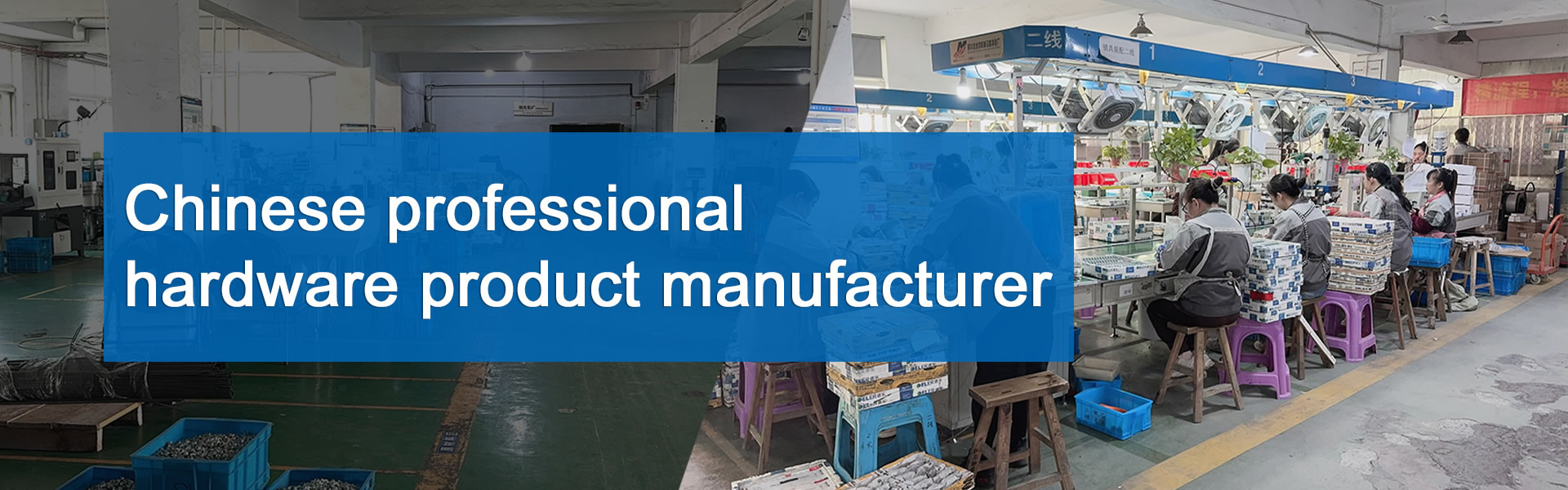
Finding a reliable heavy-duty hinge supplier requires systematic progress across three areas: channel screening, qualification verification, and sample validation. This article provides a complete methodology. Whether you need a standard heavy-duty hinge or a custom solution, these steps will help you identify the right partner.
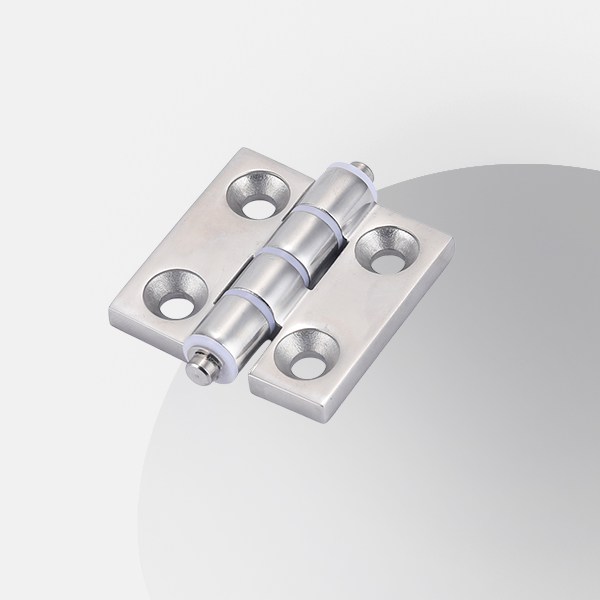
1. Multi-Channel Screening of Potential Heavy-Duty Hinge Supplier Candidates
1.1 B2B Platforms and Industry Websites
Alibaba International and Made-in-China are the preferred online channels for finding heavy-duty industrial hinge factories. Search core keywords to filter suppliers with production qualifications. Review operating history and certification marks. Prioritize source factories with over three years of history and a positive rating above 95 percent.
Industrial vertical websites such as ThomasNet and Kompass list verified industrial cabinet hinge manufacturers. You can filter precisely by product type, geographic location, and certification credentials. Vertical websites provide more detailed factory information, including equipment lists and testing capability descriptions.
GlobalSpec and similar engineering platforms offer product parameter comparison and selection tools. Enter project requirements to match suitable electrical enclosure hinges suppliers. Technical articles and case libraries on these platforms provide selection references.
1.2 Industry Trade Shows and On-Site Visits
The China International Industry Fair and Hannover Messe are the best platforms for meeting quality suppliers in one location. At the trade show, you can directly compare product quality and technical capabilities of multiple factories. Direct communication with factory technical managers is far more efficient than online interaction.
The Yangtze River Delta and Pearl River Delta are the main clusters for industrial cabinet hinge factories. Personally visiting industrial parks allows you to assess factory scale and production management. Observe workshop 5S management and equipment configuration to judge actual factory capabilities.
Industry association member directories provide verified supplier resources. Members of the Hardware Products Association have undergone qualification screening, making them more reliable than non-members. Follow-up emails after trade shows should be sent within one week to maintain communication momentum.
1.3 Peer Recommendations and Professional Communities
LinkedIn is an effective social channel for finding reliable heavy-duty industrial hinge factories. Search for "hinge manufacturer" to view company pages and employee profiles. Contact industry experts for referral lists. Suppliers already verified by peers significantly reduce screening risk.
Industry forums such as IndustryWeek and Machinery Today gather many professionals. Post inquiries about supplier recommendations to receive real user feedback. Community recommendations are more valuable than advertisements.
Procurement alliances share supplier resource libraries to shorten screening time. Joint purchasing by multiple companies strengthens bargaining power. Industrial enclosure hinges supplier resources can be shared with cabinet hinges.
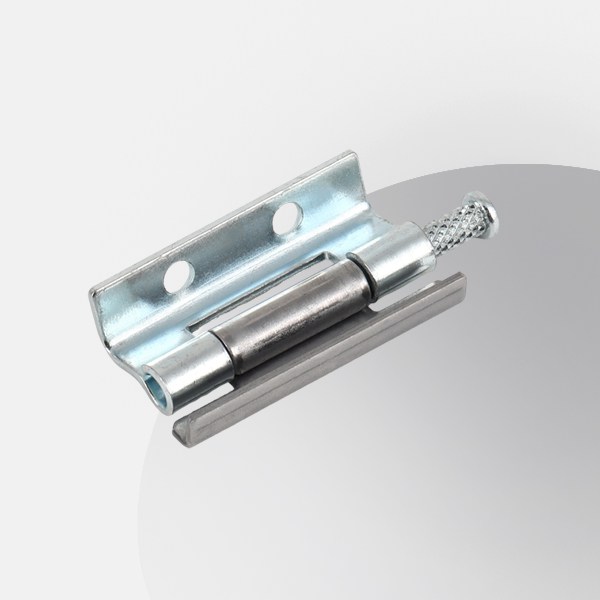
2. Supplier Qualification and Capability Verification
2.1 System Certifications and Product Certifications
Verify the heavy-duty industrial hinge factory's ISO9001 Quality Management System certification. The certificate must be valid and cover the "hinge manufacturing" category. ISO14001 Environmental Management System reflects environmental compliance levels. ISO45001 Occupational Health and Safety certification is a new recommended certification for 2026.
Export products require CE or UL certification. Domestic products must comply with GB/T 38737. Certification certificates must be issued by Notified Bodies or accredited laboratories. Even with low prices, be cautious when choosing suppliers with incomplete certifications.
RoHS and REACH environmental certifications are essential documents for EU export. ISO 14067 Carbon Footprint certification is an emerging export requirement for 2026. Certification certificates and test reports are both essential, and sample models must match the certificates.
2.2 Production Equipment and Testing Capabilities
Evaluate whether the factory has CNC punch presses, laser cutting machines, and automated welding equipment. Advanced equipment ensures product precision and consistency. On-site visits or video factory inspections are effective ways to verify equipment.
Check whether the factory's testing laboratory is equipped with hardness testers, tensile testing machines, and salt spray test chambers. In-house testing capabilities mean every batch can be inspected. Factories relying on external testing have weaker quality control capabilities.
Coordinate measuring machines are used to inspect dimensional precision. Factories with advanced testing equipment have strong quality control capabilities. Industrial-grade cabinet hingesrequire high dimensional precision, so testing capabilities require focused attention.
2.3 Production Capacity and Delivery Capabilities
Understand the factory's daily output and current order backlog. Inquire about employee count and production shifts to confirm whether there is sufficient capacity margin for new orders. Factories with insufficient capacity may delay delivery.
Standard product delivery lead time is 15 to 30 days. Custom products require 45 to 60 days. Request the factory's on-time delivery rate data for the past six months. A rate below 90 percent indicates management problems.
Emergency order channels ensure shipment within three days. Spare parts are reserved at 3 to 5 percent of procurement volume. Continuous hinges delivery lead time audit standards are consistent with other types.
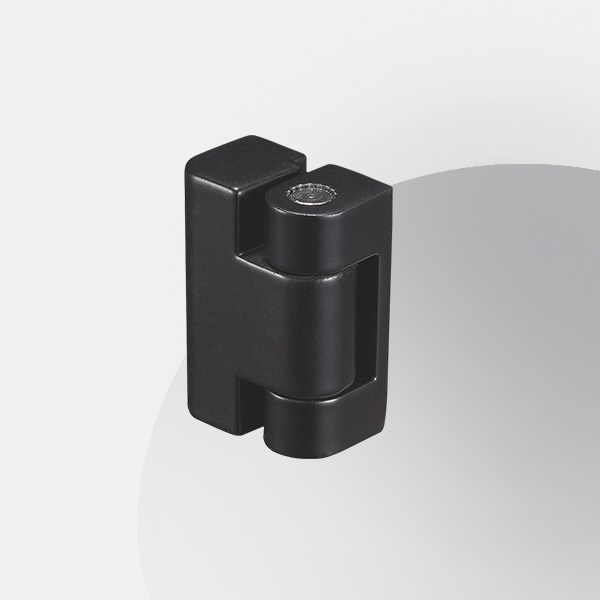
3. Sample Testing and Quality Verification
3.1 Requesting Samples for Installation Testing
Before bulk purchase, request samples for installation testing. Samples must use the same materials and processes as mass production products. Installation testing includes opening/closing smoothness and load capacity verification, observing whether rotation is smooth without binding.
Sample testing should include load application up to 1.5 times the rated value, with deformation not exceeding 0.5 millimeters considered passing. During loading, observe whether the leaf and pivot shaft show visible deformation. Test reports should detail loading methods and deformation data.
After samples pass testing, seal and retain them as the bulk acceptance benchmark. Keep test reports and sample products for future comparison. Factories with non-conforming samples should be eliminated immediately to avoid bulk quality risks.
3.2 Material and Coating Inspection
Request material test reports from the factory. Reports should include chemical composition analysis and mechanical property data. Confirm that material grades match the contract to avoid substandard substitutions. Third-party testing agencies can be commissioned for material re-verification.
Coating thickness gauges verify hot-dip galvanized coating thickness not less than 70 micrometers and powder coating not less than 60 micrometers. Cross-cut testing evaluates coating adhesion, with detachment area below 5 percent considered passing.
Salt spray testing follows application environment requirements. Indoor products require not less than 72 hours, outdoor products not less than 300 hours. 304 stainless steel requires not less than 500 hours, and 316 stainless steel exceeds 1,000 hours. Test reports are core documents for quality verification.
3.3 Small Batch Trial Order Validation
After samples pass testing, place a trial order first, with quantity at 5 to 10 percent of the bulk procurement volume. Trial orders verify the factory's batch production consistency and on-time delivery rate. Only after trial orders are qualified should formal bulk procurement proceed.
During trial orders, arrange on-site inspection or third-party inspection. Address issues promptly through communication to avoid bulk rework. Trial order delivery and quality data serve as the basis for supplier evaluation.
After trial orders pass, sign long-term framework agreements to lock in pricing and capacity. Industrial enclosure locks can be purchased together with hinges for compatible integration. Trial orders are an effective means of reducing procurement risk.
4. Supplier Evaluation and Long-Term Cooperation
4.1 Establishing a Comprehensive Evaluation System
Establish an annual supplier evaluation system covering four dimensions: quality, delivery, price, and service. Quality carries 40 percent weight, delivery 25 percent, price 20 percent, and service 15 percent. A comprehensive score of 80 or above qualifies as an approved supplier.
Quality evaluation is based on each batch's inspection pass rate and timeliness of non-conforming product handling. Delivery evaluation is based on on-time delivery rate and emergency order response speed. Price evaluation is based on market competitiveness.
Service evaluation is based on after-sales response time and problem resolution efficiency. Suppliers with excellent evaluations for two consecutive years can be upgraded to strategic suppliers. Strategic partnerships provide production priority and price preferences.
4.2 Contract and Warranty Terms
Contracts must clearly specify product specifications, material grades, and acceptance standards. Technical appendices should describe dimensional tolerances and performance indicators in detail. Warranty terms should be no less than three years, with five years being better. Quality issues during the warranty period are covered by free replacement.
Default clauses should specify compensation ratios for delayed delivery and quality non-conformance. We recommend a 3-3-3-1 payment structure. Specify warranty response time, typically not exceeding 48 hours.
Quality acceptance should follow the GB/T 2828.1 standard for sampling inspection. Non-conforming batches must be returned for rework and cannot be accepted on a concession basis. Clear contract terms effectively constrain supplier behavior.
4.3 Long-Term Cooperation and Supply Chain Optimization
Sign three-year framework agreements with selected heavy-duty industrial hinge factories. Agreements should include annual price adjustment mechanisms to respond to raw material fluctuations. Long-term agreements make factories more willing to invest capacity and technical support.
Regularly communicate usage feedback to help factories improve products. Deepened technical cooperation can reduce costs and improve quality. Invite supplier technical teams to participate in new product development; early involvement prevents later problems.
Reserve spare parts at 3 to 5 percent of procurement volume. Establish emergency order channels to ensure shipment within three days. Industrial enclosure hinge and industrial cabinet hinge suppliers can be managed uniformly.
5. Summary: Finding a Reliable Heavy-Duty Hinge Supplier
Finding a reliable heavy-duty hinge supplier requires systematic progress across four steps: channel screening, qualification verification, sample validation, and long-term cooperation.
Channel Screening: Alibaba International and Made-in-China are preferred online platforms. ThomasNet and other vertical websites suit complex custom projects. Trade shows such as the China International Industry Fair allow face-to-face product quality comparison. On-site visits to industrial parks in the Yangtze River Delta and Pearl River Delta help judge actual capabilities. LinkedIn and industry forums provide peer recommendations.
Qualification Verification: Verify ISO9001, ISO14001, and ISO45001 system certifications. Export products require CE or UL certification. Domestic products must comply with GB/T 38737. RoHS and REACH environmental certifications are essential for export. Factories should have CNC machining centers and in-house testing laboratories.
Sample Validation: Request samples for load and salt spray testing verification. Sample testing at 1.5 times rated value with deformation not exceeding 0.5 millimeters is合格. After passing, place trial orders to verify batch consistency. After trial orders pass, sign long-term framework agreements.
Long-Term Cooperation: Establish annual supplier evaluation systems with quality carrying 40 percent weight. Suppliers with excellent evaluations for two consecutive years can be upgraded to strategic suppliers. Contracts should clearly specify warranty terms and the 3-3-3-1 payment structure. Reserve spare parts at 3 to 5 percent of procurement volume.
Electrical enclosure hinges and continuous hinges supplier evaluation standards are identical to those for heavy-duty hinges. Industrial enclosure locks can be purchased together with hinges for compatible integration. Establishing long-term cooperation with a reliable heavy-duty industrial hinge factory provides stable supply and technical support, ensuring project quality and delivery timelines.