Door sag is a common problem caused by improper selection of heavy-duty
hinges. This article recommends four types of sag-resistant hinges to help you
solve door panel settlement issues.
1. Causes of Door Sag and the Sag-Resistant Principle of Heavy-Duty
Hinges
1.1 Main Causes of Door Sag
"The root cause of door sag is insufficient load capacity of the hinge to
support the full weight of the door panel. To avoid this, ensuring a precise
heavy-duty hinges load calculation before procurement is the most critical
preventative step." When the door panel weight exceeds the rated load capacity
of the hinge, the pivot shaft and bushing gradually wear and deform. A gap
difference between the top and bottom exceeding 3 millimeters indicates obvious
door sag.
Loose mounting holes or door panel deformation can also cause sagging. In
vibrating environments, bolts may back out, causing hinge leaf displacement.
Door panel warping changes the center of gravity, accelerating hinge wear.
In high-frequency opening scenarios, the clearance between the pivot shaft
and bushing gradually increases. When the clearance exceeds 0.3 millimeters,
visible door sag begins to appear. Selecting sag-resistant industrial hinges is
the fundamental solution.
1.2 Core Design of Sag-Resistant Hinges
Sag-resistant industrial hinges use oversized pivot shaft designs,
typically 16 to 25 millimeters in diameter. Thicker shafts offer higher bending
strength and resist deformation under heavy loads. Premium products have shafts
that are quenched to hardness HRC 40 or above.
The bushing features a self-lubricating bronze liner to maintain smooth
long-term rotation. The self-lubricating liner reduces friction wear, delaying
clearance expansion. The tight-fitting bushing controls clearance between 0.05
and 0.15 millimeters.
Leaves are thickened to 6 to 10 millimeters, significantly increasing the
bending section modulus. Thick leaves resist plastic deformation under heavy
loads, maintaining precise door panel positioning. The overall rigidity of
sag-resistant heavy-duty hinges is twice that of standard products.
1.3 Selection Criteria for Sag-Resistant Hinges
When selecting, the primary consideration is whether the single-hinge load
capacity reaches three times the door panel weight. An 80-kilogram door panel
requires industrial hinges rated at 240 kilograms or above. Also verify dynamic
load data to ensure it is at least twice the total door load.
With two hinges installed, spacing should be at one-third and two-thirds of
the door panel height. Optimal spacing ensures even load distribution and avoids
stress concentration. With three hinges, the middle hinge provides torsional
stability.
Welded installation offers better sag resistance than bolted types, as
welding eliminates stress concentration at hole positions. "For outdoor
scenarios, choose stainless steel material to avoid load capacity reduction from
corrosion.
You can explore more comprehensive long-term protection strategies in our
guide on preventing rust on heavy-duty hinges." Confirm anti-sag test data with
the heavy-duty hinges factory.
2. Detailed Comparison of Four Types of Sag-Resistant Heavy-Duty Hinges
* Reinforced Welded Type
6mm+ leaf, 20mm shaft, 300-500kg capacity. Best sag resistance. Permanent
installation.
* Adjustable Eccentric Type
±3mm adjustment. No-disassembly fine-tuning. Ideal for retrofits and
frequent adjustments.
*3-Hinge Distributed Type
Middle hinge shares 15% torque load. 30% better sag prevention. For
tall/wide doors (2.5m+).
* Stainless Steel Self-Lubricating
304SS + bronze bushing. 500h+ salt spray. Zero maintenance. Best for
corrosive environments.
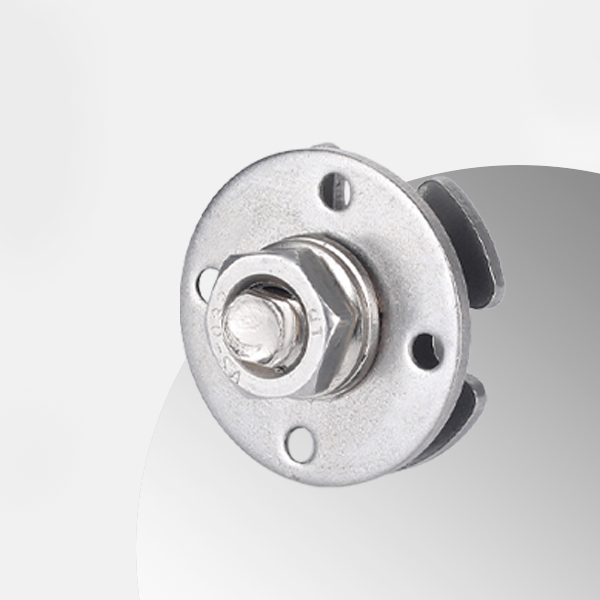
2.1 Reinforced Welded Heavy-Duty Hinges
Reinforced welded hinges feature leaves above 6 millimeters and
20-millimeter pivot shafts, with single-hinge load capacity of 300 to 500
kilograms. Multiple reinforcing ribs on the leaf increase overall bending
rigidity. Suitable for heavy industrial doors and large outdoor cabinets.
Continuous full-penetration welds are free of porosity, with the
heat-affected zone minimized. Welded types have no bolt loosening risk,
maintaining stable clearance over long-term use. Sag resistance ranks first
among the four hinge types.
Cost is moderate, but position cannot be adjusted after installation,
requiring high positioning accuracy. Suitable for fixed equipment that does not
require disassembly after installation. The heavy-duty hinges factory can
provide pre-made welding positioning templates to reduce installation
errors.
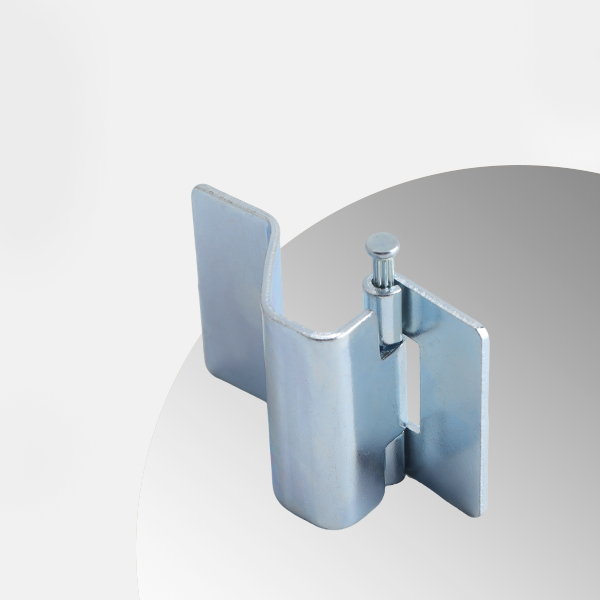
2.2 Adjustable Eccentric Heavy-Duty Hinges
Adjustable eccentric hinges feature adjustment screws that allow
fine-tuning of the door panel's vertical and horizontal position. The adjustment
range is typically 3 millimeters front-to-back, 2 millimeters left-to-right, and
2 millimeters up-and-down. Minor sag can be corrected without disassembly.
The eccentric adjustment mechanism is hardened to prevent failure over
long-term use. Lock nuts prevent position changes after adjustment. Debugging
time is reduced by over 50 percent compared to standard types.
Cost is 20 to 40 percent higher than standard types, but maintenance
convenience is outstanding. Suitable for heavy door panels requiring frequent
adjustments. Widely used in retrofit projects for old cabinets.
2.3 3-Hinge Distributed Heavy-Duty Hinges
The 3-hinge system adds a middle hinge to share the load, reducing stress
on each individual hinge. The middle hinge carries approximately 15 percent of
the torsional load. The top and bottom hinges are spaced further apart for
better stability.
The middle hinge uses the same specification product to ensure balanced
loading. All three hinges must be strictly aligned on the same vertical line
during installation. Verticality error must not exceed 1 millimeter; otherwise,
the middle hinge cannot provide effective torsion resistance.
This system is suitable for extra-tall door panels (above 2.5 meters) and
extra-wide door panels (above 1.5 meters). The third hinge improves sag
resistance by approximately 30 percent. The cost increase is modest, while the
sag prevention effect is significant.
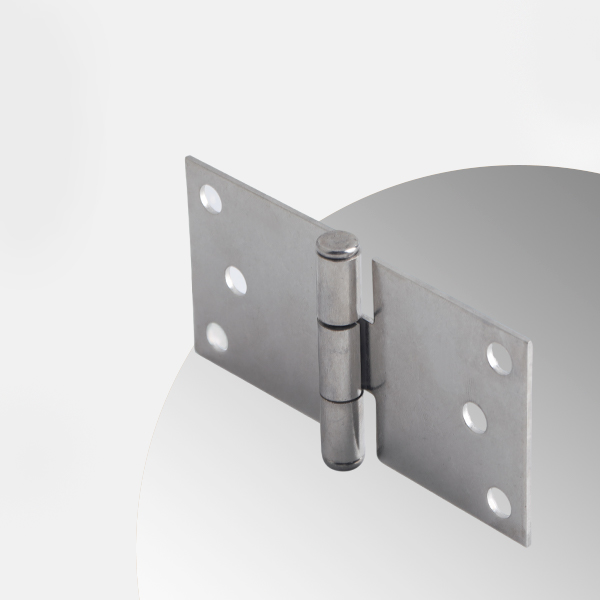
2.4 Stainless Steel Self-Lubricating Heavy-Duty Hinges
Stainless steel self-lubricating hinges combine 304 stainless steel with a
bronze liner. The bronze liner has a low friction coefficient of 0.08, reducing
wear-induced clearance expansion. Salt spray testing exceeds 500 hours, with
ten-year rust-free performance.
The self-lubricating feature eliminates the need for frequent lubrication,
maintaining long-term rotational precision. The bushing wear rate is one-third
that of standard steel-on-steel friction. Sag resistance durability is
outstanding in corrosive environments.
Initial cost is the highest among the four types, but total lifecycle cost
is the lowest. Ideal for strongly corrosive environments such as coastal base
stations and chemical plants. Overall sag-resistant service life exceeds 15
years.
3. Installation Key Points for Sag-Resistant Heavy-Duty Hinges
3.1 Precise Measurement and Positioning
Before installation, use a tape measure to accurately measure hinge
positions from the bottom of the door panel. The spacing between top and bottom
hinges should be at one-third and two-thirds of the door panel height. Use a
level to ensure both hinges are on the same vertical line.
After marking hole positions, pre-drill one hole and insert a bolt to
confirm correct positioning. Once confirmed, drill the remaining holes to avoid
cumulative errors from drilling all holes at once. Positioning templates can
significantly reduce measurement errors.
For 3-hinge installation, position the middle hinge 50 millimeters above
the center point between the top and bottom hinges. This position provides
optimal torsion resistance. Measurement error should be controlled within plus
or minus 1 millimeter.
3.2 Bolt Torque Control
Pre-drill hole diameter should be 0.5 millimeters smaller than the bolt
diameter to ensure tight thread engagement. Thread bolts in by hand for two to
three turns to confirm alignment. Use a torque wrench to tighten to standard
values: M8 bolts at 15 to 20 Newton-meters.
Use a diagonal cross-tightening sequence, starting from one corner and
tightening opposite corner bolts in sequence. Avoid overtightening on one side,
which could deform the hinge leaf. After tightening, mark a line on the bolt
head with a marker for future loosening checks.
For welded hinges, tack weld in position first, test opening and closing,
then complete the full weld. Use a segmented welding method for the full weld,
with each weld segment not exceeding 30 millimeters. Alternate welding on both
sides to prevent thermal deformation.
3.3 Adjustment and Gap Tuning
After installation, slowly open and close the door panel three times to
check for smooth rotation. If binding occurs, loosen bolts and use adjustment
shims to fine-tune hinge position. Shims range from 0.5 to 2.0 millimeters thick
and should be added one at a time.
Close the door panel and use a feeler gauge to measure the four-side gap.
The difference between top and bottom gaps should be less than 2 millimeters.
Excessive gap indicates the hinge is positioned too low and needs to be moved
up. Insufficient gap indicates the hinge is too high and needs to be moved
down.
Adjustable hinges allow fine-tuning through eccentric screws without
disassembly. After adjustment, retighten all fasteners. Finally confirm that the
door panel remains stable at any opening angle.
4. Daily Inspection and Maintenance of Sag-Resistant Heavy-Duty Hinges
4.1 Regular Sag Trend Inspection
Quarterly, measure the top and bottom gap difference with a tape measure
and compare with baseline data. A gap increase exceeding 1 millimeter warrants
attention. If the gap increases for two consecutive measurements, hinge wear is
accelerating.
With the door panel opened to 30 degrees, shake it up and down. If
looseness exceeds 2 millimeters, the bushing clearance is excessive. Prompt
lubrication can slow the wear rate. When looseness reaches 3 millimeters, hinge
replacement is required.
Use a torque wrench to spot-check bolt torque. Bolts below 80 percent of
standard value need retightening. Loose bolts are a common cause of door sag.
Record each inspection data point to track sag development trends.
4.2 Lubrication to Slow Wear
Apply anti-rust grease to the pivot shaft every three months to reduce
friction wear. For outdoor environments, choose water-resistant lithium grease.
For indoor use, choose molybdenum disulfide grease. After application, cycle the
hinge 10 times to distribute grease evenly.
Clean the pivot shaft surface of old oil and dirt before applying fresh
grease. Old oil mixed with dust forms an abrasive compound that accelerates
wear. Apply 1 to 2 grams per hinge; excess grease attracts dust.
Hinges with self-lubricating liners can extend the lubrication interval to
six months. When liner wear approaches 0.2 millimeters, prepare replacement
parts in advance. Timely lubrication can double the sag-resistant service
life.
4.3 Replacement Criteria
Replace hinges when any of the following conditions occur: top-bottom gap
difference exceeds 5 millimeters and adjustment is ineffective; pivot shaft
diameter wear exceeds 0.5 millimeters; bushing clearance exceeds 0.3 millimeters
with noticeable door panel wobble; visible bending of the leaf or cracks in weld
seams; rust depth exceeds 0.3 millimeters with extensive coating peeling.
When replacing, choose a higher load capacity sag-resistant series product.
After replacement, repeat installation, adjustment, and baseline data recording.
Maintain communication with the heavy-duty hinges factory to access the latest
sag-resistant technical solutions. Timely replacement prevents door panel fall
accidents.
5. Summary: Preventing Door Sag with Heavy-Duty Hinges
Preventing door sag requires a comprehensive approach across three areas:
selection, installation, and maintenance.
During selection, prioritize four types of sag-resistant products:
reinforced welded type (300-500kg capacity), adjustable eccentric type
(convenient fine-tuning), 3-hinge distributed system (reduces per-hinge stress),
and stainless steel self-lubricating type (corrosion-resistant,
maintenance-free).
The core selection principle is that single-hinge load capacity should be
no less than three times the door panel weight. Installation spacing should be
controlled at one-third and two-thirds of the door panel height.
During installation, ensure hinge verticality error does not exceed 1
millimeter. Tighten bolt torque to standard values.
During daily maintenance, check gap difference trends quarterly. Apply
grease promptly to slow pivot shaft wear.
The sag prevention strategies for cabinet hinges and heavy-duty industrial
hinges follow the same principles described above.
Maintain communication with a professionalheavy-duty hinges factory to
obtain accurate load data and installation guidance. Correct sag-resistant
selection and regular maintenance will keep door panels precisely positioned and
operating safely for over ten years.