When heavy-duty industrial hinges reach replacement criteria, timely action is required. This article provides clear judgment criteria from four perspectives: wear, deformation, corrosion, and noise. Whether you are using standard heavy-duty hinges or custom versions, these guidelines apply.
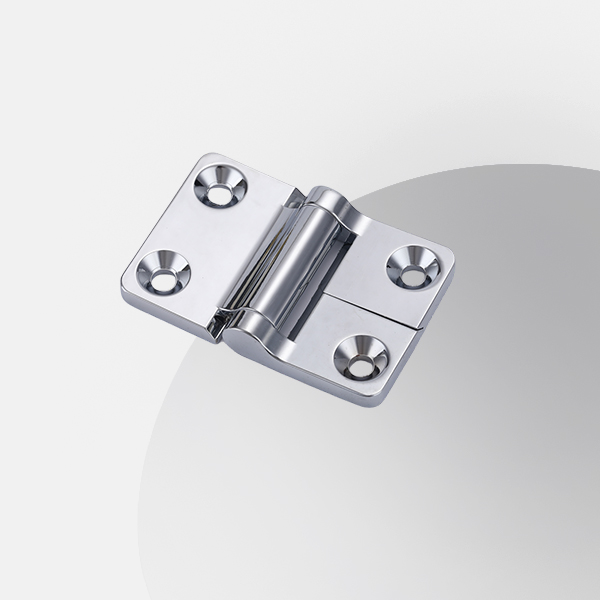
1. Excessive Wear of Pivot Shaft and Bushing
1.1 Pivot Shaft Diameter Reduction Exceeds 0.5 Millimeters
After prolonged use, heavy-duty industrial hinges gradually develop wear clearance between the pivot shaft and bushing. Measure the pivot shaft diameter with a vernier caliper. Replacement is required when the reduction exceeds 0.5 millimeters compared to the original data. Take measurements from the unworn middle section of the shaft, avoiding chamfered ends.
Shaft wear causes door wobble when opened to 30 degrees. Looseness exceeding 2 millimeters indicates excessive clearance. Normal clearance should be controlled between 0.05 and 0.15 millimeters. Severe wear significantly reduces load capacity and creates safety hazards.
We recommend performing clearance checks every six months and recording data trends. When the wear rate of heavy-duty industrial hinges suddenly accelerates, prepare replacement parts in advance. Query original diameter data from the heavy-duty industrial hinge manufacturer as a comparison baseline.
1.2 Bushing Clearance Exceeds 0.3 Millimeters
Replacement is required when the bushing inner diameter increase exceeds 0.3 millimeters compared to the initial value. Excessive bushing clearance causes uneven gaps on all four sides of the door in the closed position, with top-to-bottom gap difference exceeding 3 millimeters. Bushing wear on industrial cabinet hinges directly affects equipment sealing.
Use a feeler gauge to measure gap changes in the closed door position. If gap differences increase for two consecutive measurements, wear is accelerating. Bushing wear also produces abnormal noise that persists even after adding lubricant. Persistent noise indicates metal debris embedded inside the bushing.
Prepare replacement parts when bronze self-lubricating bushing remaining thickness drops below 1 millimeter. Early procurement prevents emergency shutdowns. Heavy-duty cabinet hinges follow the same bushing wear judgment criteria.
1.3 Cycle Count Reaches Design Life
Quality heavy-duty industrial hinges have a design life of 50,000 to 100,000 opening cycles. Beyond this range, internal metal structure is fatigued even if appearance remains intact. Record daily opening cycles to estimate cumulative usage.
In high-frequency scenarios such as inspection stations and automated production lines, service life is significantly shortened. Proactively purchase replacement parts when cycle count reaches 80 percent of design life. Avoid emergency replacement after complete failure.
The heavy-duty industrial hinges manufacturer typically provides fatigue life curves in technical documentation. Regularly record cycle counts and compare with design life to plan replacement timing. Industrial enclosure locks and hinge replacement schedules can be coordinated.
2. Deformation and Structural Damage
2.1 Bent Pivot Shaft Causing Binding
When heavy-duty industrial hinges suffer impact or overload, the pivot shaft bends. The door panel shows obvious binding or abrupt resistance at a specific point during opening and closing. Use a straightedge or dial indicator to measure shaft straightness; replacement is required when bending exceeds 0.5 millimeters.
A bent shaft causes localized stress concentration in the bushing, accelerating wear and generating noise. Continued use may cause bushing fracture or door detachment. When replacing heavy-duty industrial hinges, also inspect the door panel for deformation.
Bending is typically caused by side impact or overloading. Improving operational practices can reduce such problems. Pivot shaft replacement is relatively simple for bolted versions, while welded versions require complete replacement.
2.2 Twisted Leaf Causing Door Misalignment
When the leaf of heavy-duty industrial hinges is twisted by external force, the four-side gaps become visibly inconsistent when the door is closed. If the top-to-bottom gap difference exceeds 3 millimeters and adjustment shims cannot correct it, the leaf is twisted. A twisted leaf prevents uniform sealing gasket compression.
Use a square to check leaf flatness; replacement is required when deviation exceeds 1.5 millimeters. Leaf twisting is often caused by uneven door panel force or incorrect hinge selection. Before replacement, confirm that the new product's load rating meets actual requirements.
Twisted heavy-duty industrial hinges cannot be corrected by hammering; such attempts further damage the internal crystal structure. The only solution is complete replacement. After replacement, readjust the door panel position to ensure proper sealing.
2.3 Weld Cracks or Rust Expansion
Welded heavy-duty industrial hinges are most vulnerable to moisture accumulation at weld seams, leading to rust. When reddish-brown rust appears around the weld with micro-cracks, structural integrity is compromised. Immediate replacement is required when crack length exceeds 5 millimeters or depth exceeds 2 millimeters.
Use a magnifying glass to inspect weld surfaces. Dye penetrant inspection can reveal micro-cracks invisible to the naked eye. Weld rust expansion progressively enlarges cracks, potentially causing sudden failure. Outdoor equipment requires weld inspection every six months.
Weld repair costs and difficulty far exceed replacement of new heavy-duty industrial hinges. For critical safety equipment, stop operation and replace immediately upon finding weld rust or cracks. Choosing stainless steel versions solves weld corrosion issues at the source.
3. Corrosion and Surface Damage
3.1 Rust Depth Exceeds 0.3 Millimeters
When rust appears on the surface of heavy-duty industrial hinges, measure pit depth with a depth gauge. Replacement is required when rust depth exceeds 0.3 millimeters and the affected area exceeds 10 percent of total leaf area. Surface rust can be sanded and reused.
Carbon steel versions rust at a rate of approximately 0.1 to 0.2 millimeters per year in outdoor environments. After three years, remaining thickness may fall below safe levels. Stainless steel versions also require replacement if pitting occurs in highly corrosive environments.
Rust severely reduces load capacity, with effects more insidious and dangerous than wear. Regular rust removal and repainting can extend the service life of carbon steel versions. However, deep rust is irreversible and requires replacement.
3.2 Extensive Coating Peeling
When the surface coating of carbon steel versions peels extensively, the base metal is directly exposed to corrosive environments. When peeling area exceeds 30 percent of leaf area, protection is essentially lost. Exposed metal rusts quickly, weakening load capacity.
Coating peeling is typically caused by scratches, impact, or coating aging. Local peeling can be sanded and touched up with anti-rust paint. Industrial cabinet hinges with extensive peeling in humid environments may rust severely within six months; replacement is recommended.
When replacing, upgrade to stainless steel versions to avoid recurring coating problems. In harsh environments, stainless steel is increasingly used as an alternative to coated carbon steel. The heavy-duty industrial hinges manufacturer can provide material upgrade recommendations.
3.3 Mounting Hole Deformation or Enlargement
Mounting holes in bolted versions gradually enlarge or deform into ellipses due to long-term vibration. When hole enlargement exceeds 0.5 millimeters, bolts cannot provide sufficient clamping force. The door panel wobbles, and tightening screws cannot eliminate the issue.
Severe hole deformation requires larger diameter bolts or threaded insert repair. If more than two holes are deformed, replace the entire set and re-drill. Welded versions do not have hole deformation issues but welds may crack.
Regular fastener torque checks prevent hole enlargement. Using spring washers or thread-locking compound also slows hole wear. Heavy-duty cabinet hinges in vibration environments require particularly strict hole integrity.
4. Functional Failure and Safety Risks
4.1 Door Sags and Cannot Hold Position
When heavy-duty industrial hinges are severely worn, the door shows noticeable play when lifted manually in the closed position. The door cannot stay at any angle and closes automatically, indicating position-limiting mechanism failure or excessive shaft wear. A sagging door damages seals and allows dust ingress.
Measure door sag with a level. Replacement is required when sag exceeds 5 millimeters and adjustment is ineffective. The root cause of sag is excessive clearance from reduced shaft diameter. When replacing, choose a higher load rating.
For industrial cabinet hinges with position-limiting function, if locking fails at 90 or 180 degrees, replacement is required. Failed locking mechanisms in elevated work scenarios create safety hazards and must be addressed immediately.
4.2 Fasteners Repeatedly Loosen and Cannot Be Tightened
Fasteners on bolted versions repeatedly loosen even with thread-locking compound. This indicates severe damage to mounting holes or bolt threads. Use a thread gauge to inspect bolts; replacement is required when thread damage exceeds three threads.
Stripped internal threads can be repaired with threaded inserts, but repair costs approach replacement cost. Industrial enclosure locks paired with hinges in vibration environments present high risks when repeatedly loosening. Welded versions do not have this issue, but poor welding may cause weld cracking.
When selecting heavy-duty industrial hinges, confirm bolt strength and anti-loosening design with the manufacturer. Preset torque values reduce loosening probability. Regular inspection is key to preventing functional failure.
4.3 Persistent Abnormal Noise
When heavy-duty industrial hinges produce sharp noise during opening and closing that persists after lubrication, metal debris is embedded in the bushing or the shaft surface is severely damaged. Persistent noise indicates accelerating internal wear.
Squeaking noise typically results from dry friction or surface burrs between shaft and bushing. Grinding noise may indicate bushing fracture or shaft cracks. Any abnormal noise is a clear signal of deteriorating internal condition.
For damping versions, noise may indicate hydraulic module leakage. Such failures cannot be repaired and require complete replacement. Ignoring noise can lead to sudden door jamming or falling, requiring immediate attention.
5. Summary: Heavy-Duty Industrial Hinges Replacement Criteria
Replacement decisions for heavy-duty industrial hinges require comprehensive assessment across four dimensions: wear, deformation, corrosion, and functional abnormality.
Wear: Replacement is required when pivot shaft diameter reduction exceeds 0.5 millimeters or bushing clearance exceeds 0.3 millimeters. Prepare spare parts when cycle count reaches 80 percent of design life. Regularly measure shaft diameter and bushing clearance and record data trends.
Deformation: Replacement is required when shaft bending exceeds 0.5 millimeters or leaf twisting causes gap difference exceeding 3 millimeters. Immediate shutdown and replacement are required when weld cracks exceed 5 millimeters or rust expansion cracks appear. Deformation cannot be corrected; complete replacement is the only solution.
Corrosion: Replacement is required when rust depth exceeds 0.3 millimeters or coating peeling exceeds 30 percent. Carbon steel thickness may fall below safe levels after three years; upgrading to stainless steel is recommended. Replacement or repair is required when mounting hole enlargement exceeds 0.5 millimeters.
Functional Failure: Replacement is required when door sag exceeds 5 millimeters, fasteners repeatedly loosen and cannot be tightened, or abnormal noise persists after lubrication. Failed position-limiting mechanisms in elevated work scenarios must be addressed immediately.
Regular inspection is essential for timely replacement decisions. Industrial cabinet hinges and heavy-duty cabinet hinges follow the same criteria. Maintain communication with the heavy-duty industrial hinges manufacturer for updated replacement recommendations. Timely replacement prevents door falls and equipment damage, ensuring personnel safety.