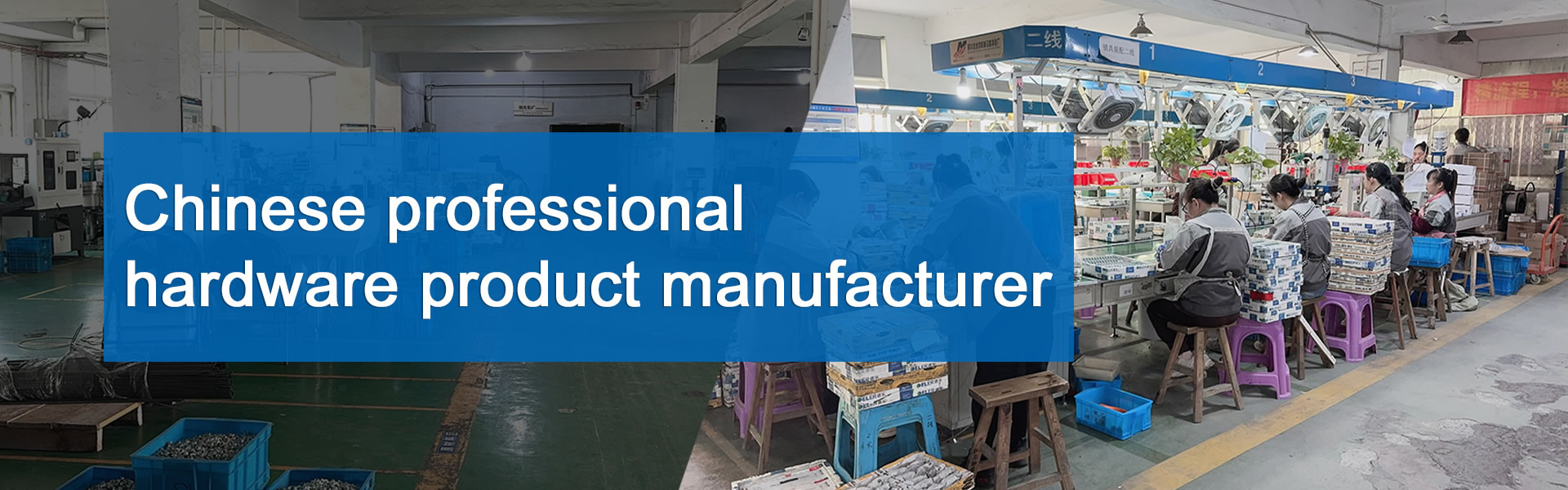
Selecting an OEM industrial hinge manufacturer requires focused evaluation of customization capabilities, engineering support, and quality systems. This article provides a complete OEM supplier screening framework. Whether you need a standard heavy-duty hinge or a fully custom solution, these criteria will guide your selection.
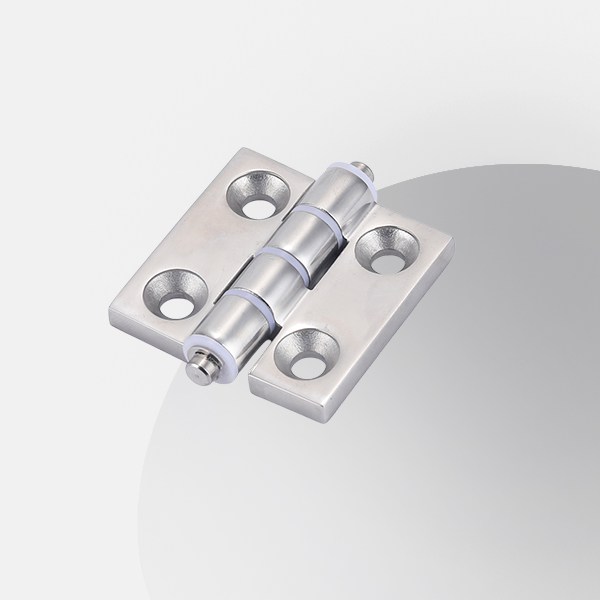
1. OEM Industrial Hinge Manufacturer Customization Capability Assessment
1.1 Drawing Conversion and Design Capabilities
When selecting an OEM hinge supplier, first evaluate their drawing conversion capabilities. Professional manufacturers should be able to quickly convert customer-provided 2D drawings or 3D models into production processes. Factories with CAD/CAM design systems can complete drawing review and process assessment within 48 hours.
The manufacturer's design team should be able to propose structural optimization recommendations. For example, adjusting control box hinge leaf thickness from 5 millimeters to 6 millimeters to improve load margin. Engineering teams of five or more members ensure rapid response, with design review cycles shortened to three days.
Manufacturers with reverse engineering capabilities can measure customer-provided physical samples. Coordinate measuring machines precisely capture sample dimensions with error controlled within 0.02 millimeters. Reverse engineering capability is particularly important for replacing hinges on old equipment.
1.2 Non-Standard Dimensions and Special Function Customization
The core of OEM cooperation lies in non-standard customization capabilities. Manufacturers should accept non-standard dimension customization, with leaf length, width, and mounting hole spacing adjustable as needed. Minimum order quantities are flexible, with small batches of 50 units also accepted.
Special function customization includes damping cushioning, position-limiting locking, and smart monitoring. Damping electrical enclosure hinges require built-in hydraulic cushioning modules. Position-limiting hinges feature locking mechanisms at 90 or 180 degrees. Smart hinges integrate load sensors and Bluetooth transmission modules.
Special material customization capabilities include 316 stainless steel, forged steel, and copper alloy. Explosion-proof scenarios require copper alloy material. Food and pharmaceutical scenarios require food-grade grease. Confirm minimum order quantities and delivery lead times for special materials with the heavy-duty industrial hinge factory.
1.3 Mold Development and Prototyping Cycles
Mold development capability determines the pace of OEM project progress. Manufacturers with in-house mold production respond faster and offer lower costs. Mold development cycles are typically 7 to 15 days, extended to 20 days for complex molds. Manufacturers outsourcing molds have delivery times constrained by mold suppliers.
Sample production cycles are 3 to 5 days, with mass production beginning after customer confirmation. Samples must use the same materials and processes as mass production products. After samples pass testing, seal and retain them as the bulk acceptance benchmark.
For OEM projects involving industrial cabinet hinges, we recommend placing trial orders first to verify batch consistency. Trial order quantities are 5 to 10 percent of the bulk volume. After passing, formal bulk procurement can proceed. NEMA-rated enclosure hinges customization processes are consistent with standard hinges.
2. Engineering Support and Technical Communication
2.1 Technical Team Configuration Assessment
Evaluate the OEM industrial hinge manufacturer's technical team size and professional background. Factories with independent R&D departments can undertake complex custom projects. Engineering teams of ten or more members can support multiple projects in parallel.
Technical teams should have professional backgrounds in materials science, mechanical design, and surface treatment. Material engineers can recommend the most suitable material grades. Mechanical engineers can optimize hinge structural design. Surface treatment engineers ensure coatings meet corrosion protection requirements.
Manufacturers should assign dedicated project managers for OEM customers. Project managers coordinate design, production, and quality inspection stages. A single point of contact reduces communication costs and improves project progress efficiency.
2.2 Communication Efficiency and Response Speed
OEM cooperation requires manufacturers to have efficient communication capabilities. International sales teams have good English communication skills with timely email and phone responses. Technical questions receive answers within 24 hours, with urgent issues responded to within 4 hours.
Manufacturers provide detailed product manuals and installation guides. Technical documentation is available in both English and Chinese for customer convenience. Digital tools support online selection and quotation, shortening communication cycles.
Regular project progress meetings report design, prototyping, and production progress. Issues are addressed promptly through communication to avoid bulk rework. Communication efficiency is a key factor in OEM cooperation success.
2.3 Intellectual Property and Confidentiality Agreements
OEM cooperation involves intellectual property protection for customer drawings and design solutions. Sign confidentiality agreements to clarify both parties' rights and obligations. Manufacturers must not use customer designs for other projects or resell them to third parties.
Ownership of customer custom molds must be clearly specified in contracts. Typically, molds belong to the customer after mold fees are paid. Manufacturers must not use customer molds to produce for other customers.
Technical data and process documents must be properly stored to prevent leaks. Industrial-grade cabinet hingesOEM cooperation particularly requires emphasis on intellectual property protection. Long-term cooperation is built on mutual trust and compliance.
3. Quality System and Production Control
3.1 System Certification and Process Control
Verify the OEM industrial hinge manufacturer's ISO9001 Quality Management System certification. Certification must cover custom product design and manufacturing processes. ISO14001 and ISO45001 certifications reflect environmental and safety compliance levels.
Audit whether the factory has established critical control points for key processes. Stamping, heat treatment, and welding processes should have work instructions. On-site observe whether workers follow work instructions and whether process parameters are completely recorded.
Heat treatment temperature curve records and hardness spot-check records are mandatory inspection items. Each batch should have complete process parameter records. Welding processes require welding procedure specifications and welder qualification certificates.
3.2 First Article Inspection and Process Patrol
OEM projects require first article inspection before mass production. First article products undergo full dimension inspection and functional testing before mass production can proceed. First article inspection reports are confirmed and signed by customers.
During mass production, implement process patrol inspections every two hours. Patrol inspection items include appearance, dimensions, and function. Upon discovering abnormalities, stop the line immediately for adjustment to avoid bulk non-conformance.
Industrial enclosure hinge OEM production requires focused attention on dimensional consistency. Sampling inspection follows the GB/T 2828.1 standard with AQL set at 1.5 percent. Non-conforming batches must be returned for rework.
3.3 Outgoing Inspection and Quality Traceability
Before shipment, perform sampling inspection according to the GB/T 2828.1 standard. Appearance, dimensions, and function are mandatory inspection items. After passing inspection, issue outgoing inspection reports to accompany the shipment.
Establish a complete quality traceability system. Each batch can be traced to specific production dates, operators, and raw material batches. Quality issues can be quickly located and corrected.
Industrial enclosure locks can be OEM purchased together with hinges for compatible integration. The quality traceability system is the foundation for long-term OEM cooperation. Request quality traceability process documents from the heavy-duty industrial hinge factory.
4. Cost Control and Long-Term Cooperation
4.1 OEM Quotations and Cost Composition
OEM quotations should include material costs, processing fees, mold fees, surface treatment costs, and packaging costs. Mold fees are one-time costs that must be itemized separately. Bulk unit prices decrease with increasing order volume, with 5 percent discounts for 500 units or more and 10 percent for 1,000 units or more.
Compare quotations from three or more qualified OEM suppliers and analyze price differences. Excessively low prices may indicate material downgrading or process compression. Within a reasonable price range, choose the supplier with the best technical solution.
Clarify whether prices include tax and transportation costs. FOB and CIF trade terms must be confirmed in advance. Industrial cabinet hinges OEM quotations must specify mold ownership.
4.2 Long-Term Framework Agreements and Capacity Lock-In
Sign three-year framework agreements with your chosen hinge manufacturer. Agreements should include annual price adjustment mechanisms to respond to raw material fluctuations. Long-term agreements make factories more willing to invest dedicated capacity and technical support.
Framework agreements should specify minimum purchase quantities and capacity guarantee clauses. Manufacturers prioritize OEM customer orders. Emergency order channels ensure shipment within seven days.
Regularly communicate usage feedback to help factories improve products. Deepened technical cooperation can reduce costs and improve quality. Invite supplier technical teams to participate in new product development; early involvement prevents later problems.
4.3 Supplier Evaluation and Strategic Upgrade
Establish an annual OEM supplier evaluation system covering four dimensions: quality, delivery, technology, and service. Quality carries 40 percent weight, delivery 25 percent, technology 20 percent, and service 15 percent.
Manufacturers with excellent evaluations for two consecutive years can be upgraded to strategic partners. Strategic partnerships provide production priority and more favorable pricing. Strategic suppliers enjoy shorter payment cycles and more technical support.
Establish joint development mechanisms with the heavy-duty industrial hinge factory. Jointly develop new products and share intellectual property and profits. Long-term strategic cooperation is the guarantee for sustained OEM business development. NEMA-rated enclosure hinges OEM cooperation also applies to this framework.
5. Summary: Choosing an OEM Industrial Hinge Manufacturer
Choosing an OEM industrial hinge manufacturer requires systematic assessment across four dimensions: customization capability, engineering support, quality systems, and cost control.
Customization Capability: Evaluate the manufacturer's drawing conversion capabilities and design team size. Factories with CAD/CAM systems and design teams of five or more members can quickly respond to non-standard customization needs. Mold development cycles are 7 to 15 days. Sample production takes 3 to 5 days. Small batches start at 50 units, supporting special material and function customization.
Engineering Support: Manufacturers should assign dedicated project managers for OEM customers. Technical teams should have professional backgrounds in materials science and mechanical design, capable of proposing structural optimization recommendations. International sales teams have good English communication skills with technical questions answered within 24 hours. Sign confidentiality agreements to protect customer intellectual property, with clear ownership of custom molds.
Quality Systems: Verify ISO9001, ISO14001, and ISO45001 certifications. Mass production begins after first article inspection passes. Process patrol inspections occur every two hours. Outgoing inspection follows GB/T 2828.1 with AQL of 1.5 percent. Establish quality traceability systems for batch traceability.
Cost Control: OEM quotations include material, processing, mold, and surface treatment costs. Compare quotations from three or more manufacturers. Discounts apply for orders of 500 units or more. Sign three-year framework agreements to lock in pricing and capacity.
Control box hinges and electrical enclosure hinges OEM supplier evaluation standards are completely identical to those for industrial cabinet hinges. Industrial enclosure locks can be OEM purchased together with hinges for compatible integration. Establishing long-term strategic cooperation with a reliable OEM industrial hinge manufacturer provides stable supply and technical support.