Requesting a quote from an industrial hinge manufacturer requires complete technical specifications, clear procurement quantities, and delivery lead times. This article provides a standardized inquiry process guide. Whether you need a standard heavy-duty hinge or a custom solution, these steps will streamline your procurement.
1. Technical Specification Preparation Before Inquiring an Industrial Hinge Manufacturer
1.1 Clarify Product Type and Application Scenario
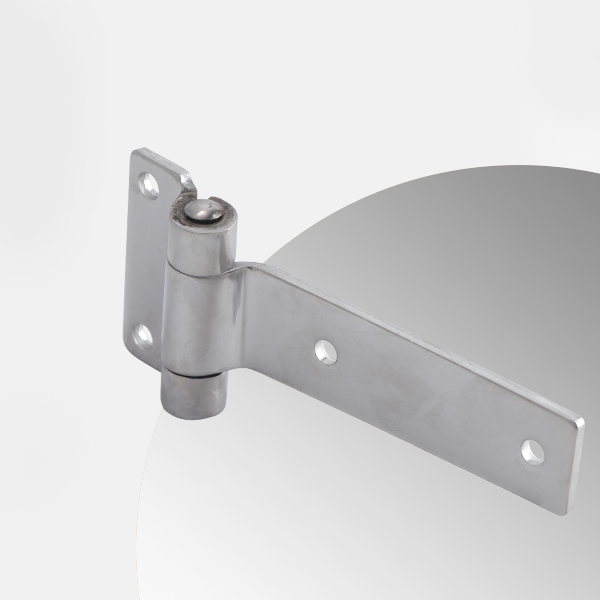
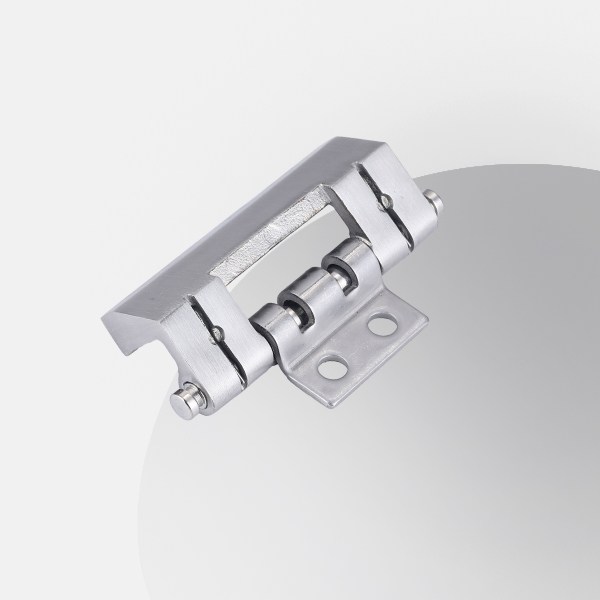
Before inquiring an industrial hinge manufacturer, first clarify the required product type. Control box hinges suit small distribution boxes and instrument cabinets with lower load requirements. Electrical enclosure hinges are used for outdoor electrical equipment and require waterproof and dustproof functions. NEMA-rated enclosure hinges comply with North American electrical standards with clear protection ratings.
Confirm whether the installation environment requires special materials. Indoor dry environments can use carbon steel with hot-dip galvanizing. Outdoor coastal environments require stainless steel cabinet hinges in 304 or 316 material. Extreme heavy-load scenarios require forged steel material with single-unit load capacity over 500 kilograms.
Clarify installation method preferences: welded, bolted, or removable. Welded types offer strong anti-theft performance for outdoor fixed equipment. Bolted types facilitate disassembly and maintenance. Removable types suit frequent inspection scenarios. Different installation methods affect processing procedures and quotations.
1.2 Compile Complete Dimensional Parameters
Inquiry documents should include complete dimensional parameters. Leaf length, width, and thickness must be precise to 0.5 millimeters. Pivot shaft diameter and mounting hole spacing must be clearly marked. Industrial cabinet hinges hole spacing must match existing cabinets to avoid installation failure.
Provide mounting hole quantity and thread specifications. M6 or M8 threads must be specified. Special hole types such as slotted holes require detailed drawings. 3D models or 2D drawings can significantly reduce communication errors.
Specify dimensional tolerance requirements. General dimensional tolerances are plus or minus 0.5 millimeters, with critical fit dimensions at plus or minus 0.2 millimeters. Heavy-duty cabinet hinges pivot shaft to bushing clearance must be controlled between 0.05 and 0.15 millimeters.
1.3 Surface Treatment and Special Function Requirements
Clarify surface treatment types: hot-dip galvanizing, powder coating, or stainless steel passivation. Hot-dip galvanized coating thickness should not be less than 70 micrometers. Powder coating colors require color samples or RAL numbers. Stainless steel surfaces require brushed or mirror-polished specifications.
Special function requirements must be described in detail in the inquiry document. Damping cushioning functions require specified cushioning angles and speeds. Position-limiting locking functions require specified locking angles. Smart monitoring functions require specified sensor types and communication protocols.
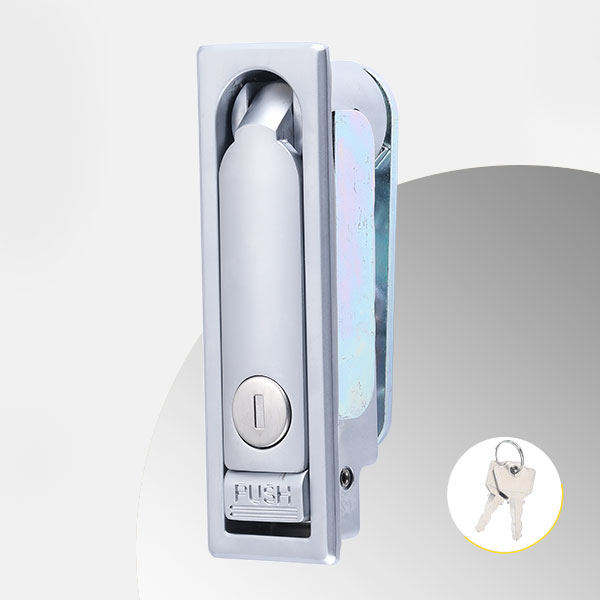
Clarify certification requirements: CE, UL, RoHS, REACH, or GB/T 38737. EU export requires CE certification. North American export requires UL certification. Industrial enclosure locks can be quoted together with hinges for compatible integration.
2. Standardized Inquiry Document Preparation and Submission
2.1 Core Elements of an Inquiry Document
A standardized inquiry document includes product name, specifications, quantity, material, and surface treatment requirements. Product names should uniformly use "industrial hinge manufacturer" industry terminology. Specifications should include dimensional parameters and installation methods.
Quantities must specify total procurement volume and phased delivery plans. First trial order quantities are typically 5 to 10 percent of the bulk volume. Bulk procurement of 500 units or more qualifies for discounts, with larger discounts for 1,000 units or more.
Delivery lead time requirements must specify the latest arrival date. Standard product lead times are 15 to 30 days. Custom products require 45 to 60 days. Urgent orders must specify acceptable expedite fee ranges.
2.2 Additional Documents for Inquiry
Attach detailed drawings or 3D models to the inquiry document. 2D drawings should mark all dimensions and tolerances. 3D models can accelerate the manufacturer's process assessment speed. When drawings are unavailable, provide clear photos with dimension annotations.
Attach reference sample photos or physical samples. Reference samples help manufacturers accurately understand requirements. The industrial hinge manufacturer can perform reverse engineering based on samples.
Attach a certification requirements list. Export products require certification requirements for the target market. CE certification must comply with the Machinery Directive and Low Voltage Directive. UL certification follows UL 294 door hardware standards.
2.3 Inquiry Submission and Follow-Up
Submit inquiry documents to three or more industrial hinge manufacturers via email or B2B platforms. Email subjects should clearly state "inquiry" and product type. Email bodies should briefly explain project background and expected delivery dates.
B2B platform inquiries should select Gold Suppliers. Platform inquiries can reach multiple manufacturers simultaneously for rapid quotation acquisition. Confirm whether manufacturers received the inquiry within 24 hours.
Follow up on quotation progress 3 to 5 days after the inquiry. Manufacturers need time to calculate costs and schedule production. Timely responses to manufacturer technical questions can accelerate the quotation process.
3. Quotation Analysis and Comparison
3.1 Quotation Completeness and Reasonableness
After receiving quotations, first verify completeness. Quotations should include unit price, mold fees, sample fees, and packaging costs. Mold fees are one-time costs that must be itemized separately. Stainless steel cabinet hinge mold fees are typically higher than carbon steel products.
Compare quotations from three or more manufacturers and analyze price differences. Excessively low prices may indicate material downgrading or process compression. Within a reasonable price range, choose the supplier with the best technical solution.
Confirm quotation validity periods, typically 30 days. During periods of significant raw material price fluctuations, quotation validity periods shorten to 15 days. Clarify whether quotations include tax and transportation costs.
3.2 Cost Composition Analysis and Negotiation Strategy
Analyze the cost composition of quotations: material costs account for 40 to 50 percent, processing fees 20 to 30 percent, surface treatment costs 10 to 15 percent, and overhead and profit 15 to 20 percent.
Negotiation strategies are based on procurement volume and long-term cooperation prospects. Orders of 500 units or more can request 5 percent discounts, and 1,000 units or more can request 10 percent. Signing three-year framework agreements secures more favorable pricing and production priority.
Compare cost differences between different materials and processes. Stainless steel cabinet hinges cost two to three times more than carbon steel. Special functions such as damping and smart monitoring increase costs by 20 to 50 percent.
3.3 Delivery and Payment Terms Comparison
Compare delivery lead time commitments from each manufacturer. Standard products 15 to 30 days. Custom products 45 to 60 days. Overly short lead times may indicate compressed essential processes affecting quality. Overly long lead times may indicate insufficient capacity.
We recommend a 3-3-3-1 payment structure: 30 percent deposit, 30 percent before shipment, 30 percent after receipt and acceptance, and 10 percent after the warranty period.
Warranty periods should be no less than three years, with five years being better. Specify warranty response time and handling procedures. Unified inquiry of industrial enclosure locks and hinges can reduce overall procurement costs.
4. Supplier Evaluation and Decision After Inquiry
4.1 Sample Testing and Quality Verification
Select two to three industrial hinge manufacturers with the best quotations and request samples. Samples must use the same materials and processes as mass production products. Sample testing applies load up to 1.5 times the rated value, with deformation not exceeding 0.5 millimeters considered passing.
Salt spray testing follows application environment requirements. Indoor products require not less than 72 hours, outdoor products not less than 300 hours. 304 stainless steel requires not less than 500 hours, and 316 stainless steel exceeds 1,000 hours.
After samples pass testing, seal and retain them as the bulk acceptance benchmark. Keep test reports and sample products. Manufacturers with non-conforming samples should be eliminated immediately.
4.2 Supplier Qualification Verification
Verify the manufacturer's ISO9001, ISO14001, and ISO45001 system certifications. Certificates must be valid and cover the "hinge manufacturing" category. Export products require CE or UL certification. Domestic products must comply with GB/T 38737.
Evaluate the manufacturer's production equipment and testing capabilities. Factories with CNC machining centers and in-house testing laboratories offer more stable quality. The heavy-duty industrial hinge factory's capacity must meet procurement volume and delivery requirements.
Understand the manufacturer's customer reputation and industry experience. Factories with over three years of history and stable customers are more reliable. Obtain real user feedback through LinkedIn or industry forums.
4.3 Contract Signing and Order Execution
Contracts must clearly specify product specifications, material grades, quantity, and acceptance standards. Technical appendices should describe dimensional tolerances and performance indicators in detail. Warranty terms should be no less than three years, with payment using the 3-3-3-1 structure.
After signing, request the manufacturer to provide a production schedule. Key milestones such as heat treatment and surface treatment require process records. For large orders, arrange on-site inspection or third-party inspection.
For first orders, we recommend placing trial orders first to verify batch consistency. After trial orders pass, formal bulk procurement can proceed. Industrial cabinet hinge and NEMA-rated enclosure hinge inquiry processes are completely identical.
5. Summary: Requesting a Quote from an Industrial Hinge Manufacturer
Requesting a quote from an industrial hinge manufacturer requires following four steps: technical preparation, standardized inquiry, quotation analysis, and supplier evaluation.
Technical Preparation: Clarify product type (control box hinges, electrical enclosure hinges, or NEMA-rated enclosure hinges). Compile complete dimensional parameters including leaf length, width, thickness, pivot shaft diameter, and mounting hole spacing. Specify surface treatment types and special function requirements.
Standardized Inquiry:Prepare inquiry documents containing product specifications, quantity, material, and certification requirements. Attach detailed drawings or 3D models. Submit inquiries to three or more manufacturers via email or B2B platforms. Confirm receipt within 24 hours and follow up on quotation progress within 3 to 5 days.
Quotation Analysis: Verify quotation completeness including unit price, mold fees, and packaging costs. Analyze cost composition with material costs accounting for 40 to 50 percent. Negotiate based on procurement volume, with 5 percent discounts for 500 units or more. Compare delivery and payment terms, with the 3-3-3-1 payment structure being optimal.
Supplier Evaluation: Request samples for load and salt spray testing verification. Sample testing at 1.5 times rated value with deformation not exceeding 0.5 millimeters is passing. Verify ISO9001 and other system certifications plus CE or UL certification. Contracts should specify warranty terms of no less than three years.
Stainless steel cabinet hinges and heavy-duty cabinet hinges inquiry processes are completely identical to those for industrial cabinet hinges. Industrial enclosure locks can be quoted together with hinges for compatible integration. Establishing long-term cooperation with a reliable industrial hinge manufacturer provides stable supply and favorable pricing.