Choosing an industrial door hinge for your door requires evaluating four key factors: load capacity, material, installation method, and environment. This article provides a complete selection framework. Whether you need a standard heavy-duty hinge or a custom solution, these criteria will guide your decision.
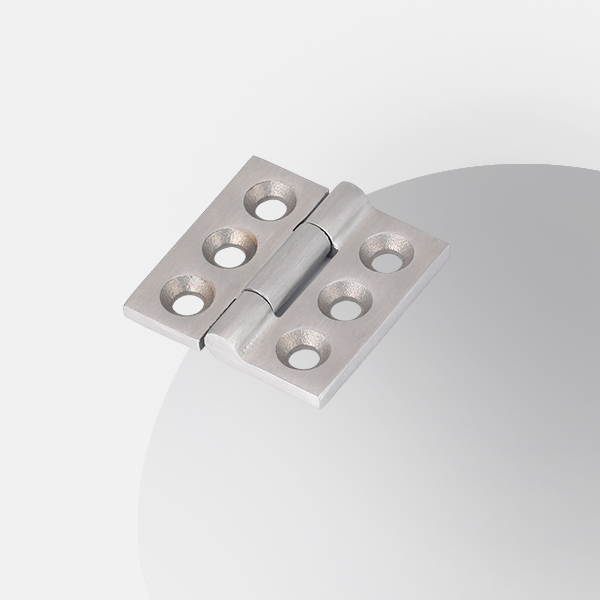
1. Assessing Door Weight and Load Requirements for Industrial Door Hinges
1.1 Precisely Measuring Total Door Panel Weight
Before selecting an industrial door hinge, first precisely measure the door panel's own weight and add all additional loads. Door panel weight includes the panel itself and all mounted accessories. Additional loads include handles, viewing windows, locks, and environmental factors such as wind pressure. Use an electronic crane scale for weighing, taking three measurements and averaging them.
When direct weighing is not possible, estimate weight by measuring door panel volume and multiplying by material density. Steel density is 7.85 grams per cubic centimeter, aluminum is approximately 2.7 grams. Composite door panels require layer-by-layer calculation. Add a 5 to 10 percent margin to the estimate to compensate for errors.
Aggregate all additional loads and add them to the door panel's own weight to determine the total load value. Total load is the final baseline for selecting an industrial door hinge. Missing any additional load can lead to selection errors.
1.2 Selecting with a Threefold Safety Factor
The recommended safety factor for industrial door hinge selection is three times. A 100-kilogram door panel requires a 300-kilogram rated product to ensure long-term sag-free performance. Heavy-duty industrial hinges have clearly marked load ratings for precise selection.
Dynamic load is equally critical and should not be less than 70 percent of static load. Dynamic load simulates impact forces during opening and closing. For high-frequency scenarios, increase the safety factor to four times. Outdoor doors also require a higher safety factor due to wind loads.
For multiple-hinge installation, total load capacity is calculated at 80 percent of the sum of individual ratings. Load sharing between two hinges must consider an unevenness factor of 1.2 to 1.5. Load selection for industrial cabinet hinges should leave an ample margin.
1.3 Hinge Quantity and Spacing Planning
Standard door panels use two units. For heights exceeding 2.5 meters, we recommend three units. With three units, the middle hinge bears torsional loads, improving stability by 30 percent. Hinge spacing should be at one-third and two-thirds of the door panel height.
For high-frequency opening scenarios, increase the number of hinges to distribute the load. Four units improve load efficiency by approximately 30 percent compared to two. Beyond four units, marginal benefits diminish, so additional units are not recommended.
For door panels exceeding 1.2 meters in width, consider adding a middle hinge for torsion resistance. Extra-wide doors tend to twist during opening. Before installation, use a laser level to establish the vertical hinge line, ensuring verticality error does not exceed 1 millimeter.
2. Material Selection by Environment for Industrial Door Hinges
2.1 Indoor Dry Environments Choose Carbon Steel
For indoor dry environments, industrial door hinges made of carbon steel should be prioritized for the best cost-effectiveness. Carbon steel with hot-dip galvanizing or powder coating meets rust protection requirements. Hot-dip galvanized coating thickness is 70 micrometers, with salt spray testing of 300 hours or more. Standard power distribution and warehouse doors prefer carbon steel material.
Carbon steel industrial door hinges offer lower cost than any other material option. Leaf thickness of 4 to 6 millimeters meets standard industrial requirements. After quenching and tempering, overall mechanical properties improve by more than 30 percent.
Carbon steel offers good machinability for stamping, welding, and drilling. The industrial door hinge factory has mature processing capabilities for carbon steel, resulting in short lead times. Indoor ambient temperature with no corrosion risk is the ideal scenario for carbon steel.
2.2 Humid Outdoor Environments Choose Stainless Steel
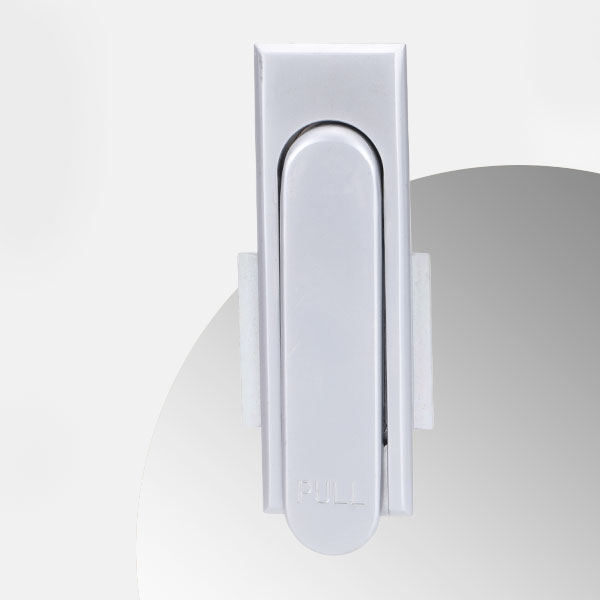
Humid outdoor environments require 304 stainless steel industrial door hinges. Upgrade to 316 stainless steel for coastal high-corrosion environments. Stainless steel cabinet hinges achieve 500 to 1,000 hours in salt spray testing with no coating maintenance required, remaining rust-free for ten years.
Stainless steel industrial door hinges contain at least 18 percent chromium, forming a dense oxide film on the surface. 316 stainless steel, with added molybdenum, offers stronger resistance to chloride corrosion. The silver-white metallic luster requires no additional coating and offers better toughness and impact resistance.
Stainless steel industrial door hinges have slightly lower strength than carbon steel, with approximately 10 percent lower load capacity at the same specifications. Extreme heavy-load scenarios require larger stainless steel products. Food and pharmaceutical applications prioritize stainless steel for its smooth, grooveless surfaces that facilitate cleaning.
2.3 Extreme Heavy-Load Environments Choose Forged Steel
Mining machinery, port equipment, and large press guard doors require forged steel heavy-duty industrial hinges. Forged steel is manufactured through high-temperature forging, with strength far exceeding cast products. Single-unit load capacity is 500 to 1,000 kilograms, with service life exceeding 15 years.
Forged steel heavy-duty cabinet hinges have leaf thickness of 8 millimeters or more, with pivot shaft diameters of 25 millimeters. Impact resistance is more than twice that of carbon steel. Forged steel with welded installation forms the most secure connection.
Forged steel industrial door hinges cost three to five times more than carbon steel, but are the only reliable choice in extreme conditions. Request material test reports from the industrial door hinge factory to confirm grades. Over the long term, forged steel offers the lowest cost per unit of time.
3. Installation Method and Function Selection for Industrial Door Hinges
3.1 Welded vs. Bolted Selection
Welded industrial door hinges suit high-security applications. After welding, there are no removable external parts, offering extremely strong pry resistance. Welded types have no bolt loosening risk, maintaining stable clearance over long-term use. Suitable for outdoor cabinets and charging stations.
Bolted industrial door hinges are easy to disassemble and replace, suitable for vibration environments. Bolts can be retightened when loose. Use Grade 8.8 high-strength bolts with thread-locking compound to prevent loosening. Quarterly torque checks prevent loosening.
Removable industrial door hinges facilitate frequent door panel removal for cleaning and inspection scenarios. Load capacity is 10 to 15 percent lower than welded types. Allow extra margin during selection to ensure safe operation.
3.2 Adjustable Hinges Application Scenarios
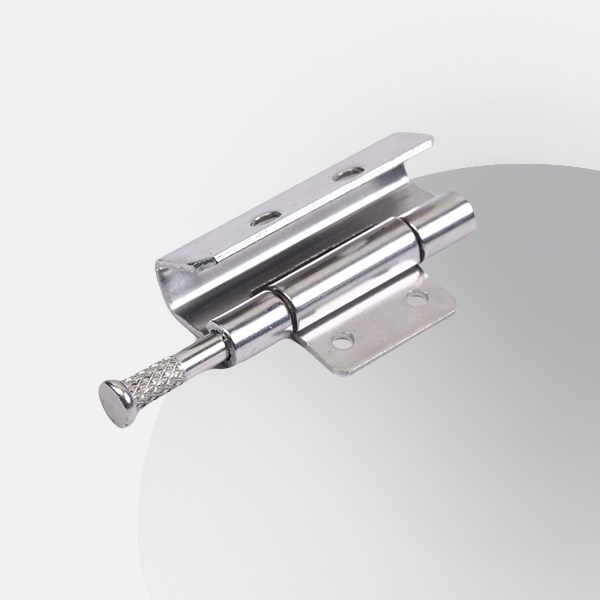
Adjustable hinges suit door frame deformation or old cabinet retrofit projects. Three-dimensional adjustment range is 5 millimeters front-to-back, 3 millimeters left-to-right, and 3 millimeters up-and-down. Compensate for installation deviations without re-drilling, significantly reducing rework hours.
The 2026 new model adds a quick-lock mechanism for one-click locking after adjustment. Adjustment screws are chrome-plated to resist wear from repeated adjustment. Cost is 20 to 40 percent higher, but offers excellent value in precision assembly.
Debugging time is reduced by 60 percent compared to standard types. Record adjustment positions for future maintenance reference. Old door frame retrofit projects should prioritize adjustable industrial door hinges.
3.3 Special Functional Requirements Assessment
Precision equipment doors should use industrial door hinges with damping functions. Hydraulic cushioning modules reduce closing impact vibration and protect internal instruments. Cushioning speed is adjustable, and the cost is approximately 30 percent higher than that of standard types.
Elevated maintenance doors should use position-limiting functions. Ratchet locking mechanisms at 90 or 180 degrees ensure personnel safety. The limiting mechanism has passed over 10,000 durability tests to ensure long-term reliability.
Data centers and base stations should use smart monitoring functions. Built-in load sensors monitor stress conditions in real time. Overload alerts are pushed via notifications, and cycle count statistics help plan maintenance intervals. Industrial enclosure locks can work with smart hinges to form a complete protection solution.
4. Certification Verification and Supplier Selection for Industrial Door Hinges
4.1 Quality System Certifications
Verify the industrial door hinge factory's ISO9001 Quality Management System certification. The certification scope must cover the "hinge manufacturing" category. ISO14001 Environmental Management System reflects environmental compliance levels. ISO45001 Occupational Health and Safety certification reflects management levels. Factories with all three certifications have stronger overall capabilities.
Export products require CE or UL certification. Domestic products must comply with GB/T 38737. Certification certificates must be issued by Notified Bodies or accredited laboratories. Even with low prices, be cautious when choosing suppliers with incomplete certifications.
RoHS and REACH environmental certifications are essential documents for export. Industrial enclosure locks can be purchased together with hinges to ensure complete certification matching..
4.2 Sample Testing and Quality Verification
Before bulk purchase, request samples for installation testing. Sample testing should include load application up to 1.5 times the rated value, with deformation not exceeding 0.5 millimeters considered passing. Salt spray testing should follow application environment requirements.
After samples pass testing, seal and retain them as the bulk acceptance benchmark. Keep test reports and sample products. Factories with non-conforming samples should be eliminated immediately to avoid bulk quality risks.
Material test reports and salt spray test reports must be issued by CNAS or CMA accredited laboratories. Sample models in the reports must match the procurement products. Report dates must be within one year to be valid.
4.3 Supplier Evaluation and Long-Term Cooperation
Establish an annual supplier evaluation system covering quality, delivery, price, and service. Quality carries 40 percent weight, delivery 25 percent, price 20 percent, and service 15 percent.
Factories with excellent evaluations for two consecutive years can be upgraded to strategic suppliers. Strategic partnerships provide production priority and price preferences. Sign three-year framework agreements with the industrial door hinge factory to lock in pricing and capacity.
Maintain two to three qualified supplier partnerships to diversify supply risks. Reserve spare parts at 3 to 5 percent of procurement volume. Industrial cabinet hinges and heavy-duty cabinet hinges suppliers can be managed uniformly.
5. Summary: Industrial Door Hinge Selection Framework
Choosing an industrial door hinge for your door requires systematic progress across four dimensions: load calculation, environmental assessment, installation matching, and certification verification.
Load Calculation: Precisely measure total door weight and add additional loads. Safety factor not less than three times. Standard door panels use two hinges, and three for heights exceeding 2.5 meters. Spacing should be at one-third and two-thirds of the door panel height.
Environmental Assessment: Indoor dry environments choose carbon steel with hot-dip galvanizing. Humid outdoor environments choose 304 or 316 stainless steel. Extreme heavy loads choose forged steel. Damping, position-limiting, and smart monitoring functions should be selected based on scenario requirements.
Installation Matching: Welded type offers strong anti-theft protection for fixed equipment. Bolted type facilitates maintenance for vibration environments. Adjustable type suits door frame deformation scenarios. Full welding should use segmented welding to prevent deformation. Bolted types should use diagonal cross-tightening sequence.
Certification Verification: Verify ISO9001, ISO14001, and ISO45001 certifications. Export products require CE or UL certification. Domestic products must comply with GB/T 38737. Request samples for load and salt spray testing verification.
Industrial hinges and heavy-duty industrial hinges selection principles are completely identical to those for industrial door hinges. Stainless steel cabinet hinges and heavy-duty cabinet hinges require special attention to material reports and salt spray data. Establish long-term cooperation with a reliable industrial door hinge factory to ensure stable product quality and reliable supply.