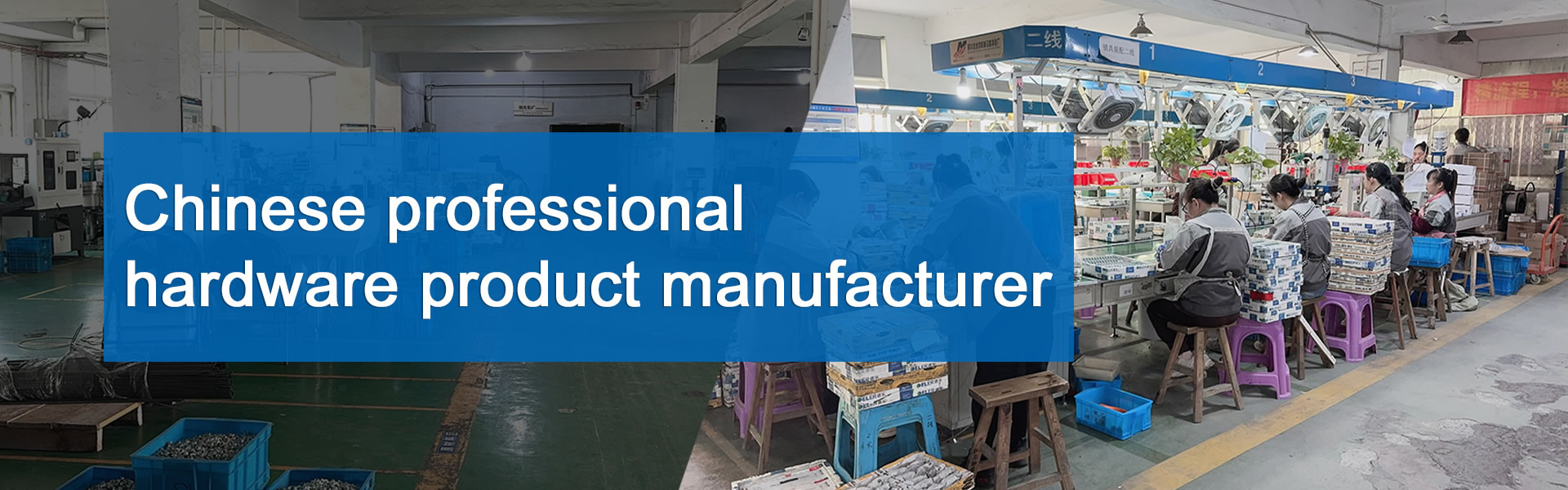
The minimum order quantity for custom industrial hinges varies by manufacturer and customization complexity. This article provides a detailed analysis of MOQ ranges for various customization scenarios. Whether you need standard heavy-duty hinges or custom solutions, understanding MOQ requirements is essential for procurement planning.
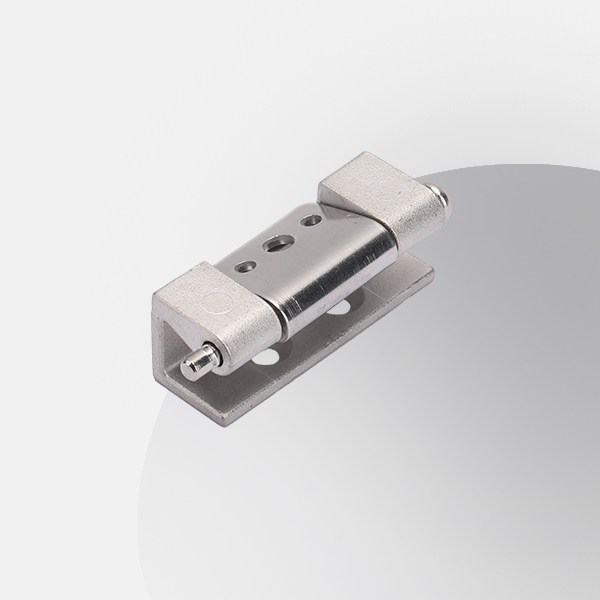
1. MOQ for Standard Customization and Simple Modifications of Industrial Hinges
1.1 Dimensional Adjustment Customization
For simple modifications involving only mounting hole spacing or leaf length adjustments, industrial hinge manufacturers typically accept lower minimum order quantities. Such customizations require no new mold development, only modifying existing molds or adjusting stamping parameters. Minimum order quantities are typically 50 to 100 units.
Hole spacing adjustments involve moving mold positioning pins with low processing difficulty. Leaf length fine-tuning is achieved through mold modification with a 3 to 5 day cycle. The MOQ for industrial door hinges in this category starts at 50 units, suitable for small and medium project procurement.
Adjusting surface treatment colors or coating types also falls under simple modifications. Powder coating color changes only require cleaning spray guns and adjusting powder, with MOQ around 100 units. Color customization for concealed hinges can be as low as 50 units.
1.2 Material Substitution Customization
Replacing carbon steel with stainless steel or vice versa constitutes material substitution customization. Material substitution does not change product structure, only replacing raw materials. Industrial hinge manufacturers typically require an MOQ of 100 to 200 units.
Stainless steel material procurement has minimum batch limits. 304 stainless steel sheet minimum order is typically 500 kilograms, sufficient to produce approximately 200 hinges. Forged steel material for heavy-duty hinges has higher MOQ, approximately 200 to 300 units.
Material upgrade customization requires re-verification of heat treatment processes. Stainless steel cabinet hinges welding processes differ from carbon steel and require re-qualification. When MOQ is below 100 units, manufacturers may charge additional process debugging fees.
1.3 Simple Function Additions
Adding thread-locking compound pre-coating or anti-loosening washers constitutes simple function additions. Such customizations do not change the hinge body structure, only adding accessories. MOQ is typically 100 to 200 units.
Pre-coated thread-locking compound requires specialized equipment and curing time. Anti-loosening washers are standard parts purchased and assembled. The function addition MOQ for heavy-duty cabinet hinges depends on the minimum purchase quantity of accessories.
Adding position-limiting blocks or simple mechanical limiting structures also falls into this category. Position-limiting blocks are machined small parts with MOQ around 100 units. Position-limiting customization for removable enclosure hinges requires confirmation of whether removal functionality is affected.
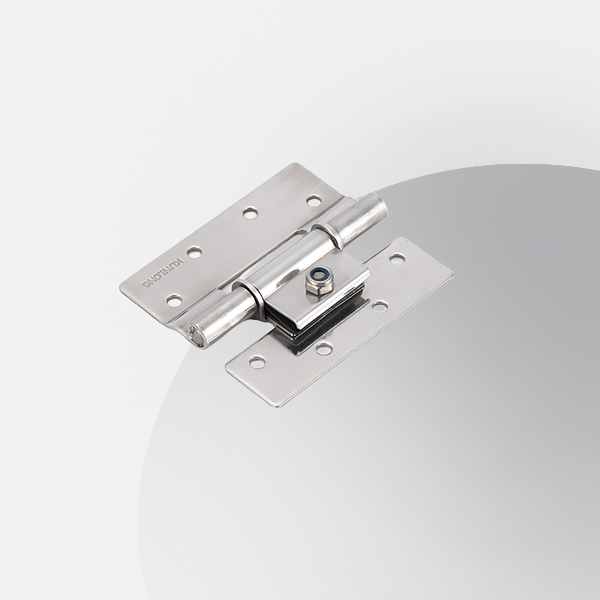
2. MOQ for New Mold Development and Structural Customization of Industrial Hinges
2.1 New Mold Development Customization
For customizations requiring new stamping molds or die-casting molds, MOQ increases significantly. Industrial hinge manufacturers typically require MOQ of 500 to 1,000 units. Mold cost amortization is the main reason for higher MOQ.
Stamping mold development costs 3,000 to 8,000 RMB, with complex molds exceeding 10,000 RMB. Die-casting mold costs are 8,000 to 20,000 RMB. Mold fees are amortized by procurement volume; larger volumes result in lower per-unit amortization. At MOQ of 500 units, per-unit mold amortization is 10 to 20 RMB.
New mold customization cycles are 45 to 60 days. Mold development takes 7 to 15 days, with trial molding and sample confirmation taking 3 to 5 days. New mold customization for industrial cabinet hinges requires advance procurement cycle planning.
2.2 Structural Change Customization
Changing the overall hinge structure such as pivot shaft position, leaf shape, or installation method constitutes structural change customization. MOQ is typically 500 to 1,000 units. Structural changes require new mold design and load performance verification.
Pivot shaft position changes affect mechanical properties and require new load testing. Leaf shape changes require new stamping molds. Installation method changes from bolted to welded require welding process adjustments. The MOQ for electrical enclosure hinges structural changes starts at 1,000 units.
Structural change customization has longer verification cycles. Load testing, fatigue testing, and salt spray testing each require 3 to 7 days. After testing passes, mass production begins, with total lead times of 60 to 90 days.
2.3 Special Materials and Special Function Customization
Customizations using special alloys such as titanium or copper alloy require MOQ of 300 to 500 units. Special material procurement cycles are long and prices are high. Industrial hinge manufacturers typically require customers to bear material procurement risks.
Special function customizations such as built-in sensors or hydraulic damping modules require MOQ of 500 to 1,000 units. Smart monitoring hinge sensor procurement has minimum batch requirements. Damping module customization requires hydraulic parameter adjustments, with MOQ around 500 units.
Explosion-proof and anti-static special treatment customization requires MOQ starting at 300 units. Special surface treatments such as Dacromet coating require dedicated production lines. The heavy-duty industrial hinge factory's special customization MOQ can reach up to 2,000 units.
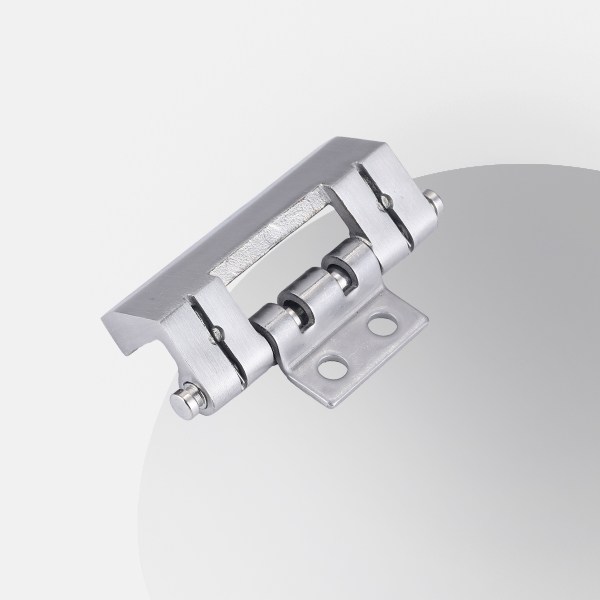
3. Key Factors Affecting MOQ for Industrial Hinges
3.1 Mold Cost Amortization
Mold costs are the core factor determining MOQ. Industrial hinge manufacturers increase MOQ to amortize mold fees to acceptable levels. A 10,000 RMB mold fee amortized over 500 units adds 20 RMB per unit. Amortized over 1,000 units adds 10 RMB per unit.
Customers can negotiate mold fee payment methods with manufacturers. One-time mold fee payment can reduce MOQ to 300 units. Amortizing mold fees into unit prices increases MOQ to 1,000 units. Mold fee payment methods for concealed hinges are flexible.
When customers own mold ownership, they can determine production batches independently. Molds stored at manufacturers require no additional mold fees for subsequent orders. MOQ can be reduced to 200 units. Mold ownership for industrial door hinges must be clearly specified in contracts.
3.2 Material Procurement Minimum Batch
Special material procurement minimum batches limit MOQ. 316 stainless steel sheet minimum order is 500 kilograms. Copper alloy bar minimum order is 100 kilograms. Titanium alloy minimum order is 50 kilograms. Material minimum orders converted to hinge quantities represent the MOQ floor.
Common materials such as carbon steel and 304 stainless steel have no procurement restrictions. Manufacturers can purchase in small batches with flexible MOQ. Standard material MOQ for stainless steel cabinet hinges can be as low as 50 units.
Material inventory status affects MOQ. Customizations using stocked materials have lower MOQ. Customizations requiring material procurement have MOQ constrained by material minimum orders. Forged steel material for heavy-duty hinges should have inventory confirmed in advance.
3.3 Production Process and Equipment Limitations
Heat treatment furnace minimum load capacity limits MOQ. Continuous heat treatment furnaces have minimum loads of 200 kilograms. Batch heat treatment furnaces have minimum loads of 50 kilograms. The heat treatment MOQ for industrial hinge manufacturers depends on furnace type.
Surface treatment production lines have minimum batch requirements. Electroplating tanks have minimum processing quantities of 100 units. Powder coating lines have minimum batches of 50 units. Dacromet coating lines have minimum batches of 200 units. Surface treatment MOQ for electrical enclosure hinges requires confirmation.
Automated assembly lines have minimum batch requirements. Automatic screw machines have minimum batches of 200 units. Automatic oiling machines have minimum batches of 100 units. Manual assembly has no minimum batch limits but lower efficiency. Assembly MOQ for removable enclosure hinges depends on automation levels.
4. MOQ Negotiation and Procurement Strategies for Industrial Hinges
4.1 MOQ Negotiation Techniques
When negotiating MOQ with industrial hinge manufacturers, emphasize long-term cooperation prospects. Committing to annual procurement volumes can reduce single-order MOQ. Framework agreements specifying annual totals with batch deliveries can reduce single-batch MOQ to 200 units.
Accepting higher unit prices in exchange for a lower MOQ. Small batch customization unit prices increase by 20 to 30 percent. Manufacturers compensate for mold and debugging costs through unit prices. Small batch customization for heavy-duty cabinet hinges can accept unit price increases.
Paying mold fees reduces MOQ. One-time full mold fee payment can reduce MOQ to 300 units. Mold fees of 3,000 to 8,000 RMB suit small batch customization projects. Mold fee payment for stainless steel cabinet hinges must be specified in contracts.
4.2 Batch Procurement and Inventory Strategies
First batch small trial orders verify market response. Trial order MOQ is 50 to 100 units. After positive market feedback, additional bulk orders follow. New product trial sales for industrial cabinet hinges adopt this strategy.
Combine multiple specifications for centralized ordering. Different specification hinges from the same project are combined for procurement, with total quantities meeting MOQ requirements. Single specification MOQ can be reduced. Electrical enclosure hinges and industrial enclosure locks can be combined for ordering.
Establish safety stock for subsequent demand. First batch orders slightly exceed actual demand, with excess as inventory. Stock products serve emergency repairs and small batch replenishment. Spare parts inventory for removable enclosure hinges is reserved at 5 percent.
4.3 Supplier Selection and Long-Term Cooperation
Choose industrial hinge manufacturers with flexible MOQ. Medium-sized specialized manufacturers have more flexible MOQ than large integrated manufacturers. Medium-sized factories accept small batch customization of 50 to 100 units. The heavy-duty industrial hinge factory's MOQ policy requires advance confirmation.
Establish long-term cooperative relationships with manufacturers. Long-term customers enjoy MOQ discounts and production priority. Annual framework agreements specify gradual MOQ reductions. Long-term cooperation for industrial cabinet hinges can reduce MOQ to 30 units.
Develop multiple suppliers to diversify risks. Different suppliers have different MOQ policies; select flexibly based on project needs. Small batch projects choose suppliers with low MOQ. Large batch projects choose suppliers with favorable pricing. For concealed hinges, maintain two to three suppliers.
5. Summary: Industrial Hinges Minimum Order Quantity Guide
The minimum order quantity for custom industrial hinges varies significantly by customization type and manufacturer policy. Purchasers must choose reasonably based on project needs.
Simple Modification Customization: Lowest MOQ, with dimensional adjustments and material substitutions at 50 to 200 units. Such customizations require no new molds, only modifying existing molds or replacing raw materials, suitable for small and medium batch projects.
New Mold Development Customization: MOQ of 500 to 1,000 units. Mold fees of 3,000 to 10,000 RMB are amortized over procurement volume; larger volumes result in lower per-unit costs. Structural change customization also requires 500 to 1,000 units, with load and fatigue performance re-verification.
Special Materials and Functions: MOQ of 300 to 1,000 units. Titanium alloy and copper alloy are constrained by material minimum orders. Smart monitoring and damping modules are constrained by sensor procurement batches.
Key Factors: Include mold cost amortization, material procurement minimum batches, and production process limitations. Heat treatment furnace minimum loads and surface treatment line minimum batches both affect MOQ.
Negotiation: MOQ reductions can be achieved through long-term cooperation commitments, accepting unit price increases, or paying mold fees. Batch procurement and combined orders are also effective strategies. Choosing medium-sized manufacturers with flexible MOQ and establishing long-term cooperation provides MOQ discounts and production priority.
Industrial door hinges and concealed hinges MOQ policies are consistent with standard hinges. Special material MOQ for stainless steel cabinet hinges and heavy-duty hinges requires advance confirmation. Establish long-term cooperation with a reliable heavy-duty industrial hinge factory to obtain MOQ reductions to 30 to 50 units.