Understanding the differences between heavy-duty hinges and standard hinges is critical for ensuring safety, longevity, and cost-efficiency in industrial and commercial applications. While both serve the basic function of connecting two surfaces, their performance, materials, and ideal use cases are worlds apart. This guide provides a comprehensive comparison to help procurement professionals and engineers make the right selection.
1. Load Capacity and Structural Design
1.1 Rated Load Range Comparison
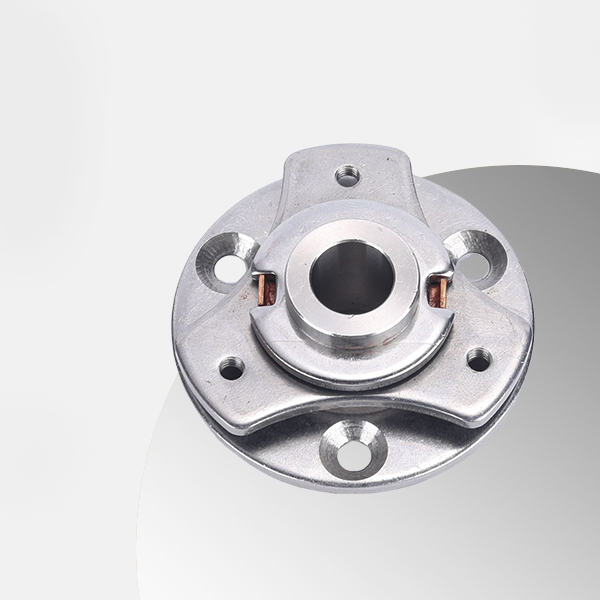
Standard models are typically rated for 20 to 80 kilograms per hinge, featuring leaf thicknesses of 2 to 3 millimeters. In contrast, Industrial-grade variants start at a 200-kilogram rating, with leaf thicknesses of at least 6 millimeters. The former suits lightweight door panels, while the latter is essential for industrial cabinets and large gates.
Furthermore, the pivot shaft diameters differ significantly. Standard versions use 6 to 10 mm ordinary carbon steel pins, whereas robust alternatives employ 16 to 25 mm hardened alloy steel. Engineering data shows that every 5-millimeter increase in pin diameter roughly doubles the load capacity.
Under updated 2026 global standards, the entry-level rating for a robust hinge is set at 200 kilograms. Standard versions lack such grading, making selection arbitrary. In comparison, industrial-grade products have clearly marked load ratings for precise engineering choices.
1.2 Fatigue Life and Durability
Standard products typically offer an opening cycle life of 10,000 to 30,000 cycles, with gaps increasing rapidly. Heavy-duty designs, however, provide a life of 50,000 to 100,000 cycles with minimal wear. For high-frequency use, such as factory automation or high-traffic doors, selecting a more durable option is non-negotiable; standard ones will fail prematurely.
Precision is another differentiator. The clearance between the pin and bushing in standard models is 0.2 to 0.5 millimeters, indicating low fit precision. Industrial units control this clearance between 0.05 and 0.15 millimeters, ensuring long-term door alignment.
After two years of use, standard hinges show obvious door sag. Heavy-duty counterparts maintain their initial clearance even after five years. This durability gap is a core reason for the price difference between the two categories.
1.3 Safety Factor and Application Boundaries
Standard hinges typically have a safety factor of 1 to 1.5 times, providing little margin for error. Their heavy-duty equivalents offer a factor of 3 to 4 times, ensuring stability under impact loads. Standard versions deform immediately when overloaded, while the other category remains stable.
Regarding environment, standard options are not suitable for outdoor or corrosive environments and lack anti-rust design. Robust models offer multiple corrosion protection options, including hot-dip galvanizing and powder coating. This environmental adaptability defines their application boundaries.
Additionally, standard hinges require complete replacement when damaged, while rugged alternatives have replaceable wear parts like bushings and bolts, positively affecting long-term maintenance costs.
2. Material Selection and Surface Treatment
2.1 Base Material Grade and Heat Treatment
Standard hinges typically use Q195 or Q235 cold-rolled steel without heat treatment. Heavy-duty products use 45# steel or 40Cr alloy steel, which are quenched and tempered. The strength of 40Cr after heat treatment is more than double that of Q235.
The pivot shafts of standard models are not quenched, resulting in a surface hardness of only HRC 15 to 20. Conversely, heavy-duty pins are quenched and low-temperature tempered, reaching a hardness of HRC 40 to 45. This hardness directly determines wear life.
Furthermore, standard hinges use ordinary iron-based powder metallurgy bushings with low oil content. High-performance options utilize self-lubricating materials like bronze or engineering plastics. The wear rate of bronze bushings is approximately one-third that of iron-based counterparts.
2.2 Surface Treatment and Corrosion Protection
Standard hinges usually have ordinary electro-galvanized or painted surfaces, with salt spray resistance of 24 to 72 hours. Heavy-duty hinges use hot-dip galvanizing or powder electrostatic spraying, achieving 300 to 1,000 hours of salt spray resistance. The thickness of a hot-dip galvanized coating is at least three times greater than that of an electro-galvanized coating.
Coating adhesion also differs. Standard versions have poor adhesion and rust quickly after scratching. Industrial versions utilize high-temperature cured powder coating, improving adhesion by 40%. In outdoor environments, standard hinges rust within six months, while the others last ten years without rusting.
Standard hinges have no salt spray testing requirements and do not provide reports. Suppliers of high-quality products provide complete salt spray test reports, which are essential for coastal applications.
2.3 Environmental and Compliance Materials
Standard hinges have less strict RoHS and REACH compliance requirements and are often produced for the domestic market. Export-oriented models must provide RoHS and REACH test reports. Environmental compliance is a necessary condition for entering international markets.
Standard hinges may contain hazardous substances like lead in coatings. Reliable alternatives use lead-free electroplating and chromium-free passivation processes. These restrictions are a hard requirement for large project procurement.
Factories producing high-quality hinges have established complete material traceability systems. Standard hinge factories often have weak traceability, affecting product quality stability.
3. Application Scenarios and Economic Benefits
3.1 Scenario Matching Determines Selection
Indoor lightweight doors and household cabinets are suitable for standard hinges. Industrial cabinets, power distribution boxes, and heavy gates require industrial-grade hinges. Incorrect selection leads to door sag, equipment damage, and safety accidents.
Doors opened more than 20 times per day necessitate high-cycle hinges. Standard versions fail within months in such scenarios. The 50,000-cycle life of these industrial options meets more than ten years of usage requirements.
Outdoor base stations and coastal equipment require stainless steel or zinc-aluminum-magnesium coated products. Standard hinges fail within six months outdoors. The application environment determines the material and protection level.
3.2 Total Cost of Ownership (TCO) Analysis
Standard hinges cost 15 to 30 RMB per unit but may require replacement every one to two years. Heavy-duty hinges cost 80 to 300 RMB per unit, with a service life of over ten years. In the long term, the average annual cost of the latter is actually lower.
Standard hinge failures lead to door sag, seal failure, and equipment damage. Downtime losses often far exceed the price of the hardware itself. The reliability of industrial hinges avoids these unplanned costs.
When procuring for industrial cabinets, calculate the five-year TCO: standard hinges (including replacement labor) cost approximately 500 RMB; heavy-duty alternatives (including initial installation) cost approximately 200 RMB. The cost-performance advantage in industrial scenarios is clear.
3.3 Procurement Quantity and Supplier Selection
For small batches, purchases can be made from hardware stores or platforms. For large projects, directly contact specialized manufacturers. Direct factory prices are 20 to 30 percent lower than intermediary prices.
For custom specifications, prioritize factories with design capabilities. For standard sizes, request quotations from multiple suppliers for comparison. Long-term cooperation can be secured through framework agreements.
Before ordering, request samples for installation testing. Place bulk orders only after samples pass inspection to avoid quality issues. Direct factory relationships provide better technical support and warranty service.
4. Certification, Warranty, and Long-Term Strategy
4.1 Certification Requirements
Export products require CE Marking (under EU Regulation 2023/1230) or UL certification, which reputable suppliers already have. Standard hinge factories often lack these credentials and cannot be used for international projects.
Heavy-duty units comply with the GB/T 38737 national standard, which requires a load capacity not less than 200 kg. Standard versions have no corresponding standard. This compliance is a threshold for domestic bidding.
For environmental claims, credible factories have established RoHS systems. Request complete certification documents and test reports. Suppliers with incomplete certifications should be approached with caution.
4.2 Warranty Terms
Standard hinges typically carry a one-year warranty for manufacturing defects only. Industrial models come with a three to five-year warranty covering load capacity degradation and corrosion resistance. This difference reflects the manufacturer's confidence.
Warranty terms for the higher-quality units specify replacement criteria for load degradation. If capacity drops by more than 20% within three years, the unit is replaced. This clear commitment is proof of durability.
Regarding warranty response times, standard hinge factories often respond slowly. Dedicated after-sales channels exist for engineered hinges, ensuring rapid support and project continuity.
4.3 Long-Term Procurement Strategy
For new projects, prioritize sturdy hinges despite the higher initial investment. For retrofits, evaluate existing conditions and upgrade when failures occur. New projects can avoid future hassles by choosing the better option initially.
Establish an approved supplier list, maintaining cooperation with two to three reputable manufacturers. Diversify risk and ensure stable delivery. Regularly evaluate performance.
Sign long-term framework agreements (3–5 years) to lock in pricing. and capacity. Include price adjustment mechanisms for raw materials. Long-term cooperation ensures manufacturers invest capacity and support in your projects.
5. Summary
Choose Standard Hinges for non-critical indoor residential applications. Always choose Heavy-Duty Hinges for industrial cabinets, outdoor power equipment,
heavy gates, and coastal environments. Source directly from qualified factories with CE, UL, or GB/T certification. While the upfront cost is higher, the 5-year TCO and reliability of heavy-duty models deliver superior long-term value and operational safety.