Before purchasing heavy-duty hinges, you need to understand key information including load capacity, material, certification, and supplier. This article outlines six essential points you must know.
1. Load Capacity and Specification Parameters to Clarify Before Buying Heavy-Duty Hinges
1.1 Door Panel Weight and Load Rating
Before purchasing industrial hinges, first precisely measure the door panel's own weight and add additional loads. Door panel weight includes the panel itself and all mounted accessories. Additional loads include instruments, heat sinks, cables, and environmental factors such as wind loads and snow accumulation.
The load rating should be at least three times the total door panel weight. For a 100-kilogram door panel, select a 300-kilogram rated product to ensure long-term sag-free performance. The 2026 new standard has raised the entry-level heavy-duty hinges load capacity to 200 kilograms.
Dynamic load data is equally critical and should not be less than 70 percent of static values. Dynamic load simulates impact forces during opening and closing. Ignoring dynamic load is a common selection mistake.
1.2 Dimension and Installation Method Confirmation
Measure key dimensions including mounting hole spacing, leaf length, and pivot shaft diameter. Mismatched hole spacing prevents installation or requires re-drilling. The hole spacing of newly purchased industrial cabinet hinges must match the original product.
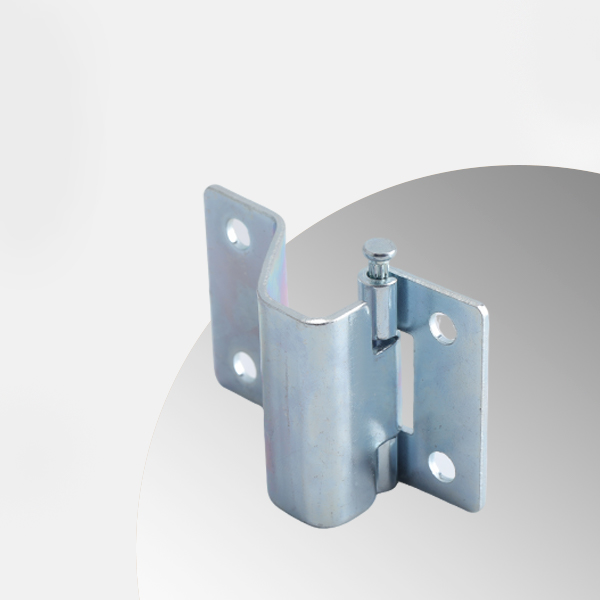
Confirm the installation method: welded type suits high-security scenarios, bolted type facilitates maintenance, and removable type suits frequent door panel removal. Adjustable hinges suit old equipment with deformed door frames.
Door panel thickness and material affect installation method selection. Thin door panels suit bolted type, while thick panels can be welded or bolted. Providing complete dimensional drawings to the heavy-duty hinges factory ensures precise matching.
1.3 Quantity and Layout Planning
Standard door panels use two hinges. For heights exceeding 2.5 meters, we recommend three hinges. With three hinges, the middle hinge bears torsional loads, enhancing stability. Hinge spacing should be at one-third and two-thirds of the door panel height.
For high-frequency opening scenarios, increase the number of hinges to distribute the load. Four hinges improve load efficiency by approximately 30 percent compared to two. However, beyond four hinges, marginal benefits diminish, so additional hinges are not recommended.
Purchasing in pairs and standardizing specifications facilitates spare parts management. Identical specifications reduce inventory types. Bulk purchases qualify for negotiated discounts.
2. Material and Surface Treatment to Understand Before Buying
2.1 Carbon Steel vs. Stainless Steel
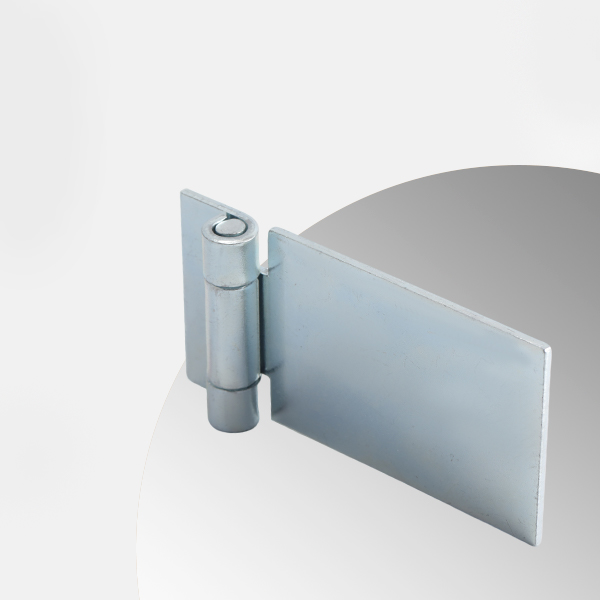
Carbon steel heavy-duty cabinet hinges offer lower cost and high strength, suitable for indoor dry environments. However, carbon steel requires coating protection and rusts easily once the coating is damaged. Hot-dip galvanized carbon steel achieves 300 hours or more in salt spray testing.
Stainless steel heavy-duty cabinet hinges offer excellent corrosion resistance, suitable for outdoor, coastal, and humid environments. 304 stainless steel achieves over 500 hours in salt spray testing, while 316 stainless steel exceeds 1,000 hours. Stainless steel requires no coating maintenance and has lower long-term costs.
Heavy-duty industrial hinges in forged steel offer the highest strength, suitable for extreme heavy-load scenarios such as mining and ports. Leaf thickness exceeds 8 millimeters, with single-hinge load capacity over 500 kilograms. Price is three to five times that of carbon steel, but service life exceeds 15 years.
2.2 Coating and Corrosion Protection Processes
Hot-dip galvanized coating thickness should not be less than 70 micrometers, offering strong adhesion and cathodic protection. Powder electrostatic spray coating thickness is 60 to 100 micrometers, with customizable colors. Zinc-aluminum-magnesium coating is a new 2026 technology, achieving over 1,000 hours in salt spray testing.
Coating adhesion testing is key to evaluating surface treatment quality. In cross-cut testing, coating detachment area below 5 percent is considered passing. Welded hinges require separate anti-rust paint application at weld seams.
For outdoor environments, choose zinc-aluminum-magnesium coating or stainless steel material. If the coating is scratched, apply anti-rust paint promptly. In corrosive environments, do not choose ordinary carbon steel, even with coating protection, as long-term durability is insufficient.
2.3 Special Functional Requirements Assessment
Damping functions suit precision equipment doors, reducing closing impact. Position-limiting functions suit elevated maintenance work, ensuring personnel safety. Smart monitoring functions suit data centers and base stations, enabling predictive maintenance.
Explosion-proof and anti-static scenarios require copper alloy or specially treated stainless steel. Food and pharmaceutical cleanroom scenarios require food-grade grease and smooth surfaces. Special functions increase costs by 20 to 50 percent.
Functional requirements should be clearly defined in advance and included in the technical specification sheet. This avoids discovering insufficient or excessive functionality after purchase. Consult the heavy-duty hinges factory about feasibility and costs.
3. Certification and Quality Standards to Verify Before Buying
3.1 Quality Management System Certifications
ISO9001 Quality Management System is the basic threshold for heavy-duty hinges factories. This certification covers raw material incoming inspection, process control, and finished product outgoing inspection. The certificate must be valid and cover the "hinge manufacturing" category.
ISO14001 Environmental Management System certification reflects the factory's environmental compliance level. Products exported to the EU must provide ISO14001 certificates. Factories with well-managed environmental systems have more stable production.
ISO45001 Occupational Health and Safety certification is a new recommended certification for 2026. Factories with all three ISO certifications demonstrate stronger overall management capabilities. Before purchase, request copies of all three certificates from the heavy-duty hinges factory.
3.2 Product Safety Certifications
For EU export, Requires CE Marking under the updated Machinery Regulation (EU) 2023/1230 and Low Voltage Directives. CE certification includes load testing and durability testing. For North American export, UL certification is required, based on UL 294 door hardware safety standards.
For the domestic China market, compliance with GB/T 38737 standard is required. The 2026 new national standard requires single-hinge load capacity not less than 200 kilograms. After 50,000 opening/closing cycles, deformation must be less than 0.5 millimeters.
Certification certificates and test reports are both essential. The sample model must match the certificate. Incomplete certifications risk customs detention and project disqualification.
3.3 Environmental Material Certifications
The RoHS Directive restricts ten hazardous substances including lead, mercury, and cadmium. Export to the EU requires RoHS test reports. In 2026, four new phthalate restrictions are added, with special attention needed for sealing rings and lubricating grease.
The REACH Regulation increases SVHC substances to 240 items. Content exceeding 0.1 percent requires notification to the European Chemicals Agency. Before purchase, request REACH compliance declarations from the heavy-duty hinges factory.
ISO 14067 Carbon Footprint certification is an emerging export requirement. It accounts for full-chain carbon emissions from raw materials to factory gate. Factories with carbon footprint certification are more competitive in international markets.
4. Supplier Evaluation and Service Assessment Before Buying
4.1 Supplier Qualifications and Reputation
Verify the factory's business license and operating history. Over three years of history is more reliable. Review the factory's customer list and industry reputation. Obtain real user feedback through LinkedIn or industry forums.
Evaluate the factory's production equipment and testing capabilities. Factories with CNC machining centers and in-house laboratories offer more stable quality. Testing equipment includes hardness testers, tensile testing machines, and salt spray test chambers.
The factory's custom capability and engineering team size determine response speed for special requirements. Factories with design teams of five or more members can produce drawings and prototypes quickly. Ask about past custom case studies; similar project experience is more valuable.
4.2 Sample Testing and Verification
Before bulk purchase, request samples for installation testing. Samples must use the same material and processes as mass production products. Installation testing includes opening/closing smoothness and load capacity verification.
Sample testing should include load application up to 1.5 times the rated value, with deformation not exceeding 0.5 millimeters considered passing. Salt spray testing should follow application environment requirements. Factories with non-conforming samples should be eliminated directly.
After samples pass testing, seal and retain them as the bulk acceptance benchmark. Keep test reports and sample products. Samples are important evidence for quality traceability.
4.3 Warranty Terms and After-Sales Service
The warranty period should be no less than three years, with five years being better. During the warranty period, the factory bears return and exchange costs for quality issues. Specify warranty response time and handling procedures.
Payment Terms: A standard 30-30-30-10 payment structure is recommended: 30 percent deposit, 30 percent before shipment, 30 percent after receipt and acceptance, and 10 percent after the warranty period.
After-sales service includes installation guidance and technical consultation. Factories that provide technical documentation in both Chinese and English are more professional. Long-term cooperation can be secured through framework agreements locking in pricing and capacity.
5. Summary: Six Core Elements Before Buying Heavy-Duty Hinges
Before purchasing heavy-duty hinges, you need a comprehensive understanding of six core elements to ensure correct selection, reliable quality, and stable supply.
Load Capacity and Specifications. Precisely measure the door panel's own weight and add additional loads. The safety factor should not be less than three times. Confirm mounting hole spacing, installation method, and hinge quantity and layout.
Material and Surface Treatment. For indoor dry environments, choose carbon steel with hot-dip galvanizing. For outdoor coastal environments, choose 304 or 316 stainless steel. For extreme heavy loads, choose forged steel. Coating adhesion testing and weld anti-rust treatment are essential.
Special Functions. Damping functions protect precision equipment. Position-limiting functions ensure safety for elevated work. Smart monitoring enables predictive maintenance. Special requirements such as explosion-proof and cleanroom applications should be listed in the technical specification sheet.
Certification Standards. Verify the factory's ISO9001, ISO14001, and ISO45001 system certifications. Export products require CE or UL certification. Domestic projects require compliance with GB/T 38737. RoHS and REACH environmental certifications are essential.
Supplier Evaluation. Verify factory qualifications, equipment capabilities, and engineering team size. Request samples for load and salt spray testing verification. Investigate customer reputation and after-sales response speed.
Contract and Warranty. Sign a procurement contract with complete technical appendices. The warranty period should be no less than three years. Use the 3-3-3-1 payment structure. Clearly specify default penalties and warranty response time.