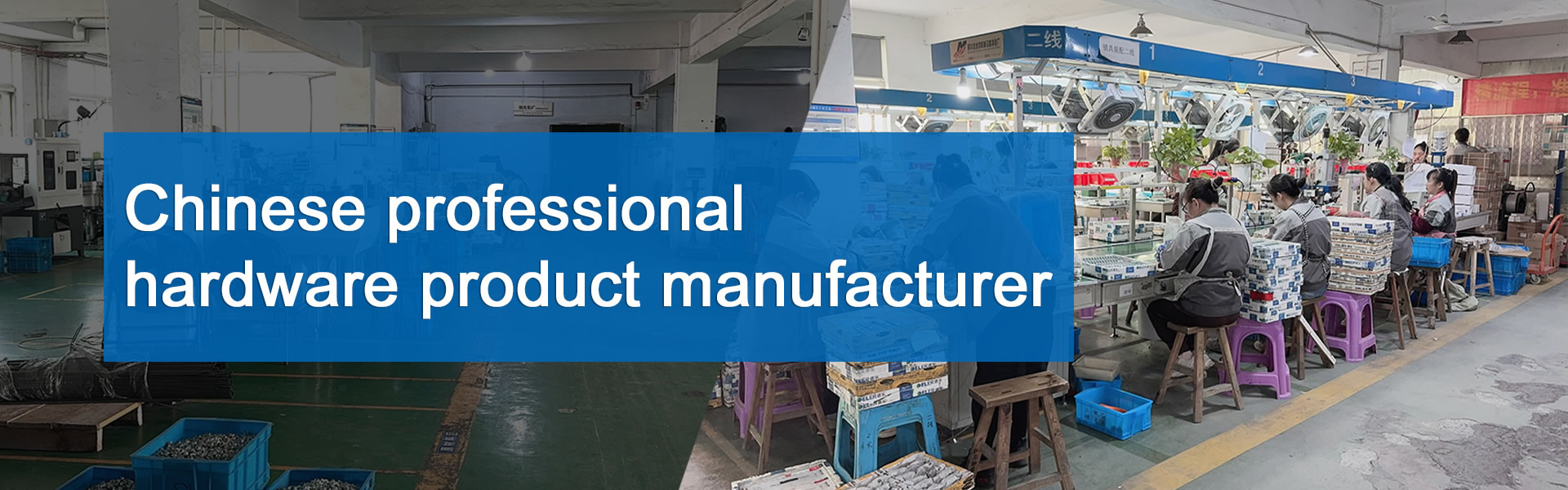
Heavy-duty industrial hinges achieve door panel rotation through the precision
fit between the pivot shaft and bushing. This article analyzes their mechanical
principles and functional mechanisms.
1. Precision Fit Mechanism Between Pivot Shaft and Bushing
1.1 Physical Foundation of Rotational Motion
The core working principle of heavy-duty industrial hinges is the rotational motion of the pivot shaft within the bushing. The pivot shaft serves as the fixed pivot point, and the leaf swings around it to enable door panel opening and closing. The fit precision between the pivot shaft and bushing directly determines rotation smoothness and service life.
The clearance between the pivot shaft and bushing is controlled between 0.05 and 0.15 millimeters. Insufficient clearance increases friction resistance, causing binding. Excessive clearance causes door wobble and accelerates bushing wear. Precision fit is the physical foundation for smooth rotation.
The pivot shaft is typically made of 40Cr alloy steel, quenched to hardness HRC 40 to 45. The bushing uses bronze powder metallurgy with oil content of 20 to 25 percent. The combination of hard steel and soft bronze ensures load capacity while reducing friction loss.
1.2 Self-Lubricating Principle of Bronze Bushings
Bronze bushings contain numerous micropores that store lubricating oil. During rotation, the bushing expands from heat, and oil seeps from the micropores to form a boundary lubrication film. This film separates the metal surfaces of the pivot shaft and bushing, converting sliding friction into fluid friction.
Self-lubricating bushings have a friction coefficient as low as 0.08, far lower than the 0.15 to 0.2 of steel-on-steel friction. Bronze wear rate is only one-third that of steel-on-steel contact. The self-lubricating mechanism enables these products to maintain smooth rotation even without manual lubrication.
The inner wall of the bushing features spiral oil grooves that further extend lubricant retention time. This design extends the lubrication interval from three months to six months. The self-lubricating performance of industrial cabinet hinges is particularly advantageous in food and pharmaceutical cleanroom applications.
1.3 Load Transfer Path and Stress Distribution
Door panel gravity transfers through the leaf to the pivot shaft, which distributes the load to the bushing and mounting base. Leaf thickness of 6 to 10 millimeters ensures sufficient bending section modulus. Large-diameter pivot shafts convert line contact to surface contact, reducing contact stress.
Reinforcing ribs on the leaf edges improve bending rigidity, preventing deformation under heavy loads. These ribs disperse stress from concentrated points across the entire leaf area. Proper structural design keeps these products in an elastic state within rated loads, returning to original shape after unloading.
Welded versions have a shorter load transfer path with less stress loss. Welding eliminates stress concentration at hole positions, providing more uniform force distribution. The load efficiency of welded structures is approximately 10 percent higher than bolted types.
2. Dynamic Analysis of Leaf Rotation
2.1 Lever Arm Principle of Door Opening and Closing
The rotation center of heavy-duty industrial hinges is located at the pivot shaft axis. Door panel gravity generates torque around the pivot shaft. Torque magnitude equals door weight multiplied by the horizontal distance from the center of gravity to the pivot shaft. Greater hinge spacing reduces the torque on each individual hinge.
With two hinges installed, the upper and lower hinges together resist the overturning moment from door panel gravity. With three hinges, the middle hinge bears approximately 15 percent of the torsional load. Proper hinge positioning optimizes the stress state and extends service life.
The door opening angle affects the center of gravity position and torque magnitude. At 90-degree opening, the door's center of gravity extends farthest outward, producing maximum torque. At 180-degree opening, the center of gravity is nearly vertical to the pivot shaft, with torque approaching zero. High-frequency use scenarios should avoid prolonged large-angle opening.
2.2 Dynamic Load Working Mechanism
Dynamic load simulates impact forces during door opening and closing. At the moment of opening, inertial forces are superimposed on static weight, creating peak impact. The dynamic load capacity of these products is not less than 70 percent of static values.
The elastic cushioning properties of bronze bushings absorbs part of the impact energy. The hardened surface layer of the pivot shaft resists micro-plastic deformation from impact. Dynamic load capacity determines the actual service life of these products in high-frequency scenarios.
Laboratory dynamic testing is conducted at 20 opening cycles per minute. After testing, pivot shaft wear and bushing clearance change are measured. Dynamic test data is the core indicator for evaluating actual durability.
2.3 Damping Cushioning Working Principle
Versions with damping function feature built-in hydraulic cushioning modules. The cushioning module contains a piston and hydraulic oil chamber. When the door closes, the piston compresses the hydraulic oil. The oil passes through micro-orifices to generate damping force, slowing the door's closing speed.
Cushioning speed is controlled by adjusting the hydraulic oil flow rate via an adjustment screw. Turning clockwise reduces oil passage cross-section, slowing cushioning speed. Turning counterclockwise increases oil passage cross-section, speeding up cushioning. Damping cushioning protects precision instruments from impact vibration during door closing.
The damping module has passed over 50,000 durability tests to ensure long-term effectiveness. Hydraulic oil maintains stable viscosity from minus 20 to plus 60 degrees Celsius. The damping function of heavy-duty cabinet hinges is widely used in medical and laboratory equipment.
3. Working Mechanism of Position Limiting and Locking Functions
3.1 Ratchet Locking Principle of Position-Limiting Hinges
Position-limiting versions feature a ratchet and pawl mechanism at the pivot shaft. When the door panel opens to a specific angle (90 or 180 degrees), the pawl engages the ratchet groove. The meshing of pawl and ratchet locks the door in position, preventing accidental swing-back.
To unlock, lift the door panel slightly or press the release button to disengage the pawl from the ratchet. The release button design allows one-handed operation for convenience and safety. The limiting mechanism has passed over 10,000 engagement tests to ensure long-term reliability.
The locking load capacity of position-limiting versions is not less than 50 percent of the rated load. In the locked state, the door can withstand horizontal thrust without disengaging. Elevated work scenarios require position-limiting versions to ensure maintenance personnel safety.
3.2 Coordination Mechanism with Industrial Enclosure Locks
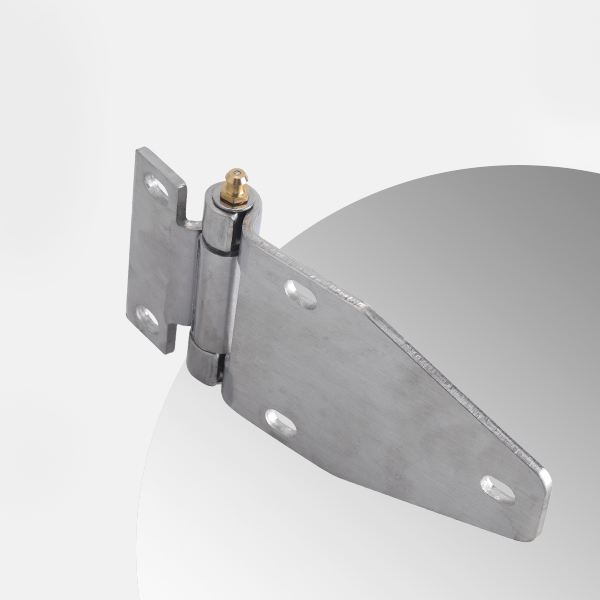
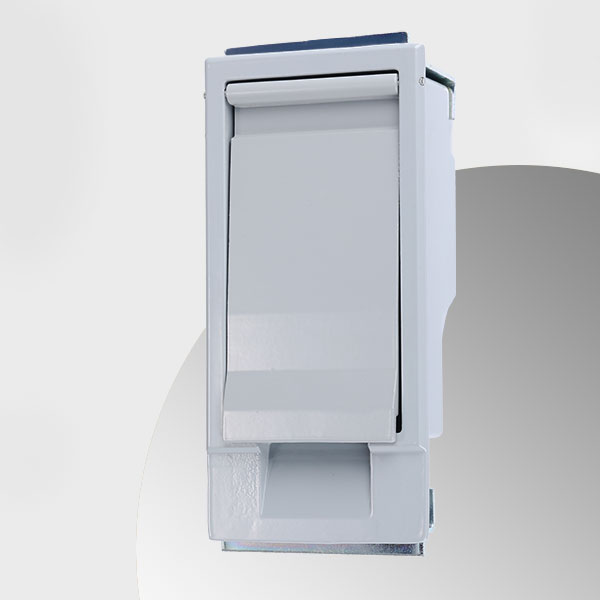
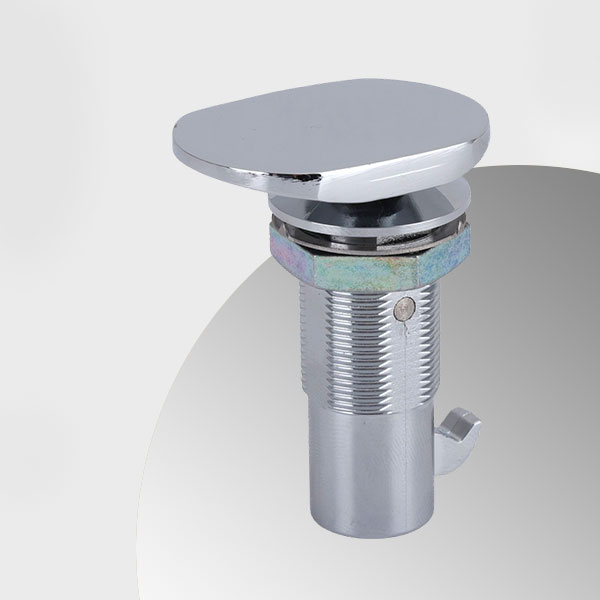
Industrial enclosure locks work together with these products to form a complete door protection solution. The lock cylinder engages with the cabinet strike plate through the bolt to achieve locking. These products bear the door weight, while the lock bears the locking force.
The lock bolt is made of stainless steel or zinc alloy, with hardness matching the cabinet strike plate. Multi-point locking design improves pry resistance and distributes locking force. The installation positions of hinges and locks must be precisely aligned to ensure proper bolt engagement.
Smart locks and smart hinges can work together in coordination. Lock status data and hinge force data are integrated into a single management platform. It is recommended to purchase industrial enclosure locks and hinges together to ensure compatibility.
3.3 Fixation Principle of Welded Structures
Welded versions use arc fusion welding to permanently connect the leaf to the door frame. The weld metal forms a metallurgical bond with the base material, with strength close to the base material itself. The welded joint has no mechanical loosening risk, maintaining stable clearance over long-term use.
Welding heat input must be precisely controlled; excessive heat reduces material properties in the heat-affected zone. Segmented welding minimizes thermal deformation and ensures installation accuracy. Welds undergo 100 percent magnetic particle inspection, with zero defects before leaving the factory.
Welded structures suit outdoor equipment with high anti-theft requirements and vibration environments. Once welding is complete, position cannot be adjusted, requiring extremely high installation accuracy. Installation of welded versions requires positioning templates to ensure verticality.
4. Working Principle of Smart Monitoring Hinges
4.1 Data Collection by Built-in Sensors
Smart versions feature built-in micro strain gauge load sensors. The strain gauge detects micro-strain caused by door panel gravity and converts it to electrical signals. The electrical signals are amplified and digitized to output force values.
Angle sensors monitor door opening angle and record cycle counts. Acceleration sensors detect impact forces during door opening and closing. Multi-sensor fusion data comprehensively reflects the hinge's working condition.
Sensor accuracy reaches 0.5 percent of full scale, with battery life exceeding three years. IP67 waterproof rating suits outdoor and humid environments. Sensor data provides an objective basis for predictive maintenance.
4.2 IoT Data Transmission and Early Warning
Sensor data is transmitted to the cloud via low-power Bluetooth or IoT gateways. Bluetooth transmission range is 10 to 30 meters, suitable for single-cabinet applications. IoT gateways can simultaneously manage hundreds of units, suitable for large-scale data center deployment.
Cloud-based data analysis algorithms determine whether overload or abnormal wear has occurred. In case of overload, the app pushes alarm notifications for immediate inspection. When cycle count reaches 80 percent of design life, automatic replacement reminders are sent.
Data visualization dashboards display real-time force status and historical trends for each hinge. Managers can remotely monitor equipment safety conditions. Smart monitoring upgrades reactive maintenance to proactive maintenance, effectively preventing sudden failures.
4.3 Maintenance and Calibration of Smart Hinges
Sensors require annual calibration to ensure accurate force data. Calibration must be performed in no-load condition, with zero-point correction completed through the app. The calibration interval can be adjusted based on usage frequency.
Batteries are replaceable by users. Low-battery alerts are issued 30 days in advance to avoid data interruption. Software should be regularly updated for new features and security patches.
Smart heavy-duty industrial hinges manufacturers provide integrated hardware and software solutions. When procuring, confirm sensor accuracy, communication protocol, and app compatibility. Smart versions represent the emerging direction for 2026.
5. Summary: Working Principle of Heavy-Duty Industrial Hinges
The working mechanism of heavy-duty industrial hinges consists of four functional modules: rotational motion, load transfer, position limiting and locking, and smart monitoring.
Rotational Motion: The precision fit between pivot shaft and bushing enables smooth rotation. Bronze self-lubricating bushings convert sliding friction to fluid friction. Clearance is controlled between 0.05 and 0.15 millimeters, with friction coefficient as low as 0.08.
Load Transfer: The leaf and pivot shaft form the load transfer path. Door panel gravity transfers through the leaf to the pivot shaft and mounting base. Leaf thickness of 6 to 10 millimeters with reinforcing ribs improves bending rigidity.
Position Limiting and Locking: Position-limiting versions lock the door at 90 or 180 degrees through a ratchet and pawl mechanism. Industrial enclosure locks work with hinges to form complete protection. Welded structures provide permanent fixation.
Smart Monitoring: Smart versions feature built-in strain gauge load sensors and angle sensors. Data is transmitted through IoT platforms for predictive maintenance. Overload alerts and replacement reminders provide early warning.
Heavy-duty cabinet hinges and industrial cabinet hinges follow the same working principles. Maintain technical communication with a professional heavy-duty industrial hinges manufacturer to obtain deeper application guidance. Correct understanding of working principles facilitates proper selection and standardized installation.