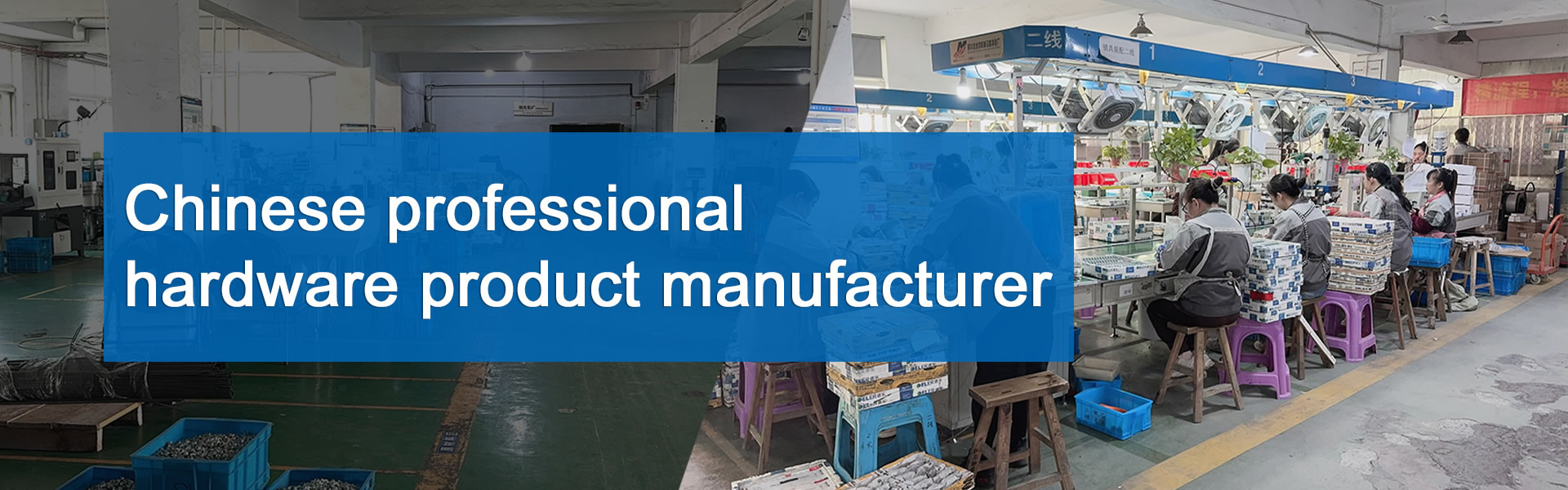
Heavy-duty industrial hinges are the core load-bearing hardware for industrial doors and cabinets. This article provides a complete guide from definition and selection to procurement for 2026.
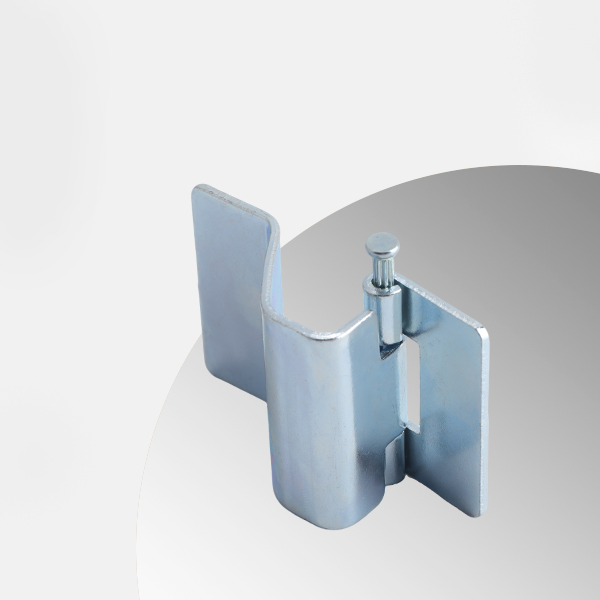
1. Definition and Core Components of Heavy-Duty Industrial Hinges
1.1 What Are Heavy-Duty Industrial Hinges
A heavy-duty industrial hinge is an industrial hardware component specifically designed to withstand heavy weight loads and high-frequency opening and closing. Unlike standard hinges, these products use thickened leaves, large-diameter pivot shafts, and high-strength materials. The rated load capacity of a single unit typically exceeds 200 kilograms.
The core components include leaves, pivot shaft, bushing, and fasteners. Leaves are metal plates fixed to the door panel and cabinet frame, with thickness not less than 6 millimeters. The pivot shaft connects the upper and lower leaves and is the load-bearing core, with diameter of 16 to 25 millimeters.
The key indicators that distinguish these products from standard hinges are threefold: load capacity, fatigue life, and fit precision. Standard hinges have 20-80 kg load capacity, while these products start at 200 kg. Standard hinges have 10,000-30,000 opening cycles, while these products have 50,000-100,000 cycles.
1.2 Main Application Scenarios
Industrial cabinet hinges are widely used in power distribution cabinets, server racks, and communication enclosures. These equipment door panels typically weigh 50 to 150 kilograms and must be supported by these products. They ensure long-term sag-free performance and protect internal precision components.
Heavy-duty cabinet hinges are standard hardware for factory buildings, warehouses, and large equipment guards. In high-frequency scenarios, the 50,000-cycle life advantage is clear. The anti-theft and anti-loosening designs meet the special requirements of the power industry.
These products also suit mining machinery, port equipment, and large press guards. Extreme heavy-load scenarios require forged steel ultra-heavy versions. Single-unit load capacity can reach 500 to 1,000 kilograms, with service life exceeding 15 years.
1.3 Essential Differences from Standard Hardware
Load capacity is the most obvious difference. Standard hinges carry 20-80 kilograms, while these products carry 200 kilograms or more. Standard hinges have leaf thickness of 2-3 millimeters, while these products have 6-10 millimeters.
Material and heat treatment processes differ. Standard hinges use Q195 cold-rolled steel without heat treatment. These products use 45# steel or 40Cr alloy steel with quenching and tempering. Pivot shaft hardness reaches HRC 40 or above, providing excellent wear resistance.
Fit precision and fatigue life differ significantly. Standard hinges have pivot shaft to bushing clearance of 0.2 to 0.5 millimeters. These products control clearance between 0.05 and 0.15 millimeters, maintaining positioning accuracy after 50,000 cycles.
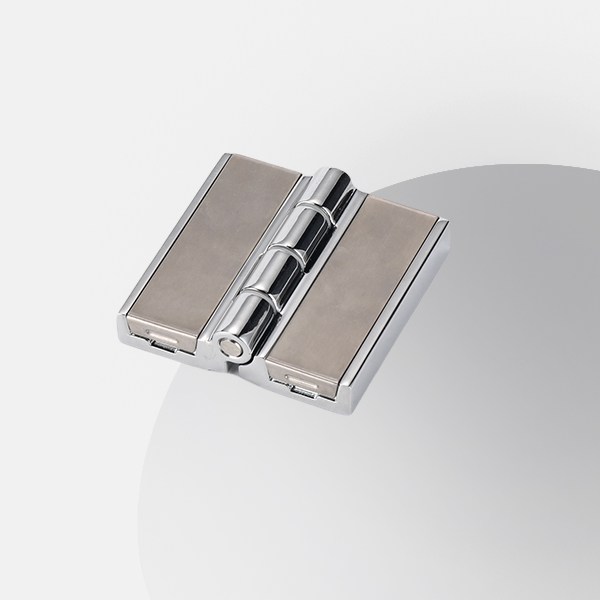
2. Key Technical Parameters of Heavy-Duty Industrial Hinges
2.1 Load Rating and Safety Factor
The rated load capacity is classified into 200 kg, 300 kg, 500 kg, and 800 kg grades. When selecting, calculate the safety factor as three times the door panel's own weight. A 100-kilogram door panel requires a 300-kilogram rated product to ensure long-term reliability.
Dynamic load is a new key indicator added in 2026, not less than 70 percent of static load. Dynamic load simulates impact forces and vibration during opening and closing. Products with insufficient dynamic load data are prone to premature failure under frequent use.
For multiple-hinge installation, total load capacity is calculated at 80 percent of the sum of individual ratings. Load sharing between two hinges must consider an unevenness factor. Installation spacing should be at one-third and two-thirds of the door panel height.
2.2 Material Grade and Heat Treatment Requirements
Carbon steel versions use 45# steel or 40Cr alloy steel with quenching and tempering. Quenched and tempered strength is more than double that of ordinary carbon steel. The pivot shaft is quenched and low-temperature tempered to achieve hardness HRC 40 to 45.
Stainless steel versions use 304 or 316 stainless steel. 316 contains added molybdenum, providing stronger resistance to chloride corrosion. Coastal chemical plants must use 316 material.
Forged steel versions are manufactured through high-temperature forging, with dense grain structure. Leaf thickness exceeds 8 millimeters, with single-unit load capacity over 500 kilograms. Suitable for extreme heavy-load scenarios such as mines and ports.
2.3 Surface Treatment and Corrosion Protection Level
Hot-dip galvanized coating thickness should not be less than 70 micrometers, with salt spray testing of 300 hours or more. Powder electrostatic spray coating thickness is 60 to 100 micrometers, with customizable colors. Zinc-aluminum-magnesium coating is a new 2026 technology, achieving over 1,000 hours in salt spray testing.
Stainless steel surfaces are pickled and passivated to form a dense oxide film. The passivation film can self-repair after damage, providing continuous protection. Outdoors, stainless steel versions last ten years without rusting.
In cross-cut coating adhesion testing, a detachment area of less than 5% is considered passing. Weld areas require separate anti-rust paint application. When procuring, request salt spray test reports from the heavy-duty industrial hinges Manufacturers.
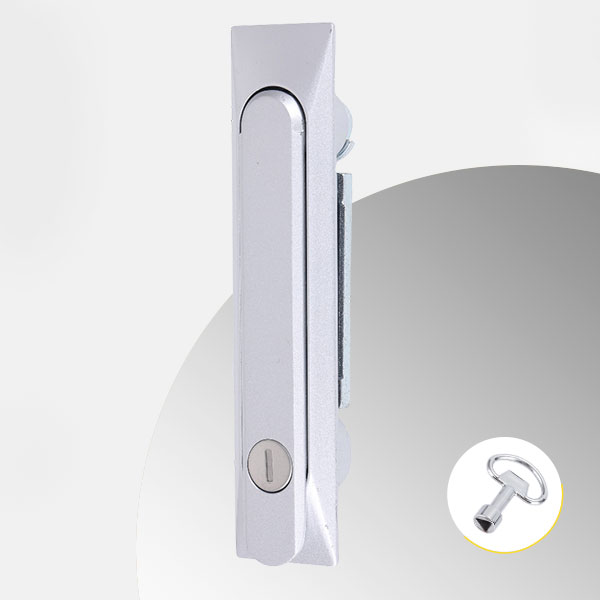
3. Procurement and Selection Key Points
3.1 Specification Matching and Dimension Confirmation
Measure the mounting hole spacing, leaf length, and pivot shaft diameter of existing hinges. Mismatched hole spacing prevents installation or requires re-drilling. Providing complete dimensional drawings to the factory ensures precise matching.
Confirm door panel thickness and material to select bolted or welded type. Thin door panels use bolted type, while thick panels can be welded or bolted. Adjustable hinges suit old equipment with deformed door frames.
Install two hinges for door heights within 2 meters, and three hinges for heights exceeding 2.5 meters. With three hinges, the middle hinge bears torsional loads. Hinge spacing should be at one-third and two-thirds of the door panel height.
3.2 Certification Requirements and Compliance Documents
For EU export, CE certification is required, based on the Machinery Directive and Low Voltage Directive. For North American export, UL certification is required, based on UL 294 door hardware standards. For the domestic China market, compliance with GB/T 38737 is required.
Environmental certifications include RoHS hazardous substance restrictions and REACH chemical registration regulations. Export products must provide RoHS and REACH test reports. ISO14067 Carbon Footprint certification is a new requirement for 2026.
Before procuring, request complete certification documents and test reports from the factory. Certificates must be valid and sample models must match the certificates. Products with incomplete certifications risk customs detention and project disqualification.
3.3 Supplier Evaluation and Sample Testing
Verify the factory's ISO9001, ISO14001, and ISO45001 system certifications. Fully certified factories have standardized production management and stable quality. Factories with CNC machining centers and in-house laboratories are more reliable.
Before bulk procurement, request samples for installation testing. Sample testing applies load up to 1.5 times the rated value, with a deformation of no more than 0.5 millimeters considered passing. Salt spray testing should follow application environment requirements.
After samples pass testing, seal and retain them as the bulk acceptance benchmark. Keep test reports and sample products. Factories with non-conforming samples should be eliminated immediately. Establishing long-term cooperation with the factory can lock in pricing and capacity.
4. 2026 Procurement Trends for Heavy-Duty Industrial Hinges
4.1 Smart Features Becoming Standard
In 2026, high-end versions feature built-in micro-load sensors. They monitor door panel weight changes and stress conditions in real time. Data is transmitted via Bluetooth or IoT gateways to management systems.
Sensors provide overload and wear alerts, enabling predictive maintenance. Replacement reminders are issued 30 days in advance to avoid sudden failures. Smart versions cost 50 percent more than standard products.
Both traditional brands and emerging tech companies have launched smart product lines in 2026. When selecting, pay attention to sensor accuracy and battery life. Mainstream products offer battery endurance of three years or more.
4.2 Environmental Regulations Continue to Evolve
In 2026, the EU market requires carbon footprint labeling on these products. Full-chain emission data from raw material extraction to delivery must be transparently disclosed. Low-carbon products receive procurement preference.
Zinc-aluminum-magnesium coating replaces traditional hot-dip galvanizing as the mainstream option. Self-healing properties after scratching extend protection life. Chromium-free passivation processes meet the strictest environmental standards.
Environmental compliance costs are rising, but long-term market competitiveness is stronger. Industrial enclosure locks and hinges can be purchased together to reduce logistics and certification costs. Early adoption of green procurement aligns with 2026 industry trends.
4.3 Digital Selection Tools Become Widespread
In 2026, most factories offer online selection tools. Enter equipment parameters to automatically match the best model. The tools include 3D simulation capabilities to preview installation results.
Digital tools reduce selection error rates from 15 percent to 3 percent. For 2026 selection, prioritize suppliers offering digital selection tools. Save substantial communication and trial-and-error costs.
Online tools provide real-time product inventory and pricing updates. Support batch inquiries and quick ordering. Digital procurement is the new standard for 2026.
5. Summary: Heavy-Duty Industrial Hinges Complete Guide
Heavy-duty industrial hinges are core hardware components specifically designed for high-load, high-frequency industrial scenarios. Their essential characteristics are leaf thickness of at least 6 millimeters, pivot shaft diameter of 16 to 25 millimeters, and single-unit load capacity of 200 kilograms or more.
When procuring, prioritize evaluation of load capacity rating (three times door panel weight), material grade (45# steel, 40Cr, or stainless steel), surface treatment (hot-dip galvanized or powder coating), and certification compliance (CE, UL, GB/T, RoHS, REACH).
2026 procurement trends include smart sensor monitoring, carbon footprint disclosure, and digital selection tools. Maintain long-term technical cooperation with a professional heavy-duty industrial hinges factory to obtain stable technical support and supply assurance.
Correct selection ensures these products operate safely for more than ten years, effectively preventing door sag and equipment damage.