The material selection for an industrial door hinge directly affects load capacity, corrosion resistance, and service life. This article compares four mainstream materials to help you make the best decision. Whether you need a standard heavy-duty hinge or a custom solution, the right material choice is essential.
1. Carbon Steel Applications and Limitations for Industrial Door Hinges
1.1 Performance Characteristics of Carbon Steel
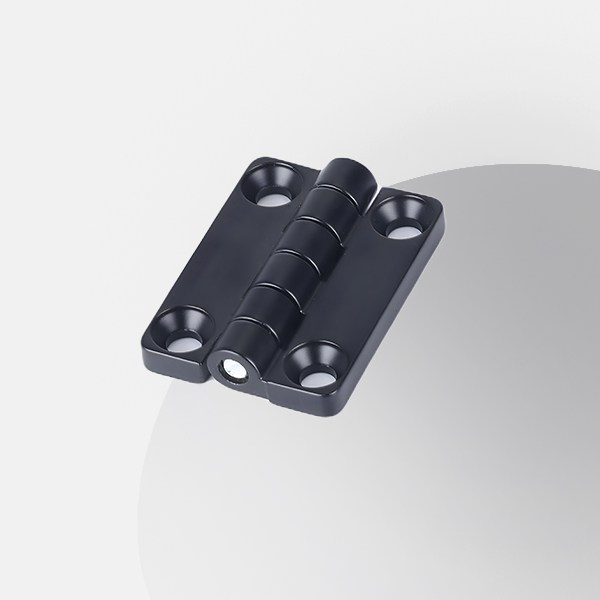
Carbon steel is the most basic material for industrial door hinges, with carbon content between 0.3 and 0.6 percent. After hot-dip galvanizing or electrophoretic coating, rust resistance is significantly improved. Single-unit load capacity reaches 200 to 300 kilograms, meeting most industrial requirements.
Carbon steel industrial door hinges offer the most economical price among all material options. Leaf thickness of 4 to 6 millimeters meets standard requirements. After quenching and tempering, overall mechanical properties improve by more than 30 percent. Machinery hinges widely adopt carbon steel material.
Carbon steel offers good machinability for stamping, welding, and drilling. The industrial door hinge manufacturer has mature processing capabilities for carbon steel, resulting in short lead times. Carbon steel weldability is superior to stainless steel, making welded carbon steel connections more reliable.
1.2 Best Application Scenarios for Carbon Steel
Carbon steel industrial door hinges suit standard industrial doors in indoor dry environments. Standard power distribution and warehouse doors prefer carbon steel material. With no corrosion risk indoors, the cost-performance advantage of carbon steel is fully realized.
Carbon steel industrial door hinges perform well when coatings are intact, but rust quickly when damaged. Ordinary factories and warehouses without corrosive conditions are the best application scenarios. When choosing carbon steel, specify hot-dip galvanizing or powder coating.
Carbon steel is not recommended for outdoor or humid environments. Even with coating protection, long-term weather exposure leads to rust. Coastal chemical plants and wastewater treatment facilities should avoid carbon steel.
1.3 Limitations of Carbon Steel
Carbon steel industrial door hinges rust easily in humid environments, with corrosion rates of approximately 0.1 to 0.2 millimeters per year. After coating damage, the base metal is exposed, and remaining thickness may fall below safe levels within three years. Salt spray test durations are typically 72 to 300 hours.
Surface treatment quality directly affects carbon steel's service life. Hot-dip galvanized coating should be no less than 70 micrometers, and powder coating no less than 60 micrometers. When purchasing, request coating thickness test reports from the industrial door hinge manufacturer.
Carbon steel cannot be used in strong acid or alkali environments, where corrosion accelerates more than tenfold. Food and pharmaceutical applications are also unsuitable due to cleaner corrosion.
2. Advantages and Selection of Stainless Steel for Industrial Door Hinges
2.1 Performance Characteristics of Stainless Steel
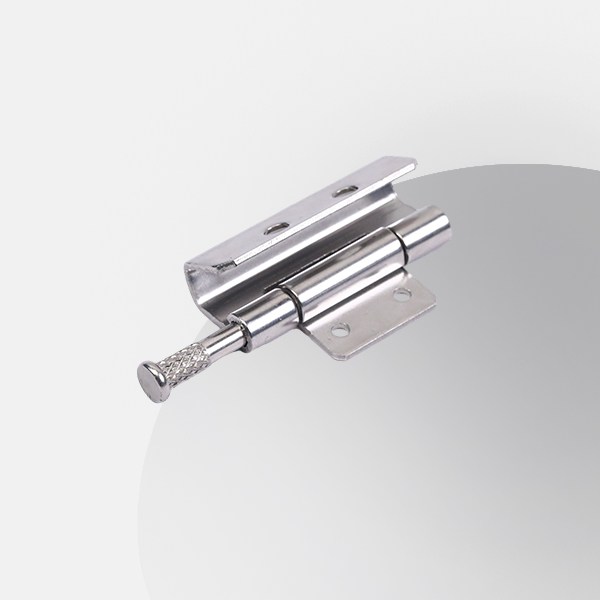
Stainless steel industrial door hinges are manufactured from 304 or 316 stainless steel, with chromium content not less than 18 percent. Chromium forms a dense oxide film on the surface, providing excellent corrosion resistance. 304 stainless steel achieves over 500 hours in salt spray testing.
316 stainless steel, with added molybdenum, offers stronger chloride corrosion resistance, exceeding 1,000 hours in salt spray tests. Stainless steel industrial door hinges have slightly lower hardness than carbon steel but better toughness and impact resistance. The silver-white metallic luster requires no additional coating.
Stainless steel maintains stable performance from minus 40 to plus 60 degrees Celsius. At low temperatures, its toughness exceeds carbon steel, resisting brittle fracture. At high temperatures, its oxidation rate is far lower than carbon steel. Industrial cabinet hinges in outdoor scenarios must use stainless steel material.
2.2 Best Application Scenarios for Stainless Steel
Stainless steel industrial door hinges suit highly corrosive environments such as coastal areas, chemical plants, and wastewater treatment facilities. Outdoor base station and charging station doors must use stainless steel. 304 stainless steel handles most corrosive scenarios effectively.
316 stainless steel industrial door hinges suit high-salt environments such as offshore platforms and marine equipment. Food processing plants and pharmaceutical cleanrooms also prefer stainless steel. Smooth, grooveless surfaces facilitate cleaning and resist chemical cleaner corrosion.
Stainless steel industrial door hinges offer a premium appearance suitable for equipment with visual requirements. Hospital and laboratory equipment choose stainless steel for both function and aesthetics. When purchasing, confirm the grade and salt spray test reports with the industrial door hinge manufacturer.
2.3 Limitations of Stainless Steel
Stainless steel industrial door hinges cost two to three times more than carbon steel. 316 stainless steel costs even more, approximately four times carbon steel. Budget-constrained projects must balance initial investment and long-term maintenance costs.
Stainless steel strength is slightly lower than carbon steel, with approximately 10 percent lower load capacity at the same specifications. 304 stainless steel has tensile strength of about 500 MPa, while carbon steel reaches about 600 MPa. Extreme heavy-load scenarios require larger stainless steel products.
Stainless steel is more difficult to process than carbon steel, requiring specialized welding techniques. Custom industrial door hinges require attention to corrosion risk in the heat-affected zone during welding. Manufacturers need professional welding and pickling-passivation capabilities.
3. Special Applications of Forged Steel and Copper Alloy for Industrial Door Hinges
3.1 Performance Characteristics of Forged Steel
Forged steel industrial door hinges are manufactured through high-temperature forging, resulting in dense grain structure and strength far exceeding cast parts. Leaf thickness typically exceeds 8 millimeters, with pivot shaft diameters reaching 25 millimeters. Single-unit load capacity can exceed 500 kilograms.
Forged steel achieves HRC 32 to 36 hardness after quenching and tempering, with excellent wear resistance. Pivot shafts are quenched to HRC 40 to 45 hardness and used with bronze bushings. Forged steel shows minimal deformation under continuous heavy loads, maintaining long-term positioning accuracy.
Forged steel offers more than twice the impact resistance of carbon steel. It suits extreme conditions with frequent impact and vibration. Fatigue life exceeds 100,000 opening cycles, suitable for high-frequency scenarios with over 10,000 cycles per year.
3.2 Suitable Applications for Forged Steel
Forged steel industrial door hinges suit extreme heavy-load scenarios such as mining machinery, port equipment, and large press guard doors. Heavy-duty industrial hinges show the greatest advantage with forged steel in mining and port applications. Forged steel is irreplaceable in heavy industry.
Forged steel suits high-vibration environments, with welded forged steel eliminating bolt loosening risk. Forged steel combined with welded installation forms the most secure connection. Large access doors and blast doors prefer forged steel industrial door hinges.
After surface treatment, forged steel durability is significantly improved. Price is three to five times that of ordinary carbon steel, but service life exceeds 15 years. Over the long term, forged steel offers the lowest cost per unit of time.
3.3 Copper Alloy Materials and Special Environments
Copper alloy industrial door hinges are manufactured from tin bronze or aluminum bronze, offering excellent wear and corrosion resistance. Friction coefficient is as low as 0.08, with good self-lubricating properties. Pivot shaft wear is far lower than steel products, suitable for oil-free lubrication scenarios.
Copper alloy performs stably in marine environments and chemical media. Copper alloy does not rust or produce sparks, offering excellent explosion-proof performance. Commonly used in marine equipment and hazardous locations.
Copper alloy industrial door hinges have relatively limited load capacity, typically not exceeding 150 kilograms per unit. Price is two to three times that of stainless steel. Suitable for explosion-proof and anti-static special scenarios; petrochemical and mining equipment must use copper alloy.
4. Material Selection Decision Framework and Procurement for Industrial Door Hinges
4.1 Decision Matrix for Material Selection by Environment
Indoor dry environments: Prioritize carbon steel industrial door hinges for the best cost performance. Carbon steel with hot-dip galvanizing or powder coating meets requirements. Indoor ambient temperature with no corrosion risk is the ideal scenario for carbon steel.
Humid outdoor environments: Must use 304 stainless steel industrial door hinges. Upgrade to 316 stainless steel for coastal high-corrosion environments. Stainless steel requires no coating maintenance, resulting in lower total lifecycle costs.
Extreme heavy-load impact environments: Choose forged steel industrial door hinges. Forged steel with welded installation forms the most reliable connection. Mines, ports, and press guard doors are the exclusive domain of forged steel. Food and pharmaceutical clean environments choose stainless steel with food-grade grease.
4.2 Total Lifecycle Cost Assessment
Carbon steel industrial door hinges have the lowest unit price but require periodic repainting. Labor costs and production losses must be included in total cost calculations. Over five years, carbon steel still holds a cost advantage in indoor scenarios.
Stainless steel industrial door hinges have higher initial investment but zero coating maintenance costs. Over ten years in coastal scenarios, stainless steel costs less than carbon steel. The economic advantage of stainless steel is clear in corrosive environments.
Forged steel industrial door hinges have the highest price but the longest service life. In extreme conditions, forged steel is the only reliable choice. Calculated over a 15-year cycle, forged steel offers the lowest cost per unit of time.
4.3 Procurement Verification and Supplier Selection
Before purchasing, require the industrial door hinge manufacturer to provide material test reports. Reports should include chemical composition analysis and mechanical property data. Confirm that material grades match the contract to avoid substandard substitutions.
Request samples for salt spray testing and load testing. Bulk orders should only proceed after samples pass testing. OEM industrial hinges follow identical material acceptance standards. Industrial cabinet hinges and industrial door hinge factories follow the same material selection principles.
Establish long-term technical cooperation with the industrial door hinge manufacturer. Regularly communicate usage feedback to help factories improve products. Choose suppliers with R&D capabilities and quality traceability systems. Custom industrial door hinges are recommended with the most suitable materials based on specific working conditions.
5. Summary: Industrial Door Hinge Material Selection
There is no single "best" material for industrial door hinges. The right choice depends on environment, load, service life, and budget.
Carbon Steel: Best for indoor dry environments. Hot-dip galvanized or powder coated. Low cost, mature processing. Suitable for standard power distribution and warehouse doors.
Stainless Steel: Best for humid outdoor and coastal environments. 304 stainless steel: 500h salt spray. 316 stainless steel: 1,000h+ salt spray. Zero coating maintenance. Essential for food, pharma, and outdoor base stations.
Forged Steel: Best for extreme heavy-load and high-vibration environments. Single-unit load capacity over 500 kg. Impact resistance twice that of carbon steel. Ideal for mines, ports, and large press guard doors.
Copper Alloy: Essential for explosion-proof and anti-static environments. Non-sparking, self-lubricating. Suitable for petrochemical and mining equipment. Load capacity limited; evaluate carefully.
When procuring, request material test reports and salt spray test reports from the industrial door hinge manufacturer. Request samples for load testing verification. Machinery hinges and industrial cabinet hinges follow the same material selection principles. Maintain technical communication with a professional industrial door hinge factory to obtain material recommendation data. Correct material selection ensures industrial door hinges operate safely for more than ten years.