Preventing rust and corrosion on industrial door hinges requires attention to three areas: material selection, surface protection, and daily maintenance. This article shares practical anti-rust strategies. Whether you need a standard heavy-duty hinge or a custom solution, these guidelines will extend service life.
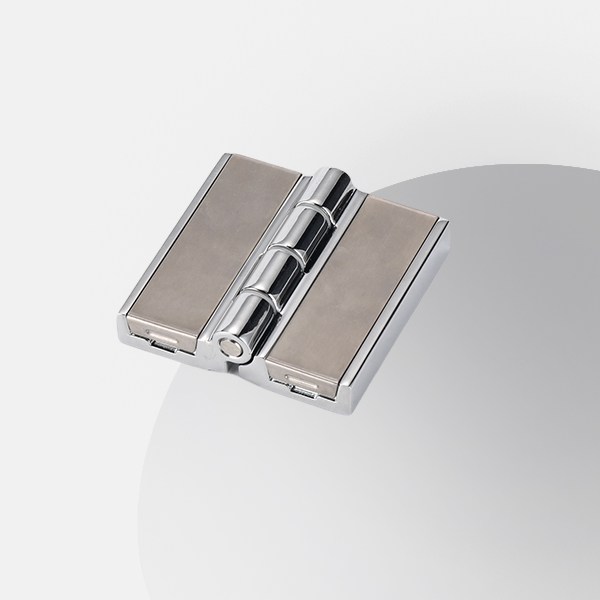
1. Preventing Corrosion from the Material Source for Industrial Door Hinges Industrial Door Hinges
1.1 Prioritizing Stainless Steel Materials
Stainless steel industrial door hinges contain at least 18 percent chromium, forming a dense oxide film on the surface. The oxide film effectively blocks moisture and oxygen from contacting the metal substrate. 304 stainless steel suits most industrial and outdoor scenarios, achieving over 500 hours in salt spray testing.
316 stainless steel, with added molybdenum, offers stronger resistance to chloride corrosion. Coastal chemical plants and marine environments should prioritize 316 material, with salt spray testing exceeding 1,000 hours. Although priced higher, no-coating maintenance results in lower long-term costs.
Stainless steel industrial door hinges require no additional coating, remaining rust-free for ten years. When purchasing, request material test reports from the industrial door hinge manufacturer to confirm chromium and nickel content. Suitable stainless steel grades for custom industrial door hinges can be recommended based on corrosion levels.
1.2 Carbon Steel Must Have Anti-Corrosion Coatings
Carbon steel industrial door hinges must undergo hot-dip galvanizing or powder coating treatment. Hot-dip galvanized coating thickness should not be less than 70 micrometers, with salt spray testing of 300 hours or more. Hot-dip galvanized coatings provide cathodic protection when damaged, preventing rust around damaged areas.
Powder electrostatic spray coating thickness is 60 to 100 micrometers, with adhesion 40 percent higher than liquid paint. Powder coatings are cured at 200 degrees Celsius, providing dense protection. Zinc-aluminum-magnesium coating is a new technology for 2026, exceeding 1,000 hours in salt spray testing with self-healing properties after scratching.
The coating quality of carbon steel industrial door hinges directly determines service life. When purchasing, request coating thickness test reports and salt spray test reports from the industrial door hinge factory. Cross-cut coating adhesion testing requires detachment area below 5 percent to pass.
1.3 Special Environments Choose Forged Steel or Copper Alloy
Mining ports and other high-corrosion high-impact environments should use forged steel industrial door hinges. Forged steel after quenching and tempering combined with hot-dip galvanizing plus powder dual protection achieves over 500 hours in salt spray testing. The surface treatment processes for heavy-duty industrial door hinges must balance wear resistance and corrosion protection.
Petrochemical and mining explosion-proof scenarios should use copper alloy material. Copper alloy does not rust or produce sparks, with a self-friction coefficient as low as 0.08. Copper alloy industrial door hinges offer better corrosion resistance than stainless steel in marine environments.
High-temperature and high-humidity environments require the evaluation of material tolerance. Stainless steel maintains stable performance from minus 40 to plus 60 degrees Celsius. Industrial door hinge load capacity decreases annually due to corrosion; allow sufficient margin during selection.
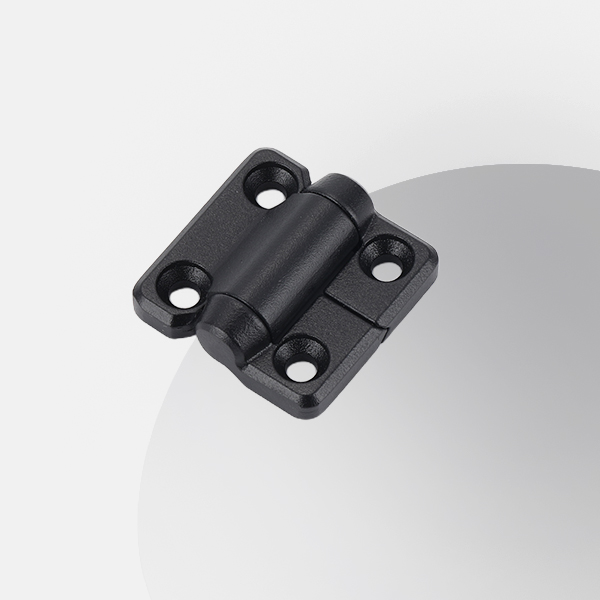
2. Correct Selection of Surface Treatment Processes for Industrial Door Hinges
2.1 Quality Control of Hot-Dip Galvanizing
Hot-dip galvanizing involves immersing hinges in molten zinc to form a zinc-iron alloy layer. Zinc coating thickness should not be less than 70 micrometers, with strong adhesion and resistance to peeling. Hot-dip galvanized industrial door hinges have a dark gray appearance, suitable for outdoor and humid environments.
Before galvanizing, acid pickling for rust removal and flux treatment are required. Incomplete acid pickling leads to poor zinc adhesion. Galvanizing temperature is controlled at 440 to 460 degrees; excessive temperatures cause thick, brittle zinc layers.
The zinc coating thickness of hot-dip galvanized industrial door hinges is measured with coating thickness gauges. Sample five points per batch and average them. Areas with insufficient zinc thickness are touched up with zinc-rich paint. The industrial door hinge manufacturer should provide galvanizing process records.
2.2 Key Points of Powder Coating Process
Powder coating requires phosphating treatment to enhance coating adhesion. Phosphating film thickness is 1 to 3 micrometers, uniform and dense. Spraying voltage is 60 to 80 kilovolts, with powder uniformly charged and attracted.
Curing temperature is 180 to 200 degrees Celsius for 15 to 20 minutes. Insufficient curing results in poor coating adhesion; excessive curing makes coatings brittle. Powder coating thickness is 60 to 100 micrometers, with uniform color and no bubbles.
The industrial door hinge factory's coating line should include three complete stages: pre-treatment, powder application, and curing. Factories outsourcing coating face greater quality control challenges. Heavy-duty industrial door hinge coatings must pass cross-cut and impact testing.
2.3 Advanced Zinc-Aluminum-Magnesium Coating Technology
Zinc-aluminum-magnesium coating is a 2026 mainstream anti-corrosion technology, exceeding 1,000 hours in salt spray testing. The coating consists of zinc-aluminum-magnesium alloy; after scratching, magnesium element migration forms a protective film for self-healing. Suitable for coastal and high-corrosion industrial environments.
Zinc-aluminum-magnesium coating offers strong adhesion and withstands stamping and bending processes. Coating thickness is 60 to 80 micrometers, with a silver-gray appearance. Industrial door hinges with zinc-aluminum-magnesium coating can extend maintenance intervals to over five years.
Welding of zinc-aluminum-magnesium coated parts requires attention to coating integrity. After welding, apply zinc-rich paint to weld seams. Custom industrial door hinges with zinc-aluminum-magnesium coating require confirmation of whether the factory has production lines.
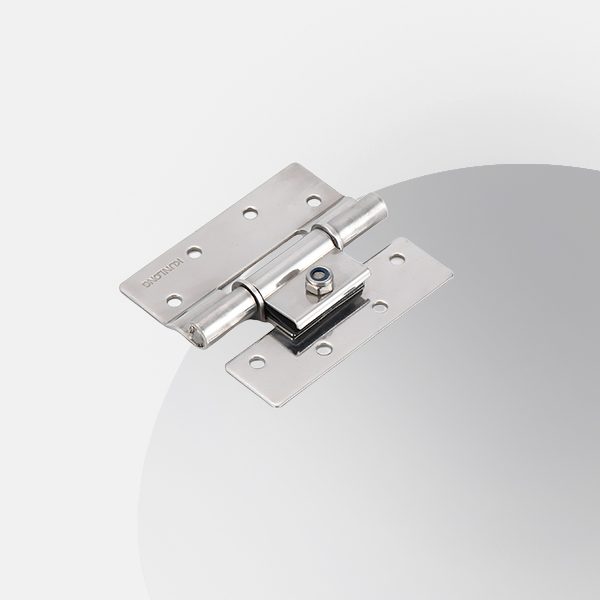
3. Anti-Rust Maintenance During Use of Industrial Door Hinges
3.1 Regular Cleaning and Inspection
Clean industrial door hinges every three months. Wipe pivot shafts and leaf surfaces with a cotton cloth dipped in industrial alcohol to remove dust and oil. After cleaning, inspect surfaces for rust spots or coating damage.
Remove light rust spots by gently sanding with fine sandpaper or a brass brush. Apply anti-rust primer immediately after rust removal. For deep corrosion, measure remaining thickness; replace hinges if below safe values.
Welded industrial door hinges require focused inspection at weld seams. Weld seams tend to accumulate moisture and cause rust. Address weld rust cracks immediately. Industrial door hinge load capacity affected by corrosion requires regular evaluation.
3.2 Correct Application of Lubricating Grease
After cleaning, apply anti-rust lubricating grease to pivot shafts. Anti-rust grease contains corrosion inhibitors that form a protective film. Standard grease provides lubrication only without rust prevention. Outdoor environments should use water-resistant lithium grease that does not emulsify in water.
Apply 1 to 2 grams of grease per industrial door hinge. Excess grease attracts dust and forms sludge that accelerates wear. After application, cycle the hinge five times to distribute grease evenly. Heavy-duty industrial door hinges in high-load scenarios require shortened lubrication intervals.
Ensure surfaces are dry before applying grease. Moisture mixed into grease reduces protection effectiveness. Wipe away excess grease after application to maintain cleanliness. The industrial door hinge manufacturer recommends grease models suitable for specific operating conditions.
3.3 Timely Repair of Coating Damage
After coating scratches, apply anti-rust repair paint immediately. For deep scratches, first sand edges with fine sandpaper then apply paint. Repair paint colors should match original coatings. Clean surfaces to remove oil before painting.
Large-area coating peeling requires evaluation for complete replacement. When peeling area exceeds 30 percent, protection is essentially lost. Carbon steel industrial door hinges with coating peeling may rust severely within six months.
Regularly inspect repaired areas for re-rusting. The industrial door hinge factory provides original repair paint matching. Custom industrial door hinge coating repairs follow original processes.
4. Environmental Control and Long-Term Protection for Industrial Door Hinges
4.1 Controlling Operating Environment Humidity
The relative humidity of industrial door hinge operating environments should be controlled below 60 percent. Excessive humidity accelerates coating aging and metal oxidation. Install dehumidification equipment or enhance ventilation in high-humidity environments.
Rapid temperature changes create condensation that harms hinges. Avoid placing hinges in locations with large temperature differences. Outdoor equipment should consider sunshade and rain protection measures. Industrial door hinge load capacity decreases faster in humid environments.
Corrosive gas environments require enhanced protection. Chemical plant workshops should choose stainless steel or copper alloy materials. Install protective covers to isolate corrosive media when necessary. The industrial door hinge manufacturer can provide environment adaptation recommendations.
4.2 Anti-Rust Measures for Long-Term Storage
Store spare industrial door hinges in dry, ventilated environments. Relative humidity 40 to 60 percent, temperature minus 5 to plus 40 degrees Celsius. Add desiccant to packaging to absorb moisture.
For long-term storage, use VCI (vapor corrosion inhibitor) paper wrapping. VCI molecules form a protective layer in enclosed spaces with a two-year validity period. VCI paper does not contaminate hinge surfaces; they can be installed immediately after unpacking.
Inspect appearance every six months during storage. Address rust spots promptly. Place unused hinges from opened packaging into sealed bags. The industrial door hinge factory's original packaging has anti-rust functions.
4.3 Supplier Selection and Quality Traceability
Choose industrial door hinges from manufacturers with complete anti-corrosion processes. Verify ISO9001 and ISO14001 certifications. Request salt spray test reports and coating test reports. Verify anti-corrosion performance through sample testing.
Stainless steel industrial door hinge material reports must confirm chromium and nickel content. Carbon steel zinc coating thickness reports must meet standards. Establish annual supplier evaluation systems to track anti-corrosion quality.
Establish long-term cooperation with the industrial door hinge factory for technical support. Regularly communicate environmental changes to adjust protection plans. Reserve spare parts at 3 to 5 percent of procurement volume. Correct selection and maintenance of industrial door hinges can extend service life by three to five times.
5. Summary: Preventing Industrial Door Hinge Rust and Corrosion
Preventing rust and corrosion on industrial door hinges requires systematic measures across four dimensions: material, process, maintenance, and environment.
Material Selection: For humid outdoor environments, prioritize 304 or 316 stainless steel. Coastal chemical plants must use 316. Carbon steel requires hot-dip galvanizing or powder coating. Extreme corrosion requires forged steel. Explosion-proof scenarios require copper alloy.
Surface Processes: Hot-dip galvanized coating not less than 70 micrometers. Powder coating 60 to 100 micrometers. Zinc-aluminum-magnesium coating exceeds 1,000 hours in salt spray testing with self-healing after scratching. Cross-cut coating adhesion detachment area less than 5 percent.
Daily Maintenance: Clean and inspect for rust every three months. Apply anti-rust grease after cleaning, 1 to 2 grams per unit. Apply anti-rust paint immediately after coating scratches. Evaluate replacement for large-area peeling.
Environmental Control: Control relative humidity below 60 percent. Store spare hinges in VCI paper wrapping. Choose industrial door hinge manufacturers with ISO9001 and ISO14001 certifications, requesting salt spray test reports to verify anti-corrosion performance.
Heavy-duty industrial door hinges and heavy-duty industrial hinges anti-rust strategies are completely identical to those for industrial door hinges. Stainless steel industrial door hinges anti-corrosion advantages are most evident in harsh environments. Custom industrial door hinges are recommended with suitable materials and processes based on specific corrosion levels. Establish long-term cooperation with a reliable industrial door hinge factory to ensure stable anti-corrosion quality and long product service life.