The opening angle of an industrial door hinge requires comprehensive selection based on operating space, maintenance needs, and safety standards. This article analyzes the suitable scenarios for each angle. Whether you need a standard heavy-duty hinge or a custom solution, these criteria will guide your decision.
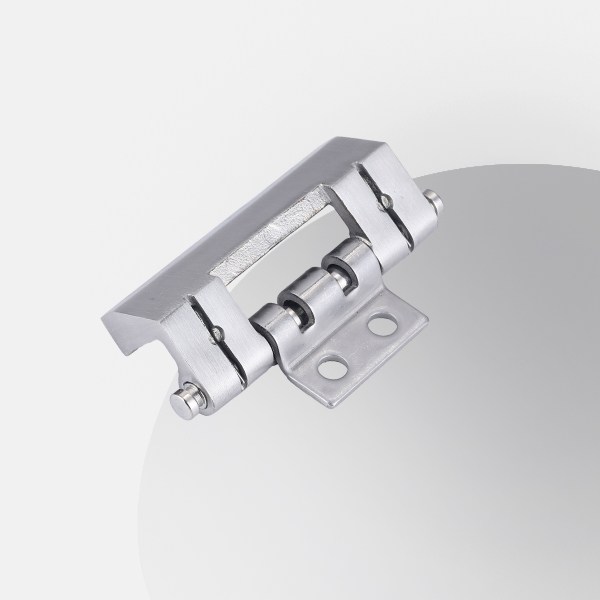
1. Common Opening Angle Types and Suitable Scenarios for Industrial Door Hinges
1.1 90-Degree Opening Angle Applications
90 degrees is the most common opening angle for industrial door hinges. When the door panel opens to 90 degrees, the center of gravity extends farthest outward, and the hinge bears maximum torque. Selecting a 90-degree position-limiting mechanism prevents the door panel from hitting adjacent equipment, suitable for factories with narrow aisles.
Power maintenance cabinets and distribution boxes mostly use 90-degree position-limiting hinges. Door panels remain fixed without wobbling after opening, allowing maintenance personnel to operate instruments with both hands. The limiting mechanism has passed over 10,000 durability tests to ensure long-term reliability.
The installation spacing for 90-degree opening industrial door hinges is at one-third and two-thirds of the door panel height. With three hinges, the middle hinge bears torsional loads.NEMA-rated cabinet hinges mostly come standard with 90-degree position-limiting functions.
1.2 180-Degree Opening Angle Applications
The 180-degree opening angle suits scenarios requiring complete door panel opening. The door panel flips parallel to the cabinet side, not occupying additional aisle space. Large power distribution cabinets and server racks prefer 180-degree hinges.
At 180-degree opening, the door panel center of gravity is nearly vertical to the pivot shaft, with torque close to zero. The hinge bears minimum torque, helping extend service life. However, after the door panel is fully opened, care must be taken to prevent accidental closing.
The 180-degree position-limiting mechanism of heavy-duty industrial hinges is required by regulations for marine equipment and elevated work platforms. Continuous hinge design suits extra-long door panels requiring 180-degree opening.
1.3 120-Degree and Special Angles
The 120-degree opening angle falls between 90 and 180 degrees. Suitable for scenarios with limited aisle width but requiring larger operating space. Medical equipment cabinets and laboratory equipment cabinets often use this angle.
Special angles such as 135 degrees or 150 degrees are customized as needed. OEM industrial hinges can produce non-standard limiting angles according to customer drawings. Customization cycles are 45 to 60 days with MOQ starting at 500 units.
Self-positioning hinges with continuously adjustable opening angles suit multiple scenario requirements. Door panels can stay at any angle with maximum flexibility. However, self-positioning mechanisms cost more, suitable for high-end equipment.
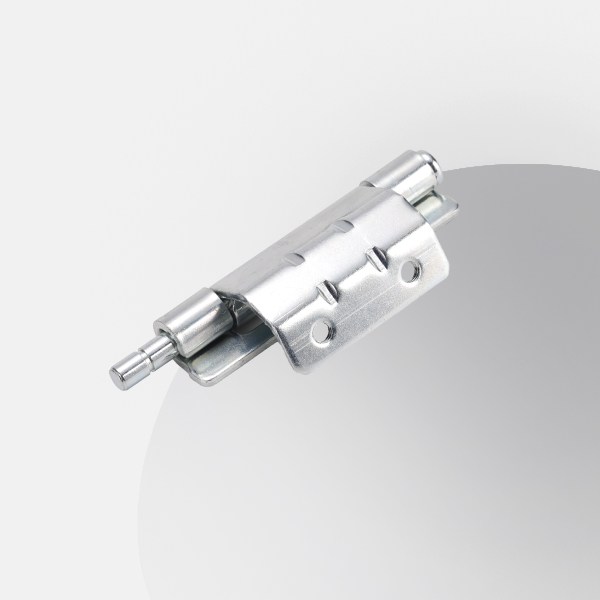
2. Relationship Between Opening Angles and Space Layout for Industrial Door Hinges
2.1 Aisle Width Determines Maximum Opening Angle
When aisle width is less than door panel width, 90-degree position-limiting is the only choice. Door panels do not exceed aisle boundaries after opening, avoiding collisions with pedestrians and other equipment. Measure aisle net width and door panel width to determine available angles.
When aisle width equals door panel width, 180-degree opening can be selected. Door panels flip parallel to the cabinet, not occupying aisle space. However, confirm sufficient space on the cabinet side to accommodate the door panel.
When aisle width exceeds 1.5 times door panel width, opening angles can be freely selected. Both 90-degree and 180-degree options meet requirements. The industrial door hinge manufacturercan recommend optimal angles based on site conditions.
2.2 Impact of Adjacent Equipment Spacing
When adjacent equipment spacing is less than door panel width, 90-degree position-limiting prevents door panel collisions. When spacing exceeds 1.2 times door panel width, larger opening angles can be selected.
When multiple cabinets are installed side by side, middle cabinet door opening angles are limited. We recommend using 90-degree position-limiting uniformly to maintain appearance consistency. Continuous hinge design suits linked opening of side-by-side cabinets.
Opening angle requirements can be re-evaluated when equipment layout changes. Adjustable hinges support angle adjustments to accommodate layout changes. The industrial door hinge factory provides on-site measurement and selection guidance.
2.3 Maintenance Operation Space Requirements
Maintenance scenarios requiring both hands require door panels to remain fixed without wobbling. 90-degree or 180-degree position-limiting functions ensure operational safety. The locking load capacity of position-limiting heavy-duty industrial hinges is not less than 50 percent of rated values.
Scenarios requiring only visual inspection have lower opening angle requirements. 90-degree opening meets observation needs. Standard hinges can meet such low-frequency operation scenarios.
Scenarios requiring replacement of large internal components require 180-degree opening. Components can be pulled out in straight lines after door panels are fully opened. Custom industrial door hinges can determine minimum opening angles based on component dimensions.
3. Safety Standards and Position-Limiting Function Selection for Industrial Door Hinges
3.1 Safety Value of Position-Limiting Functions
Position-limiting industrial door hinges feature ratchet locking mechanisms at specific angles. Door panels remain fixed without wobbling after opening, avoiding accidental swing-back injuries. Elevated work scenarios must use position-limiting products.
To unlock, lift the door panel slightly or press the release button. Unlocking methods vary slightly among different brands. The limiting mechanism has passed over 10,000 durability tests to ensure long-term effectiveness.
Position-limiting requirements for power maintenance cabinets and marine equipment are written into industry safety standards. NEMA-rated cabinet hinges position-limiting functions comply with North American electrical standards. Confirm position-limiting angles match safety standards during procurement.
3.2 Damping Cushioning and Angle Control
Damping industrial door hinges automatically decelerate during the final 15 to 20 degrees of closing. This prevents door panels from impacting cabinets and generating vibration, protecting internal precision instruments. Damping cushioning speeds are adjustable to accommodate different door panel weights.
Damping modules have passed over 50,000 durability tests to ensure long-term effectiveness. Hydraulic oil maintains a stable viscosity from minus 20 to plus 60 degrees Celsius. The damping function of heavy-duty industrial hinges is widely adopted in hospital imaging equipment.
Damping cushioning and position-limiting functions can be combined. Door panels are position-limited when opening and damping-cushioned when closing. The industrial door hinge factory provides combined function customization services.
3.3 Smart Monitoring and Angle Recording
Smart industrial door hinges feature built-in angle sensors. They monitor door panel opening angles in real time and record opening cycle counts. Data is transmitted via Bluetooth to mobile apps for viewing.
Overload alerts are pushed via notifications, indicating door panel opening angles exceed safe ranges. Cycle count statistics help plan maintenance intervals. Smart hinges upgrade reactive maintenance to proactive maintenance.
Smart monitoring functions suit high-end applications such as data centers and unattended base stations. OEM industrial hinges can integrate sensor modules for intelligent functionality. Confirm sensor accuracy and communication protocols during procurement.
4. Opening Angle Selection Verification and Procurement for Industrial Door Hinges
4.1 Load and Angle Matching Verification
Opening angles affect the torque borne by hinges. Torque is maximum at 90-degree opening, requiring higher load rating selection. Torque is minimum at 180-degree opening, with the lightest hinge stress.
The recommended safety factor for industrial door hinge selection is three times. For 90-degree position-limiting scenarios, we recommend increasing the safety factor to 3.5 times. Dynamic load should not be less than 70 percent of static load.
For multiple-hinge installation, total load capacity is calculated at 80 percent of the sum of individual ratings. For door panel heights exceeding 2.5 meters, install three hinges. Hinge spacing should be at one-third and two-thirds of the door panel height.
4.2 Sample Testing and Function Verification
Before bulk purchase, request samples for installation testing. Test the locking reliability of position-limiting mechanisms at 90 and 180 degrees. Check whether unlocking operations are smooth and can be completed with one hand.
Test cushioning effects for samples with damping functions. Door panels should automatically decelerate during the final 15 degrees of closing. Damping modules should have no leakage or abnormal noise.
After samples pass testing, seal and retain them as the bulk acceptance benchmark. Keep test reports and sample products. Samples with non-conforming functions should be eliminated immediately.
4.3 Supplier Evaluation and Long-Term Cooperation
Verify the industrial door hinge manufacturer's ISO9001, ISO14001, and ISO45001 system certifications. Export products require CE or UL certification. Domestic products must comply with GB/T 38737.
Establish an annual supplier evaluation system covering quality, delivery, price, and service. Factories with excellent evaluations for two consecutive years can be upgraded to strategic suppliers. Sign three-year framework agreements with the industrial door hinge manufacturer.
Maintain two to three qualified supplier partnerships to diversify risks. Reserve spare parts at 3 to 5 percent of procurement volume. Position-limiting and damping function customization for the industrial door hinge factory requires advance technical solution communication.
5. Summary: Industrial Door Hinge Opening Angle Selection
Industrial door hinge opening angle selection requires comprehensive consideration of aisle space, maintenance needs, and safety standards.
Space Layout: When aisle width is less than door panel width, select 90-degree position-limiting. When aisle width equals door panel width, select 180-degree opening. When adjacent equipment spacing exceeds 1.2 times door panel width, angles can be freely selected.
Safety Standards: Elevated work and power maintenance scenarios must use position-limiting hinges. 90-degree or 180-degree ratchet locking mechanisms ensure personnel safety. Damping cushioning functions automatically decelerate during the final 15 to 20 degrees of closing to protect precision instruments.
Functional Requirements: Scenarios requiring both hands require door panels to remain fixed without wobbling. Scenarios requiring replacement of large components require 180-degree full opening. Smart monitoring hinges record opening angles and cycle counts, enabling predictive maintenance.
Selection Verification: Torque is maximum at 90-degree opening, requiring safety factor increases to 3.5 times. Request samples to test position-limiting reliability and damping cushioning effects. Verify ISO9001 and other certifications plus CE or UL certification.
OEM industrial hinges and custom industrial door hinges can produce non-standard limiting angles as needed. NEMA-rated cabinet hinges position-limiting functions comply with North American electrical standards. Continuous hinge design suits linked opening requirements for side-by-side cabinets. Establish long-term cooperation with a reliable industrial door hinge factory to obtain professional opening angle selection guidance.