Common problems with industrial door hinges include sagging, abnormal noise, binding, and rust. This article provides targeted diagnosis and solutions. Whether you need a standard heavy-duty hinge or a custom solution, these troubleshooting guidelines will help.
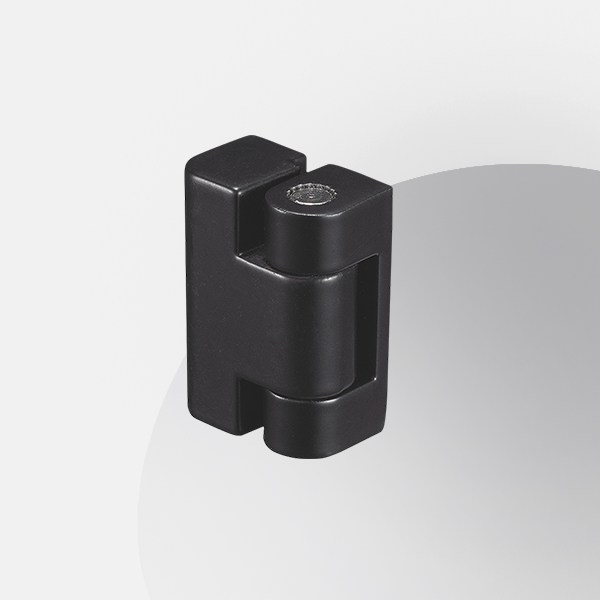
1. Diagnosis and Solutions for Door Sagging with Industrial Door Hinges
1.1 Main Causes of Sagging
Door sagging is the most common failure of industrial door hinges, appearing as a wider gap at the top and **a** narrower gap at the bottom after closing. The main cause is insufficient hinge load capacity when actual loads exceed rated values. When door panel weight plus accessory weight exceeds the rated load, pivot shafts and bushings gradually wear and deform.
When pivot shaft or bushing wear causes clearance to exceed 0.5 millimeters, visible door panel sinking occurs. Loose mounting screws causing leaf displacement also cause sagging. Measure the gap difference on all four sides with a tape measure; top-to-bottom difference exceeding 3 millimeters confirms sagging.
Sagging industrial door hinges require inspection for leaf cracks or deformation. When leaf thickness decreases by more than 20 percent due to wear, structural strength is insufficient. Heavy-duty cabinet hinge sagging is often related to insufficient load rating selection.
1.2 Solutions for Sagging
Sagging caused by insufficient load capacity requires replacement with higher-rated hinges. New hinges should have rated loads three times the door panel weight. Distribution box hinge sagging follows the same principle; calculate total load precisely before replacement.
Sagging caused by pivot shaft wear requires paired replacement of pivot shafts and bushings, or complete replacement of the industrial door hinge set. Bushings with inner diameter increases exceeding 0.3 millimeters from initial values must be replaced. Choose bronze self-lubricating bushings for extended service life during replacement.
Sagging caused by loose screws should first be retightened with a torque wrench. M8 bolts require 18 to 22 Newton-meters. If door panels have permanently deformed, add adjustment shims between hinges and door panels, with single shim thickness of 0.5 to 2 millimeters.
1.3 Daily Measures to Prevent Sagging
Check fastener torque on industrial door hinges quarterly. Retighten if below 80 percent of standard values. Apply medium-strength thread-locking compound to threads before retightening to prevent re-loosening.
Regularly measure four-side gaps and record change trends. If gap differences increase for two consecutive measurements, wear is accelerating. Apply lubricating grease promptly to delay pivot shaft wear. The industrial door hinge manufacturer recommends comprehensive inspections every six months.
Reserve sufficient safety margins during selection to avoid long-term overloading. Safety factors for heavy-duty industrial hinges should be three times or more. Recalculate load requirements when adding door panel accessories.
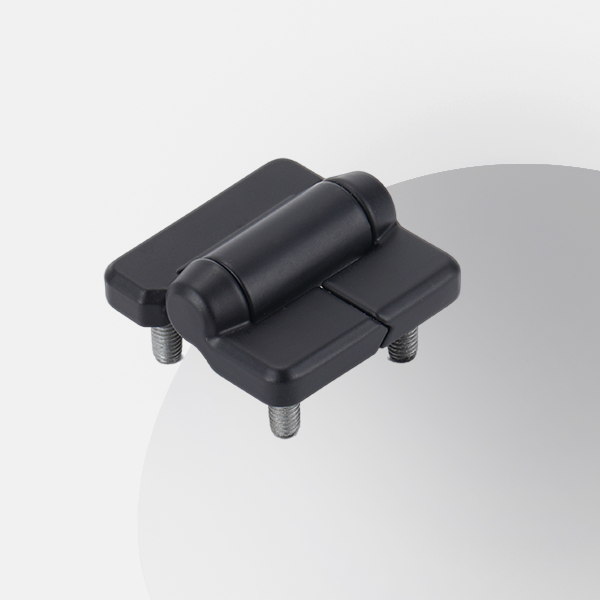
2. Handling Abnormal Noise and Binding in Industrial Door Hinges
2.1 Root Causes and Solutions for Abnormal Noise
Squeaking or creaking noises during industrial door hinge operation are usually caused by insufficient pivot shaft lubrication or metal debris entering bushings. First, apply molybdenum disulfide grease; if noise disappears after 10 cycles, the problem is solved.
If noise persists after grease application, disassemble the hinge and sand the pivot shaft surface smooth with fine sandpaper. Embedded hard particles in bushings require disassembly and cleaning. Rust-caused noise requires rust removal followed by anti-rust grease application.
Grinding noises may indicate bushing fracture or pivot shaft cracks. At this point, complete replacement of the industrial door hinge is mandatory. Distribution box hinge noise handling processes are consistent with standard hinges.
2.2 Diagnosis and Repair of Binding
Binding refers to industrial door hinges rotating with difficulty at certain angles or suddenly jamming. Causes include pivot shaft bending, leaf impact deformation, or bushing fracture. Slowly open and close the door panel to locate the binding point.
Measure pivot shaft straightness with a straightedge; replacement is mandatory when bending exceeds 0.5 millimeters. Leaf deformation can be corrected by light tapping with a rubber mallet; severe deformation requires complete hinge set replacement. Bushing fracture requires disassembly to remove debris and replace bushings.
Theindustrial door hinge factoryreminds that forcefully operating binding hinges is strictly prohibited to avoid damaging door frames and cabinets. Custom industrial door hinge binding issues require contacting the manufacturer for cause analysis.
2.3 Lubrication Maintenance to Prevent Noise
Apply anti-rust grease to pivot shafts every three months. Use molybdenum disulfide grease indoors and water-resistant lithium grease outdoors. Apply 1 to 2 grams per unit and cycle five times to distribute grease evenly.
Clean pivot shaft surface oil before applying new grease. Old oil mixed with dust forms abrasive paste that accelerates wear. Self-lubricating bushings can extend lubrication intervals to six months. Industrial door hinge load capacity is affected by lubrication status and requires regular maintenance.
Establish lubrication maintenance records to track maintenance dates for each hinge. The industrial door hinge manufacturer provides grease recommendations suitable for specific operating conditions. Correct lubrication can double hinge service life.
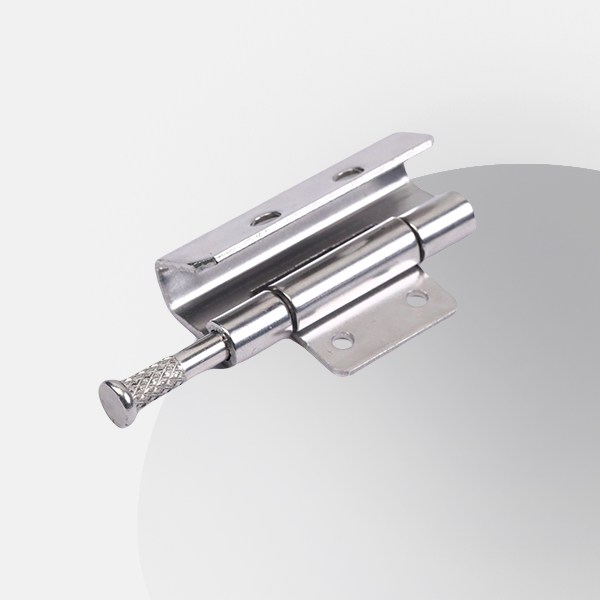
3. Handling Rust and Coating Damage on Industrial Door Hinges
3.1 Graded Treatment for Rust
Remove surface rust with a brass brush or fine sandpaper, then apply anti-rust primer after cleaning. For hinges with rust depth less than 0.3 millimeters, measure remaining thickness after rust removal; continue using if within safe ranges.
Rust depth exceeding 0.3 millimeters or perforation appearing requires immediate replacement. Carbon steel industrial door hinges rust at rates of 0.1 to 0.2 millimeters per year in outdoor environments. Remaining thickness may fall below safe values after three years.
Stainless steel industrial door hinges with pitting in highly corrosive environments also require replacement. Pitting rapidly develops into perforation. The industrial door hinge manufacturer recommends 316 stainless steel for coastal scenarios.
3.2 Repair of Coating Peeling
Apply anti-rust repair paint immediately after local coating scratches. For deep scratches, first sand edges with fine sandpaper then apply paint coverage. Clean surfaces to remove oil and rust before painting.
When coating peeling area exceeds 30 percent of leaf area, protection is essentially lost; direct hinge replacement is recommended. Carbon steel with large-area coating peeling may rust severely within six months.
When replacing, upgrade to stainless steel industrial door hinges to avoid recurring coating problems. Heavy-duty industrial hinges increasingly adopt stainless steel alternatives to coated carbon steel in harsh environments.
3.3 Rust Treatment at Welded Areas
Welded industrial door hinges are most prone to moisture accumulation and rust at weld seams. Regularly inspect for reddish-brown rust or micro-cracks around weld seams.
Clean weld rust with power tools fitted with wire wheels, then apply specialized weld anti-rust paint. Weld cracks exceeding 5 millimeters require immediate shutdown and replacement. Weld rust is a signal of structural damage requiring high attention.
The industrial door hinge factory's welding processes must ensure full welds without porosity. Apply anti-rust paint promptly after welding to form continuous protective layers. Distribution box hinge weld anti-rust treatment standards are identical.
4. Fastener Loosening and Mounting Hole Damage in Industrial Door Hinges
4.1 Handling Repeated Fastener Loosening
When bolted industrial door hinges repeatedly loosen even with thread-locking compound, mounting holes or bolt threads are damaged. Check bolts with thread gauges; replace when thread damage exceeds three threads.
Stripped internal threads can be repaired with threaded inserts, with costs approaching new hinge replacement. Repeatedly loosening hinges present extremely high risks in vibration environments; complete replacement of the industrial door hinge set is recommended.
Welded hinges do not have bolt loosening issues but welds may crack. The industrial door hinge manufacturer recommends welded types or adding anti-loosening washers for vibration environments.
4.2 Repair of Enlarged Mounting Holes
When mounting holes enlarge beyond 0.5 millimeters due to long-term vibration, bolts cannot provide sufficient clamping force. Door panels wobble and cannot be eliminated by tightening screws.
For minor hole enlargement, use larger diameter bolts or install threaded inserts. When more than two holes are deformed, replace the entire hinge set and re-drill. Industrial-grade cabinet hinge hole repairs must match original hole spacing.
Use adapter plates during replacement to match old hole positions and avoid re-drilling. Adapter plates are 5 millimeters thick with zinc plating. Custom industrial door hinges can be produced according to old hole spacing.
4.3 Installation Standards to Prevent Loosening
Apply medium-strength thread-locking compound to threads before installing bolts. Use spring washers to increase preload. Tighten bolts in diagonal sequence to ensure uniform force distribution.
Retighten fasteners with torque wrenches quarterly. Draw marking lines on bolt heads after tightening for easy loosening checks. Industrial door hinge installation precision directly affects performance.
Choose hinges with preset torque values to reduce loosening probability. The industrial door hinge factory provides installation guidance and torque parameters. Correct installation and regular maintenance prevent fastener loosening issues.
5. Summary: Industrial Door Hinge Troubleshooting
Solving common industrial door hinge problems requires systematic handling across four areas: sagging, noise and binding, rust, and fasteners.
Sagging: Replace with higher-rated hinges for insufficient load capacity; safety factor three times. Replace pivot shafts in pairs when wear exceeds 0.5 millimeters. Retighten loose screws with torque wrenches. Measure gap change trends quarterly and record data.
Noise and Binding: If noise persists after grease application, sand pivot shafts or replace bushings. Replace when pivot shaft bending exceeds 0.5 millimeters. Forcefully operating binding hinges is strictly prohibited. Regular lubrication every three months prevents problems.
Rust Treatment: Sand and repaint surface rust. Replace when depth exceeds 0.3 millimeters. Replace with stainless steel when coating peeling exceeds 30 percent. Clean weld rust and apply specialized anti-rust paint; shut down and replace when cracks exceed 5 millimeters.
Fasteners: Replace bolts when thread damage exceeds three threads. Repair enlarged holes with threaded inserts. Apply thread-locking compound and tighten diagonally. Retighten quarterly and draw marking lines to check loosening.
Heavy-duty cabinet hinges and distribution box hinges problem handling is completely identical to industrial door hinges. Custom industrial door hinge special problems require contacting manufacturers for cause analysis. Establish long-term cooperation with a reliable industrial door hinge factory to obtain technical support and parts supply, ensuring safe equipment operation.