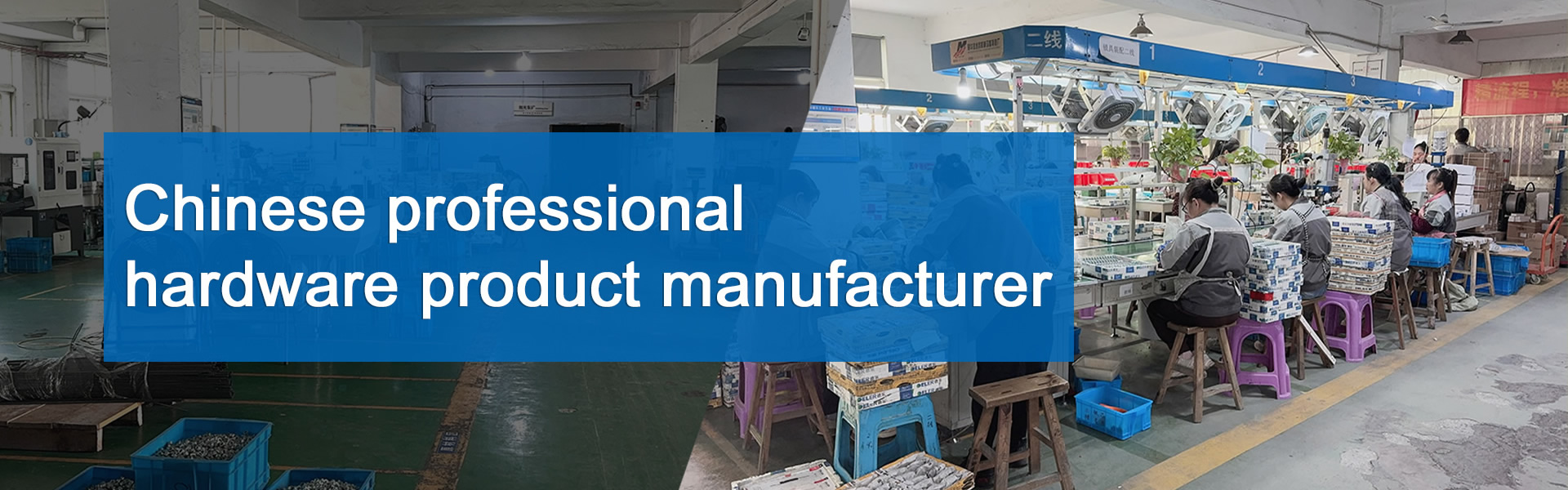
Industrial door hinges should be replaced promptly when they reach wear, deformation, or functional failure thresholds. This article clarifies replacement criteria from four dimensions. Whether you need a standard heavy-duty hinge or a custom solution, these guidelines ensure equipment safety.
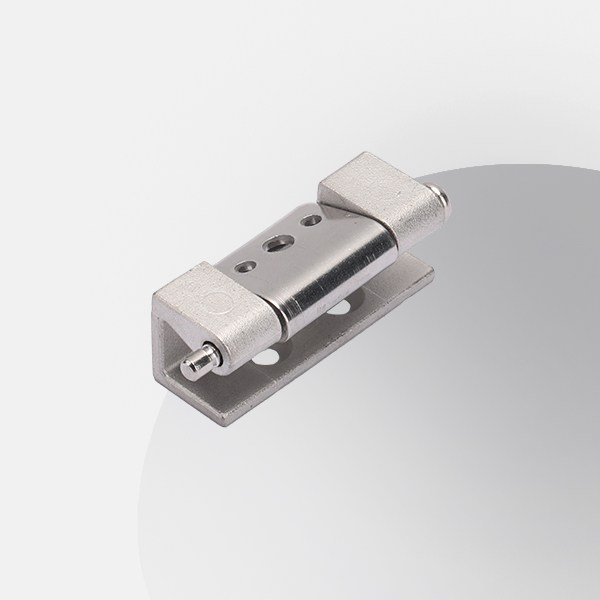
1. Replacement Judgments for Excessive Wear in Industrial Door Hinges
1.1 Pivot Shaft and Bushing Clearance Measurement
After a period of use, the clearance between the pivot shaft and bushing of industrial door hinges gradually increases. Measure pivot shaft diameter with a vernier caliper; replacement is mandatory when the reduction exceeds 0.5 millimeters compared to original factory data. Take measurements from unworn areas in the middle of the shaft as the baseline.
When the door panel is opened to 30 degrees and shaken up and down, looseness exceeding 2 millimeters indicates excessive clearance. Normal clearance should be controlled between 0.05 and 0.15 millimeters. Severely worn hinges have significantly reduced load capacity, posing safety hazards.
We recommend checking clearance every six months and recording data trends. Prepare replacement parts in advance when wear rates suddenly accelerate. Query original diameter data from the industrial door hinge manufacturer as comparison baselines.
1.2 Leaf Thickness Wear Assessment
When leaf thickness decreases by over 20% of its initial value, structural strength can no longer meet safety requirements. 4-millimeter thick leaves worn below 3.2 millimeters must be replaced. Select flat center areas for measurement, avoiding stamped reinforcing ribs.
Measure at least three positions on each industrial door hinge and take the minimum value. Thickness loss from coating wear is not included in structural thickness calculations. Thinner leaves reduce bending strength; door panels under heavy loads easily deform permanently.
Heavy-duty cabinet hingeshave higher leaf thickness standards than standard hinges. During replacement, also check whether door panel and cabinet mounting surfaces are flat. Uneven mounting surfaces accelerate new hinge wear.
1.3 Cycle Count Reaches Design Life
Quality industrial door hinges have design lives of 50,000 to 100,000 opening cycles. Beyond this range, internal metal structures are fatigued even if appearances remain intact. Record daily cycle counts to estimate cumulative usage.
In high-frequency scenarios such as automated production lines, hinge life is significantly shortened. Proactively purchase replacement parts when reaching 80 percent of design life. Avoid emergency replacements after a complete failure, which can cause costly downtime.
The industrial door hinge manufacturer provides fatigue life curves in technical documentation as references. Continuous cabinet hinges in high-frequency scenarios require shortened replacement cycles. Regularly record cycle counts and compare with design lives to plan replacement timing.
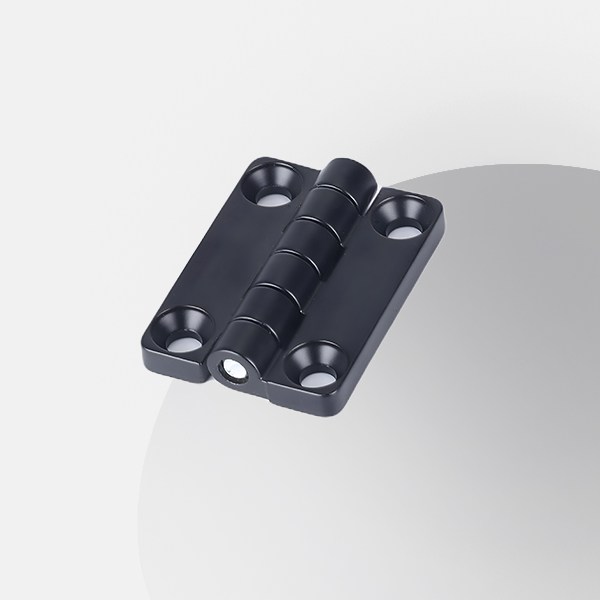
2. Replacement Standards for Deformation and Structural Damage in Industrial Door Hinges
2.1 Pivot Shaft Bending Causing Binding
When industrial door hinges suffer impact or overload, pivot shafts bend and deform. Obvious binding or sudden resistance changes occur at specific points during door panel operation. Measure pivot shaft straightness with a straightedge; replacement is mandatory when bending exceeds 0.5 millimeters.
Bent pivot shafts cause localized stress concentration in bushings, accelerating wear and generating noise. Forced continued use leads to bushing fracture or even door panel detachment. Check whether door panels are deformed during replacement.
Bending is usually caused by lateral impact or overloading. Improving operating practices reduces such problems. Replacing pivot shafts is relatively simple for bolted types, whereas welded types require complete hinge replacement.
2.2 Leaf Twisting and Weld Cracking
After leaves are twisted by external forces, the gaps on all four sides become noticeably inconsistent when door panels close. When top-to-bottom gap differences exceed 3 millimeters and adjustment shims cannot correct them, leaves are twisted. Use squares to check flatness; replacement is required when deviations exceed 1.5 millimeters.
When weld seams of welded hinges show reddish-brown rust accompanied by micro-cracks, structural integrity is compromised. Immediate replacement is required when crack lengths exceed 5 millimeters or depths exceed 2 millimeters. Dye penetrant inspection can reveal micro-cracks invisible to the naked eye.
Twisted and deformed hinges cannot be corrected by hammering. The only solution is complete industrial door hinge replacement. Readjust door panel positions after replacement to ensure sealing effectiveness. Industrial box hinge weld inspection standards are identical.
2.3 Mounting Hole Deformation and Enlargement
When mounting holes in bolted types enlarge beyond 0.5 millimeters due to long-term vibration, bolts cannot provide sufficient clamping force. Door panels wobble and cannot be eliminated by tightening.
For severe hole deformation, use larger diameter bolts or threaded inserts for repair. When more than two holes are deformed, replace the entire hinge set and re-drill. NEMA-rated cabinet hinge hole repairs must match original hole spacing.
Regular fastener torque checks prevent hole enlargement. Use spring washers or thread-locking compound during installation to slow wear. Cabinet hinges in vibration environments have strict requirements for hole integrity.
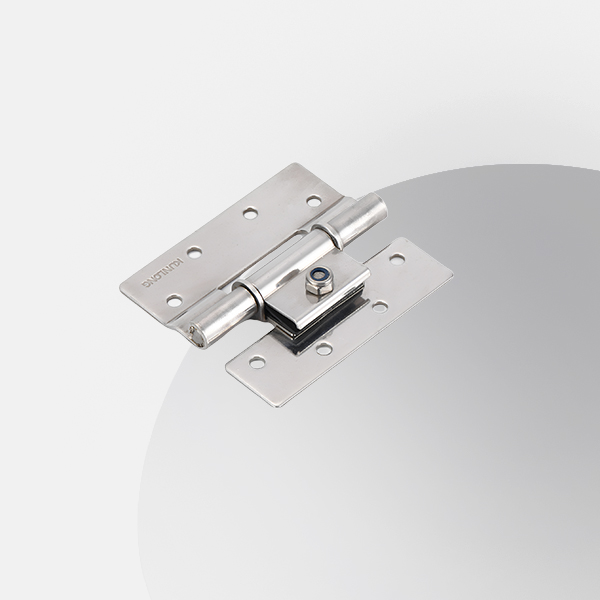
3. Replacement Criteria for Rust and Functional Failure in Industrial Door Hinges
3.1 Rust Depth Exceeds Standards
Measure rust pit depth on hinge surfaces with depth gauges. Replacement is mandatory when rust depth exceeds 0.3 millimeters and the affected area exceeds 10 percent of total leaf area. Surface rust can be sanded and continued in use.
Carbon steel hinges rust at rates of 0.1 to 0.2 millimeters per year outdoors. Remaining thickness may fall below safe values after three years. Stainless steel with pitting in highly corrosive environments also requires replacement.
Severe rust significantly reduces load capacity and is harder to detect than wear. Regular rust removal and repainting extend carbon steel life. Deep rust is irreversible and requires replacement. Heavy-duty hinges in harsh environments should directly use stainless steel materials.
3.2 Large-Area Coating Peeling
When carbon steel hinge coating peeling area exceeds 30 percent of leaf area, protection is essentially lost. Exposed metal rusts quickly, weakening load capacity. Local peeling can be sanded and repainted with anti-rust paint.
Hinges with large-area peeling in humid environments may rust severely within six months; direct replacement is recommended. Upgrade to stainless steel hinges during replacement to avoid recurring coating problems. The industrial door hinge factory provides material upgrade recommendations.
Weld rust expansion cracks are precursors to structural failure. Stop operation and replace immediately upon discovery. Welded hinge weld anti-rust treatment requires strengthening from the source.
3.3 Clear Signals of Functional Failure
Replacement is required when door panel sag exceeds 5 millimeters and adjustment is ineffective. The root cause of sag is excessive clearance from reduced pivot shaft diameter. Position-limiting mechanism failures in elevated work scenarios must be replaced immediately.
Repeated fastener loosening, even after applying a thread-locking compound, indicates severe hole or thread damage. When repair costs approach new hinge prices, direct replacement is recommended. Hydraulic module leaks in damping hinges cannot be repaired and require replacement.
Abnormal noise persisting after lubricant application indicates accelerated internal wear. Squeaking sounds originate from dry friction; grinding sounds indicate bushing fracture. Any abnormal noise is a clear signal for replacement.
4. Replacement Implementation and Preventive Maintenance for Industrial Door Hinges
4.1 Preparation Work Before Replacement
Before replacing industrial door hinges, secure door panels with support stands to prevent falling. Prepare replacement hinges of the same specifications or higher grades. Confirm new hinge hole spacing matches original products to avoid re-drilling.
Provide old hinge dimensions and models to the industrial door hinge manufacturer. When drawings are available, order from them to ensure matching. When drawings are unavailable, measure critical dimensions and provide them to the factory for customization.
When removing old hinges, use appropriate wrenches for bolted types and angle grinders to cut welds for welded types. Clean old holes or weld slag from door panels and cabinets. Use adapter plates to match hole spacing when necessary.
4.2 Replacement Operations and Adjustment Acceptance
New hinge installation positions must completely coincide with old positions to ensure door panel gap alignment. After installation, perform opening/closing tests to confirm smooth rotation and good sealing. Two people work together: one holds the door panel while the other tightens.
During adjustment, measure four-side gaps with differences not exceeding 2 millimeters. Door panels should remain stable without rebound when released at 90 degrees. Tighten fasteners in diagonal sequences to standard torque values.
Record installation dates and baseline data for new hinges. Establish maintenance files to track usage conditions for each hinge. The industrial door hinge factory provides installation guidance and torque parameters.
4.3 Preventive Replacement and Long-Term Management
Establish regular inspection systems to check clearance and gap changes quarterly. When data trends show accelerated wear, purchase spare parts in advance. Planned replacement saves costs compared to emergency repairs.
Reserve spare parts at 3 to 5 percent of procurement volume. Stock consumable parts in advance for unexpected demand. Sign framework agreements with the industrial door hinge manufacturer to lock in pricing and capacity.
Continuous cabinet hinges and heavy-duty hinges in high-frequency scenarios should shorten inspection cycles to monthly. Correct maintenance of industrial door hinges can double service life. Timely replacement of aging hinges ensures safe equipment operation and personnel safety.
5. Summary: Replacing Industrial Door Hinges
Replacement decisions for industrial door hinges require comprehensive assessment across four dimensions: wear, deformation, rust, and functional failure.
Wear: Replacement is mandatory when pivot shaft diameter reduction exceeds 0.5 millimeters, bushing clearance exceeds 0.3 millimeters, or leaf thickness decreases by more than 20 percent. Prepare spare parts when cycle counts reach 80 percent of design life.
Deformation: Immediate replacement is required when pivot shaft bending exceeds 0.5 millimeters, leaf twisting causes gap differences exceeding 3 millimeters, or weld cracks exceed 5 millimeters. Mounting holes enlarged beyond 0.5 millimeters require repair or replacement.
Rust: Replacement is required when rust depth exceeds 0.3 millimeters or coating peeling area exceeds 30 percent. Weld rust expansion cracks are precursors to structural failure; stop operation and address immediately.
Functional Failure: Replacement is required when door panel sag exceeds 5 millimeters with ineffective adjustment, fasteners repeatedly loosen and cannot be tightened, or abnormal noise persists after lubricant application. Position-limiting mechanism failures in elevated work scenarios must be addressed immediately.
Replacement standards for heavy-duty cabinet hinges and industrial box hinges are completely identical to those of industrial door hinges. NEMA-rated cabinet hinges and continuous cabinet hinges require adjusted inspection cycles based on specific working conditions. Establish long-term cooperation with a reliable industrial door hinge factory to obtain technical support and parts supply, ensuring timely replacement and safe equipment operation.