Purchasing industrial cabinet hingesrequires focus on four key parameters: load capacity, material, installation method, and certification. This article explains each selection point. Whether you need standard heavy-duty industrial hinges or a custom solution, these criteria ensure reliable procurement.
1. Load and Dimension Parameters for Industrial Cabinet Hinges
1.1 Rated Load Capacity and Safety Factor
The rated load capacity of an industrial cabinet hinge is the primary parameter. Single-unit loads should start at 200 kilograms; standard hinge loads of 20 to 80 kilograms are unsuitable for industrial cabinet doors. Apply a safety factor of 3x (or a factor of 3) based on the total door panel weight to ensure long-term sag-free performance.
Dynamic load parameters are equally critical, not less than 70 percent of static load values. Dynamic load simulates impact forces during opening and closing; high-frequency scenarios require increasing the safety factor to four times. For multiple-hinge installation, total load capacity is calculated at 80 percent of the sum of individual ratings.
Heavy-duty cabinet hinges have clearly marked load ratings; verify rated values against actual requirements during procurement. Request load test reports from the industrial door hinge manufacturer to confirm loading methods and deformation data. Machinery hinge load selection also follows the threefold principle.
1.2 Dimensions and Mounting Hole Spacing
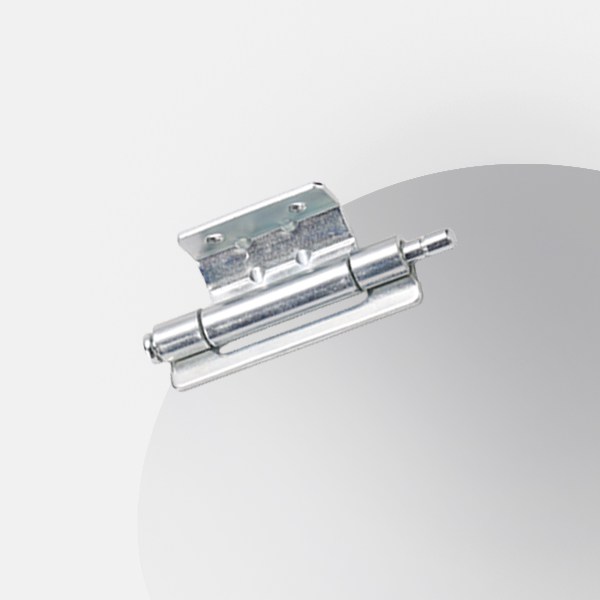
Measure mounting hole spacing, leaf length, width, and thickness dimensions. Mismatched hole spacing prevents installation or requires re-drilling. The hole spacing of newly purchased enclosure hinges must match that of the original products.
Leaf thickness not less than 6 millimeters meets heavy-duty standards. Pivot shaft diameters of 16 to 25 millimeters determine bending strength. Dimensional tolerances are typically plus or minus 0.5 millimeters, with critical fit dimensions at plus or minus 0.2 millimeters.
Install two hinges for door heights within 2 meters, and three hinges for heights exceeding 2.5 meters. Hinge spacing should be at one-third and two-thirds of the door panel height. Provide complete dimensional drawings to the Cabinet Hinges factory before procurement for precise matching.
1.3 Hinge Quantity and Layout Parameters
Standard door panels use two units. High-frequency opening scenarios can increase to three or four units. Four units improve load efficiency by approximately 30 percent compared to two. Beyond four units, marginal benefits diminish, so additional units are not recommended.
For door panels exceeding 1.2 meters in width, add a middle hinge for torsion resistance. Extra-wide doors tend to twist during opening. Before installation, use a laser level to ensure verticality error does not exceed 1 millimeter.
Purchasing in pairs with unified specifications facilitates spare parts management. Identical specifications reduce inventory types. Bulk purchases qualify for negotiated discounts, reducing procurement costs. Heavy-duty hinge layout parameters are calculated precisely based on door panel dimensions.
2. Material Selection and Anti-Corrosion Standards
2.1 Base Material Grade Selection
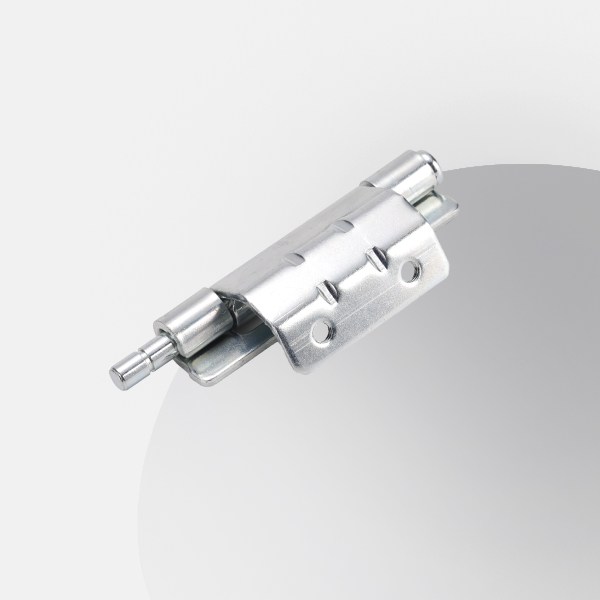
For carbon steel options, choose 45# steel or 40Cr alloy steel, not ordinary Q195 cold-rolled steel. 40Cr after quenching and tempering offers more than twice the strength of ordinary carbon steel. Stainless steel categories should use 304 or 316, with chromium content not less than 18 percent.
316 stainless steel, with added molybdenum, offers stronger chloride corrosion resistance. Forged steel suits extreme heavy-load scenarios such as mines and ports, with single-unit load capacity of 500 to 1,000 kilograms. Machinery hinge material selection depends on the operating environment.
Request material test reports from the industrial door hinge manufacturer, including chemical composition and mechanical property data. Material grades must be laser-marked on hinge bodies. Third-party testing agencies can be commissioned for material re-verification.
2.2 Surface Treatment and Corrosion Protection Levels
Hot-dip galvanized coating thickness should not be less than 70 micrometers, with salt spray testing of 300 hours or more. Powder electrostatic spray coating thickness is 60 to 100 micrometers, with adhesion 40 percent higher than liquid paint. Zinc-aluminum-magnesium coating is a 2026 new technology, exceeding 1,000 hours in salt spray testing.
Stainless steel surfaces are pickled and passivated to form dense oxide films. Welded hinge seams require separate anti-rust paint application. Cross-cut coating adhesion testing requires detachment area below 5 percent to pass.
When purchasing, request coating thickness test reports and salt spray test reports from the Cabinet Hinge manufacturer. Outdoor scenarios require salt spray testing of not less than 500 hours. The corrosion protection levels of NEMA-rated cabinet hinges must comply with North American standards.
2.3 Material and Environment Matching
For indoor dry environments, choose carbon steel with hot-dip galvanizing to achieve the best cost-performance ratio. For humid outdoor environments, choose 304 stainless steel; for highly corrosive coastal environments, choose 316. Extreme heavy loads choose forged steel; explosion-proof scenarios choose copper alloy.
Food and pharmaceutical cleanroom scenarios require food-grade grease and smooth surfaces. High-temperature environments require evaluation of material tolerance. Heavy-duty hinges in corrosive environments should directly use stainless steel to avoid coating failure.
Material selection requires comprehensive consideration of environment, load, service life, and budget. Industrial hinge material matching principles are consistent with standard enclosure hardware. Consult the Cabinet Hinges factory for material recommendations based on specific working conditions.
3. Installation Methods and Functional Characteristics
3.1 Installation Method Selection
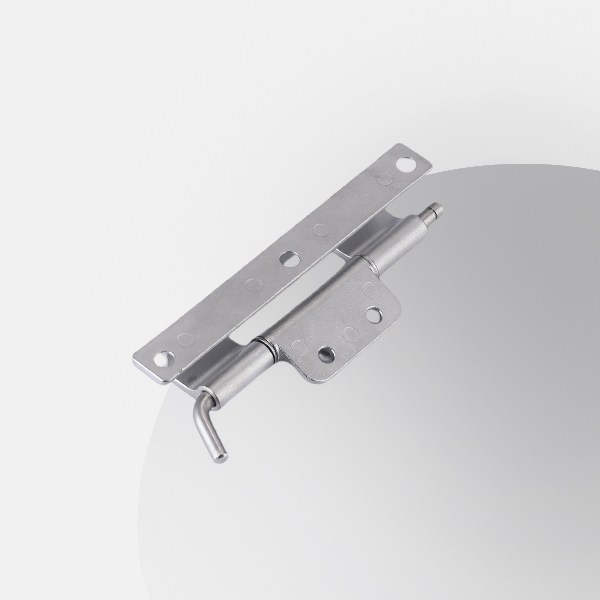
Welded industrial cabinet hinges offer extremely strong anti-theft performance, suitable for outdoor fixed equipment. After welding, there are no removable external parts and no bolt loosening risk. Welded types offer 10 percent higher load efficiency than bolted types.
Bolted types facilitate disassembly and replacement, suitable for vibration environments. Use Grade 8.8 high-strength bolts with thread-locking compound to prevent loosening. Removable types suit frequent door panel removal for cleaning and inspection scenarios, with load capacity 10 to 15 percent lower than welded types.
Adjustable hinges offer three-dimensional adjustment ranges of 5 millimeters front-to-back, 3 millimeters left-to-right, and 3 millimeters up-and-down. Suitable for door frame deformation or old cabinet retrofit projects. Debugging time is reduced by 60 percent compared to standard types. Confirm adjustment ranges meet actual tolerances before procurement.
3.2 Functional Characteristics Parameters
Standard types provide only basic rotational opening and closing functions, suitable for low-frequency scenarios with the best cost performance. Damping types feature built-in hydraulic cushioning modules that automatically decelerate door closing to protect precision instruments. Damping speeds are adjustable, with costs 30 percent higher.
Position-limiting types feature ratchet locking mechanisms at 90 or 180 degrees, ensuring elevated maintenance safety. Limiting mechanisms have passed over 10,000 durability tests. Smart monitoring types feature built-in load sensors, enabling predictive maintenance and overload alerts.
Functional requirements should be clearly defined in advance and included in technical specification lists. Avoid insufficient or excessive functionality after purchase. Consult the industrial door hinge manufacturer about feasibility and costs of functional implementation.
3.3 Certification and Compliance Parameters
Verify ISO9001, ISO14001, and ISO45001 system certifications. Export products require CE or UL certification. Domestic products must comply with GB/T 38737. Certification certificates must be valid and cover the "hinge manufacturing" category.
RoHS and REACH environmental certifications are essential compliance documents for EU exports. ISO 14067 Carbon Footprint certification has become an emerging export requirement. Certification certificates and test reports are both essential, and sample models must match certificates.
Products with incomplete certifications risk customs detention and project disqualification. Verify certification authenticity one by one during procurement. The industrial door hinge factory's certification completeness is the primary condition for supplier screening.
4. Sample Verification and Supplier Evaluation
4.1 Sample Testing Parameter Verification
Before bulk purchase, request samples for installation testing. Sample testing applies load up to 1.5 times the rated value, with deformation not exceeding 0.5 millimeters considered passing. Salt spray testing should follow application environment requirements.
After samples pass testing, seal and retain them as the bulk acceptance benchmark. Keep test reports and sample products for future comparison. Suppliers with non-conforming samples should be eliminated immediately to avoid bulk quality risks.
Material test reports and salt spray test reports must be issued by CNAS or CMA accredited laboratories. Sample models in reports must match procurement products. Report dates must be within one year to be valid.
4.2 Supplier Qualification Evaluation
Verify the industrial door hinge manufacturer's system certifications and product certifications. Evaluate production equipment and testing capabilities; factories with CNC machining centers and in-house laboratories offer more stable quality.
Understand factory customer reputation and industry experience. Factories with over three years of history and stable customers are more reliable. Request customer lists and cooperation case studies from the industrial door hinge manufacturer.
Establish annual supplier evaluation systems covering quality, delivery, price, and service. Suppliers with excellent evaluations for two consecutive years can be upgraded to strategic suppliers. Sign three-year framework agreements to lock in pricing and capacity.
4.3 Contract and Warranty Parameters
Contracts must clearly specify product specifications, material grades, quantity, and acceptance standards. Technical appendices should describe dimensional tolerances and performance indicators in detail. Warranty terms should be at least three years, preferably five.
We recommend the 3-3-3-1 payment structure. Specify warranty response times not exceeding 48 hours. Quality acceptance follows GB/T 2828.1 standards for sampling inspection.
Reserve spare parts at 3 to 5 percent of procurement volume. Establish emergency order channels with the industrial door hinge factory to ensure shipment within three days. Standard industrial hinge and heavy-duty unit procurement verification processes are completely identical.
5. Summary: Industrial Cabinet Hinges Procurement Guide
Selecting the right industrial cabinet hinges requires systematic evaluation across four major parameter categories: load and dimensions, material and processes, installation and functions, and certification verification.
Load and Dimensions: Rated load starts at 200 kilograms with a safety factor of three times. Dynamic load should not be less than 70 percent of static load. Precisely measure mounting hole spacing, leaf length/width/thickness, and pivot shaft diameter. Standard door panels use two hinges; over 2.5 meters use three.
Material and Processes: Carbon steel choose 45# steel or 40Cr. For stainless steel, choose 304 or 316. Hot-dip galvanized coating 70 micrometers or more. Powder coating 60 to 100 micrometers. Salt spray testing for outdoor use not less than 300 hours.
Installation and Functions: Welded types offer strong anti-theft protection. Bolted types facilitate maintenance. Adjustable types suit door frame deformation. Damping, position-limiting, and smart monitoring functions should be selected based on scenarios. Functional requirements should be included in technical lists in advance.
Certification Verification: Verify ISO9001, ISO14001, and ISO45001 certifications. Export requires CE or UL certification. Domestic products must comply with GB/T 38737. RoHS and REACH environmental certifications complete. Request samples for load and salt spray testing verification.
Heavy-duty units and enclosure hardware purchasing parameters are basically consistent with these standards. NEMA-rated cabinet hinges require additional protection rating certification verification. Machinery hinges and industrial hinges material parameter selection principles are identical. Establish long-term cooperation with a reliable industrial door hinge manufacturer to obtain stable product quality and technical support.