How to Measure Heavy Duty Hinge Size Correctly
Views:249 Author: Dele-Heavy-Duty Industrial Hinge Manufacturers Publish Time:2026-06-10 Origin:Dele-Industrial cabinet lock manufacturer
This article provides a detailed explanation of how to correctly measure
heavy-duty hinge dimensions, covering key parameters such as leaf length, leaf
width, leaf thickness, and pivot shaft diameter.
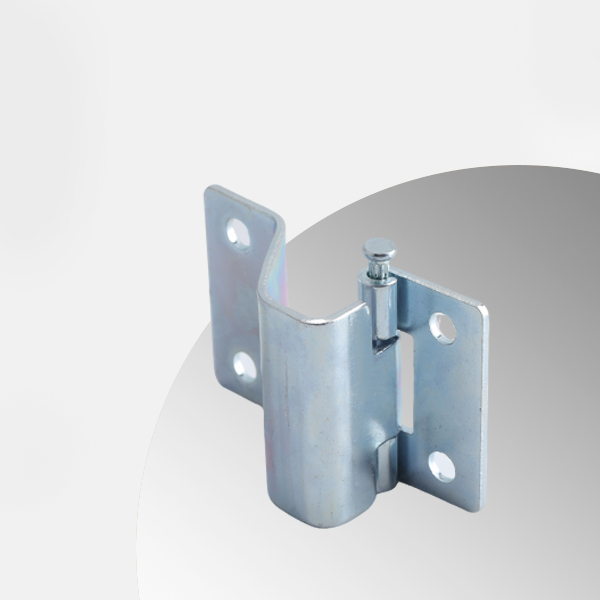
1. Preparation Work for Measuring Heavy-Duty Hinge Dimensions
1.1 Choosing the Right Measurement Tools
Before measuring heavy-duty hinge dimensions, you need to prepare a vernier
caliper with an accuracy of no less than 0.05 millimeters, a steel ruler, and a
depth gauge. For large heavy-duty hinges, you can also prepare a tape measure to
assist with length measurements. The vernier caliper is the core tool for
measuring heavy-duty hinge leaf thickness and pivot shaft diameter, and digital
calipers provide more intuitive readings. The steel ruler is used to measure the
overall length and mounting hole spacing of the heavy-duty hinge. Before
measuring, clean the surface of the heavy-duty hinge to remove oil and rust,
ensuring accurate and reliable measurement data. While different heavy-duty
hinge manufacturers have slightly different product size specifications, the
measurement methods are fully universal.
1.2 Measurement Environment and Recording Requirements
Place the heavy-duty hinge on a flat, stable workbench, avoiding
measurement on curved or tilted surfaces. The ambient light should be sufficient
for reading scale values. When measuring, we recommend having two people work
together: one person holds the heavy-duty hinge steady while the other reads the
measurements, preventing movement that could cause errors. Each time you measure
the same dimension of the heavy-duty hinge, repeat the measurement three times
and take the average value to eliminate random errors. Prepare a recording form
and fill in data for leaf length, leaf width, leaf thickness, pivot shaft
diameter, and mounting hole spacing in order. For heavy-duty hinges used in
pairs, measure each one separately and mark the left and right orientation.
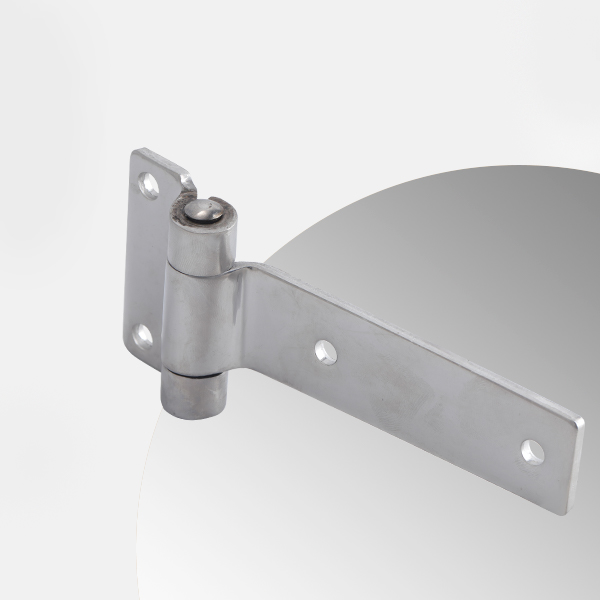
2. Methods for Measuring Heavy-Duty Hinge Leaf Dimensions
2.1 Measuring Leaf Length and Leaf Width
Use a steel ruler or vernier caliper to measure the leaf length of the
heavy-duty hinge, which is the maximum distance from one end of the leaf to the
other end. During measurement, the ruler should be parallel to the leaf edge of
the heavy-duty hinge, and your line of sight should be perpendicular to the
scale markings. Leaf width refers to the maximum dimension of the leaf
perpendicular to the pivot shaft direction, including the rolled section of the
hinge. For non-standard shaped heavy-duty hinges, measure the length and width
at multiple positions and take the maximum value as the basis for selection.
When recording data, note whether it is the upper leaf or lower leaf, as some
heavy-duty hinges may have different lengths for the upper and lower leaves.
Cabinet hinges follow exactly the same leaf dimension measurement method.
2.2 Precisely Measuring Leaf Thickness
Use the inside or outside measuring jaws of the vernier caliper to clamp
the flat area of the heavy-duty hinge leaf for thickness measurement. Avoid
stamped deformation areas and the heat-affected zone of welds, and choose a flat
location at the center of the leaf. For each heavy-duty hinge, measure the
thickness at least three different positions and use the minimum value as the
effective thickness. This is because the load capacity of a heavy-duty hinge
mainly depends on the strength at its thinnest point. When measuring carbon
steel heavy-duty hinges, pay attention to the effect of coating thickness on the
actual steel thickness. Coatings are typically 20 to 50 micrometers thick.
Heavy-duty industrial hinges follow the same principle of taking the minimum
value for thickness acceptance.
3. Measuring Heavy-Duty Hinge Pivot Shaft and Mounting Hole Spacing
3.1 Method for Measuring Pivot Shaft Diameter
Position the two measuring jaws of the vernier caliper perpendicular to the
cylindrical surface of the heavy-duty hinge pivot shaft to measure the outer
diameter. The pivot shaft diameter is a core parameter that determines the load
capacity of the heavy-duty hinge. A solid shaft with a diameter of 10
millimeters can withstand loads of up to 200 kilograms. During measurement,
avoid the chamfered ends and worn areas of the shaft, and measure at the middle
position of the pivot shaft. For removable heavy-duty hinges, you can remove the
pivot shaft before measuring for more accurate data. If the pivot shaft of the
heavy-duty hinge has already rusted, remove the rust before measuring, as the
rust layer can cause readings to be too large. When recording the pivot shaft
diameter, also note whether the shaft is solid or hollow.
3.2 Techniques for Measuring Mounting Hole Spacing
Mounting hole spacing refers to the distance between the centers of two
adjacent mounting holes on the heavy-duty hinge leaf. Use the vernier caliper to
measure the distance from the left edge of the first hole to the left edge of
the second hole; this value is equal to the center-to-center distance. If the
hole is a slotted hole rather than a round hole, measure to the center of the
slot. The hole spacing of the upper and lower heavy-duty hinges must be
identical; otherwise, they cannot be aligned during installation. For welded
heavy-duty hinges, hole spacing measurement is unnecessary, but you do need to
measure the weld leg size. Concealed hinges have mounting holes typically
located on the inside of the door frame, requiring door panel removal for
measurement. Accurate hole spacing data is the key basis for ordering
replacement parts from heavy-duty hinge manufacturers.
4. Common Errors and Avoidance Guide for Measuring Heavy-Duty Hinge
Dimensions
4.1 Incorrect Measurement Positions
A common mistake for beginners is placing the heavy-duty hinge on a curved
or uneven workbench for measurement, resulting in larger length readings. When
measuring a heavy-duty hinge, ensure the product is fully opened to 180 degrees.
Another common error is measuring thickness while clamping onto a stamped
reinforcing rib. Instead, choose a flat area. For used heavy-duty hinges that
have already worn, measurement data from worn or deformed areas does not
represent the original dimensions. Refer to symmetrical areas or unworn regions
instead. Before each measurement of a heavy-duty hinge, zero and calibrate the
caliper to avoid cumulative errors.
4.2 Ignoring Tolerances and Fit Clearance
After measuring the dimensions of a heavy-duty hinge, you also need to
understand the tolerance range. Typically, the length tolerance of a heavy-duty
hinge is plus or minus 0.5 millimeters, and the thickness tolerance is plus or
minus 0.1 millimeters. When purchasing replacement parts, choose products with
the same nominal size and the same tolerance grade as the old heavy-duty hinge.
The clearance between the pivot shaft and the bushing should be between 0.05 and
0.15 millimeters. Excessive clearance can cause the door panel to wobble. If,
during measurement, you find that the pivot shaft of the heavy-duty hinge has
already worn into an elliptical shape, measure both the major axis and the minor
axis, and use the minor axis as the baseline for selection. Correct heavy-duty
hinge dimension measurement is the prerequisite for successful replacement and
installation.
5. Summary
Correctly measuring heavy-duty hinge dimensions requires mastering four
core steps: First, prepare a vernier caliper with an accuracy of 0.05
millimeters and a steel ruler, clean the heavy-duty hinge surface before
measurement, and place it on a flat workbench. Second, measure leaf length,
width, and thickness at multiple positions and take the minimum value, avoiding
stamped reinforcing ribs and the heat-affected zone of welds. Third, measure the
pivot shaft diameter vertically at the middle position, and measure the mounting
hole spacing using the hole-edge measurement method. Fourth, avoid common errors
such as an uneven workbench or failing to zero the caliper, and record the
tolerance range. While product specifications may vary among different
heavy-duty hinge manufacturers, the measurement methods are fully universal.
Cabinet hinges and heavy-duty industrial hinges follow the same dimension
measurement process. Concealed hinges require door panel removal to measure
internal hole positions. Accurate dimension data directly improves procurement
efficiency and installation success rates while extending the service life of
heavy-duty hinges.