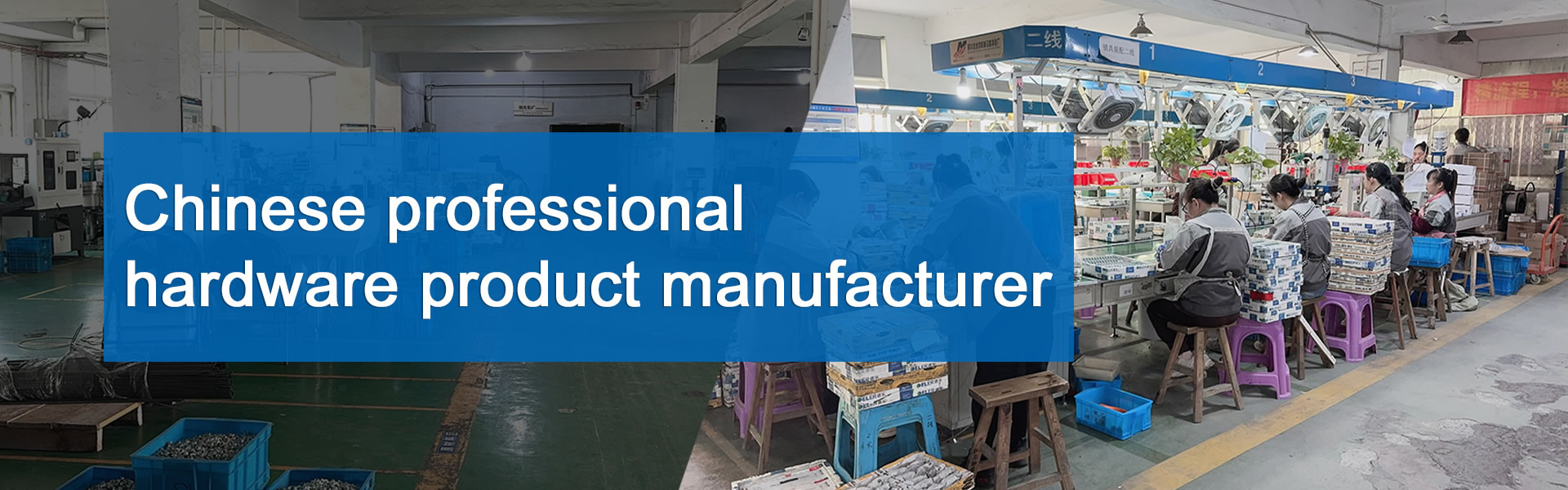
Heavy-duty industrial hinges offer exceptional load capacity, superior durability, and reliable safety, making them the preferred hardware for industrial doors and cabinets.
1. High Load Capacity Ensures Long-Term Door Stability
1.1 Ample Load Margin
Heavy-duty industrial hinges start at 200 kilograms per unit, far exceeding standard hardware at 20 to 80 kilograms. Load ratings are clearly marked, allowing precise selection. A 100-kilogram door panel requires a 300-kilogram rated product, achieving a safety factor of three times. This ample margin ensures doors remain sag-free and secure under heavy loads.
Dynamic load capacity is equally excellent, at no less than 70 percent of static load. Dynamic load simulates impact forces and vibration during opening and closing. In industrial settings, doors open and close frequently, and inadequate dynamic load capacity leads to premature failure. These products undergo rigorous laboratory testing to verify dynamic load performance.
For multiple-hinge installation, total load capacity is calculated at 80 percent of the sum of individual ratings, providing a conservative safety margin. A three-hinge configuration further improves stability, with the middle hinge bearing torsional loads. These products are designed to meet more than ten years of usage requirements.
1.2 Deformation-Resistant Structural Design
Leaf thickness ranges from 6 to 10 millimeters, with multiple reinforcing ribs that significantly improve bending rigidity. These ribs prevent deformation under heavy loads, maintaining precise door alignment. Standard hardware leaves are only 2 to 3 millimeters thick without reinforcing ribs, resulting in noticeable door sag after just two years.
Pivot shaft diameters range from 16 to 25 millimeters, more than double that of standard hardware. The shaft material is 40Cr alloy steel, quenched to HRC 40 to 45 hardness. Large-diameter quenched shafts maintain high precision under heavy loads and high-frequency operation, with bending resistance three times that of standard shafts.
Bronze self-lubricating bushings provide tight fit with clearance controlled between 0.05 and 0.15 millimeters. This precision fit enables heavy-duty industrial hinges to maintain door positioning accuracy over long-term use. Continuous hinges further distribute loads, making them suitable for extra-long door panels.
1.3 Extended Fatigue Life
These products have a design life of 50,000 to 100,000 opening cycles, three to five times that of standard hardware. After 50,000 cycles, gap increase is less than 0.3 millimeters. In high-frequency scenarios, the life advantage is even more pronounced.
Bronze bushings wear at one-third the rate of iron-based bushings, maintaining smooth rotation over time. High-quality versions show minimal deformation under continuous heavy loads. Fatigue test reports are the core basis for evaluating product quality.
Extended fatigue life reduces replacement frequency and lowers long-term maintenance costs. In industrial settings, unplanned downtime losses far exceed the hinge price itself. The reliability of these products ensures continuous production line operation.
2. Superior Durability for Harsh Industrial Environments
2.1 Diverse Material Options for Different Environments
Carbon steel versions offer low cost and high strength, with rust resistance significantly improved by hot-dip galvanizing or powder coating. Hot-dip galvanized coating thickness is 70 micrometers, with salt spray testing of 300 hours or more. Suitable for standard industrial cabinets and power distribution boxes in indoor dry environments.
Stainless steel versions contain at least 18 percent chromium, forming a dense oxide film on the surface. 304 stainless steel achieves over 500 hours in salt spray testing, while 316 stainless steel exceeds 1,000 hours. Coastal base stations, chemical plants, and food workshops require stainless steel material.
Forged steel versions are manufactured through high-temperature forging, resulting in dense grain structure and exceptional strength. Single-unit load capacity can reach 500 to 1,000 kilograms, with impact resistance twice that of carbon steel. Mines, ports, and large press applications prefer forged steel.
2.2 Advanced Surface Treatment Processes
Hot-dip galvanized coating provides cathodic protection, preventing rust around scratches. Powder electrostatic spray coating thickness is 60 to 100 micrometers, with adhesion 40 percent better than liquid paint. Zinc-aluminum-magnesium coating is a 2026 new technology, achieving over 1,000 hours in salt spray testing with self-healing properties after scratching.
In cross-cut coating adhesion testing, a detachment area of less than 5% is considered passing. Welded products require separate anti-rust paint application at weld seams to eliminate corrosion weak points. The heavy-duty industrial hinges factory provides complete salt spray test reports.
Stainless steel surfaces are pickled and passivated, with the oxide film self-repairing after damage. Passivated stainless steel remains rust-free for ten years in marine environments. Heavy-duty cabinet hinges corrosion protection is a core guarantee of durability.
2.3 Optimized Wear Component Design
Pivot shafts are quenched to HRC 40 to 45 hardness for excellent wear resistance. Combined with bronze or engineering plastic self-lubricating bushings, wear rates are significantly reduced. Self-lubricating bushings have 25 percent oil content, requiring no greasing for 50,000 cycles.
Replaceable bushing design extends overall service life. When bushings wear out, only the bushing needs replacement, costing one-tenth of a complete hinge set. The factory provides bushing spare parts for convenient maintenance.
Leaf and pivot shaft wear cannot be repaired, but thick leaves and large-diameter shafts significantly slow the wear process. Correct selection combined with regular lubrication extends service life beyond 15 years. Continuous hinges are specifically designed for high-frequency applications.
3. Reliable Safety for Personnel and Equipment Protection
3.1 Anti-Theft and Anti-Loosening Design
Welded versions have no removable external parts, offering extremely strong pry resistance. Outdoor cabinets and charging stations require welded types. Welded types have no bolt loosening risk, maintaining stable clearance and reliable safety over long-term use.
Bolted versions use Grade 8.8 high-strength bolts with thread-locking compound. The compound fills thread gaps, preventing vibration-induced loosening. Quarterly bolt torque checks prevent loosening and ensure door stability.
Removable versions feature anti-disengagement safety pins to prevent pivot shaft displacement. The safety pin is a double-lock design, requiring removal before door panel replacement. Multiple anti-loosening designs ensure these products remain effective in vibration environments.
3.2 Damping and Position-Limiting Functions
Damping versions feature built-in hydraulic cushioning modules that automatically slow door closing. This prevents impact vibration and protects internal precision instruments. Damping speed can be adjusted via an adjustment screw to accommodate different door panel weights.
Position-limiting versions feature ratchet locking mechanisms at 90-degree or 180-degree positions. Doors lock securely without wobbling, ensuring maintenance personnel safety. Elevated work scenarios require position-limiting versions.
The locking mechanism has passed over 10,000 durability tests, ensuring long-term reliability. To unlock, lift the door panel or press the release button for simple, safe operation. Industrial enclosure locks work together with position-limiting hinges for a complete safety solution.
3.3 Smart Monitoring Early Warning
Smart versions feature built-in load sensors that monitor stress conditions in real time. The app pushes overload alerts to prevent door panel falls and equipment damage. Data is transmitted via Bluetooth or IoT gateways to management systems for remote monitoring.
Opening cycle statistics help plan maintenance intervals, enabling predictive maintenance. Replacement reminders are issued 30 days in advance to avoid sudden failures. Smart hinges upgrade reactive maintenance to proactive maintenance, significantly improving safety.
Sensors offer high accuracy with battery life exceeding three years. Smart versions suit high-end applications such as data centers and unattended base stations. The factory provides integrated hardware and software solutions.
4. Flexible Adaptability and Long-Term Cost Benefits
4.1 Diverse Installation Methods
Welded, bolted, and removable types cover different project requirements. Welded types offer strong anti-theft protection for fixed equipment. Bolted types facilitate maintenance in vibration environments. Removable types enable quick disassembly for frequent inspection scenarios. One product series covers multiple installation needs.
Adjustable hinges offer three-dimensional adjustment range of 5 millimeters front-to-back, 3 millimeters side-to-side, and 3 millimeters vertically. The new 2026 model adds a quick-lock mechanism for one-click locking after adjustment. Suitable for door frame deformation and retrofit projects, significantly reducing rework hours.
Installation spacing and quantity can be optimized. Standard door panels use two hinges, with three hinges for heights exceeding 2.5 meters. Custom sizes meet special requirements. The factory provides installation positioning templates to reduce errors.
4.2 Low Total Lifecycle Cost
These products cost 80 to 300 RMB per unit but last over ten years. Standard hardware costs 15 to 30 RMB per unit but requires replacement every one to two years. Calculating five-year total cost, these products are actually more economical.
Standard hardware failure leads to door sag, seal failure, and equipment damage. Downtime losses and repair costs far exceed the hinge price itself. The reliability of these products avoids economic losses from unplanned downtime.
Stainless steel and forged steel versions have higher initial investment but offer maintenance-free or extremely low maintenance operation. Over ten years in coastal scenarios, stainless steel costs less than carbon steel. Correct selection minimizes cost per unit of time.
4.3 Complete Certifications Ensure Compliance
The factory holds ISO9001, ISO14001, and ISO45001 system certifications. Export products have CE or UL certification. Domestic products comply with GB/T 38737. RoHS and REACH environmental certifications ensure international market access.
Complete certifications meet large project bidding requirements. Quality system certifications ensure stable and reliable quality for every batch. When purchasing, request complete certification documents and test reports from the factory.
Warranty period is three to five years, covering material, process, and load capacity degradation. Specify warranty response time and handling procedures. Long-term framework agreements lock in pricing and capacity, ensuring supply chain stability.
5. Summary: The Six Core Advantages of Heavy-Duty Industrial Hinges
Heavy-duty industrial hinges offer six core advantages that make them the top choice for industrial doors and cabinets.
High Load Capacity: Single-unit load starts at 200 kilograms with a safety factor of three times. Dynamic load is at least 70 percent of static load. Pivot shafts are 16 to 25 millimeters in diameter, quenched to HRC 40 to 45, with bronze precision bushings. Gap increase after 50,000 cycles is less than 0.3 millimeters.
Superior Durability: Carbon steel offers 300 hours salt spray testing. 304 stainless steel offers 500 hours, and 316 stainless steel exceeds 1,000 hours. Zinc-aluminum-magnesium coating self-heals after scratching. Continuous hinge design distributes loads effectively, with service life exceeding 15 years.
Reliable Safety: Welded anti-theft design prevents forced entry. High-strength bolts with thread-locking compound resist loosening. Damping protects precision instruments from impact. Position-limiting ensures safety for elevated work. Smart sensors provide real-time monitoring with overload alerts.
Flexible Adaptability: Four installation types cover all scenarios: welded, bolted, removable, and adjustable. Three-dimensional adjustment range is 5 millimeters front-to-back, 3 millimeters side-to-side, and 3 millimeters vertically. Standard door panels use two hinges; door panels exceeding 2.5 meters use three hinges. Custom sizes are available.
Cost-Effective: These products cost 80 to 300 RMB per unit with a service life exceeding ten years. Total lifecycle cost is lower than standard hardware, avoiding unplanned downtime losses. Stainless steel offers lower ten-year costs in coastal environments.
Complete Certifications: ISO9001, ISO14001, and ISO45001 system certifications. CE and UL for export. GB/T 38737 for domestic compliance. RoHS and REACH environmental certifications. Three- to five-year warranty with a 30-30-30-10 payment structure.
Heavy-duty cabinet hinges and continuous hinges follow the same selection principles as these products. Maintain technical communication with a professional hinge manufacturer to obtain accurate selection recommendations. Correct selection and regular maintenance ensure heavy-duty industrial hinges operate safely for more than ten years.