Views:103 Author: Dele-Heavy-Duty Industrial Hinge Manufacturers Publish Time:2026-05-29 Origin:Dele-Industrial cabinet lock manufacturer
This article provides an in-depth analysis of heavy-duty hinges, covering their definition, structural characteristics, classifications, and application scenarios, helping you fully understand the core knowledge of hinges.
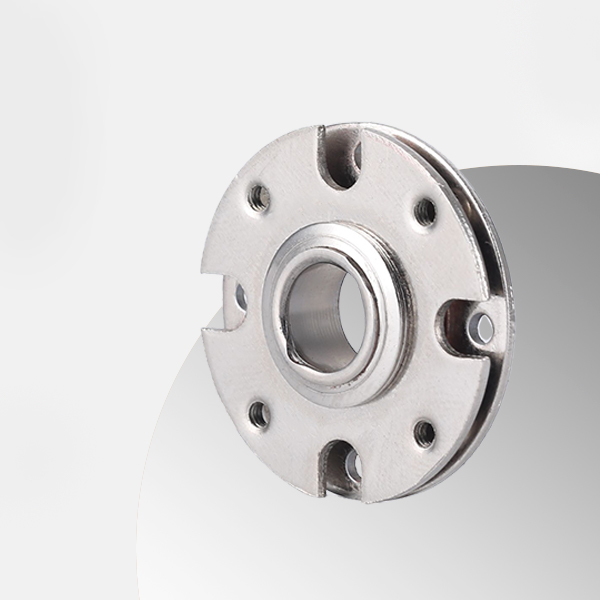
A heavy-duty hinge is a professional connecting device specifically designed to withstand large weight loads and frequent opening and closing. Unlike standard hinges, heavy-duty hinges are manufactured using thickened leaves, large-diameter pivot shafts, and high-strength materials.
Typically, a single heavy-duty hinge has a load capacity exceeding 100 kilograms, with some ultra-large products reaching 500 to 1,000 kilograms. Any industrial equipment Any industrial equipment requiring heavy door support or resistance to severe vibration should prioritize the use of heavy-duty industrial hinges. This is the core difference between hinges and ordinary hardware.
Standard hinges typically have leaf thicknesses of 1.5 to 2 millimeters, while heavy-duty hinges have leaf thicknesses of at least 4 millimeters or more. Additionally, the pivot shaft diameter of hinges is generally between 10 and 20 millimeters, far exceeding the 5-millimeter specification of standard hinges.
In terms of material selection, hinges predominantly use cold-rolled steel, 304 stainless steel, or forged steel rather than the stamped sheet metal commonly used for standard hinges. These differences enable hinges to exhibit excellent impact resistance and fatigue resistance. Many cabinet hinges follow the same design standards.
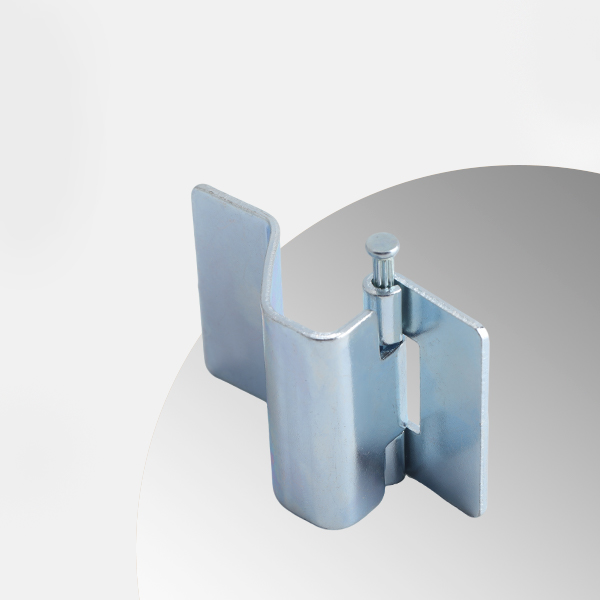
A complete heavy-duty hinge consists of four core parts: leaves, pivot shaft, bushings, and fasteners. The leaves are metal plates fixed to the door panel and cabinet frame. The pivot shaft serves as the load-bearing core connecting the upper and lower leaves. Bushings reduce rotational friction,
while fasteners secure the hinge to the equipment. High-quality hinges incorporate self-lubricating materials inside the bushing, ensuring smooth opening and closing even under heavy-load conditions. Additionally, concealed hinges position the pivot shaft inside the door frame, remaining hidden from the exterior while balancing load capacity and security needs. Regardless of the structure, every component of hinges is precisely engineered.
Carbon steel is the most commonly used material for heavy-duty hinges. After electrophoretic or hot-dip galvanized treatment, its rust resistance significantly improves. For humid or corrosive environments, 304 stainless steel hinges are the preferred choice, achieving salt spray resistance exceeding 500 hours.
Higher-grade 316 stainless hinges are suitable for coastal chemical plants or marine equipment. The surface treatment of hinges directly determines their service life in harsh environments. Carbon steel heavy-duty hinges have lower cost, but stainless hinges offer greater durability.
Welded heavy-duty hinges are directly welded to the door frame, offering strong theft resistance and no loosening risk, making them suitable for high-security server cabinets and outdoor charging stations. Bolted hinges are easy to disassemble for maintenance, making them suitable for vibration environments such as areas near generators or air compressors, where periodic tightening is possible.
There are also removable hinges, where the door panel can be lifted upward for removal, suitable for scenarios requiring frequent internal equipment access. Each type of heavy-duty hinge has unique application scenarios, requiring judgment based on actual needs during selection. The installation method of hinges directly affects their load stability.
Standard heavy-duty hinges provide only rotational functionality, with simple structure and lower cost. Damping hinges have built-in hydraulic cushioning modules, automatically slow down during door closing to prevent impact damage to precision instruments. Positioning hinges can lock at specific angles, facilitating hands-free operation for maintenance personnel. Additionally,
heavy-duty industrial hinges can be classified into standard and sealed types based on protection level. The latter comes with rubber sealing rings, achieving dust and water resistance up to IP68. When selecting hinges, always determine the type based on functional requirements.
When selecting heavy-duty hinges, the primary consideration is load requirements, typically selecting based on two to three times the door panel weight. Second, evaluate the corrosion risk of the operating environment. For humid outdoor applications, choose stainless hinges. For dry indoor environments, carbon steel electrophoretic-coated versions are suitable.
Third, confirm whether the installation space allows welding or requires bolted mounting. Finally, calculate the daily opening and closing frequency. For high-frequency scenarios, choose hinges with self-lubricating bushings to extend service life. High-quality hinges must simultaneously meet load capacity, corrosion resistance, and durability requirements. Selection errors for hinges can lead to door panel falling accidents.
The most reliable way to verify the true load capacity of hinges is to request third-party laboratory test reports from suppliers, focusing on 1.5-times-rated-load static test data and 50,000-cycle durability test data. For simple on-site testing, fix the heavy-duty hinge and gradually add load to 80 percent of the rated value, observing for visible deformation or unusual noise.
High-quality hinges should exhibit no noticeable movement during testing, with smooth pivot shaft rotation without binding. Simultaneously, inspect welded hinges for uniform and full weld seams, and verify that bolted-type threads are intact without stripping. Regularly inspecting the fastening condition of heavy-duty hinges can prevent safety accidents.
A heavy-duty hinge is a critical hardware component specifically designed for large weight loads and high-intensity use scenarios. Its core characteristics include leaf thickness not less than 4 millimeters, pivot shaft diameter not less than 10 millimeters, and single-unit load capacity exceeding 100 kilograms.
The main classifications of heavy-duty hinges include welded type, bolted type, and removable type. Materials cover carbon steel, 304 stainless steel, and 316 stainless steel. When selecting hinges, comprehensive judgment must be made based on load requirements, environmental corrosiveness, installation method, and opening/closing frequency.
Previous:Which Industrial Enclosure Hinge Is Best?
Next:No More!