Views:112 Author: Dele-Heavy-Duty Industrial Hinge Manufacturers Publish Time:2026-05-20 Origin:Dele-Industrial cabinet lock manufacturer
This article provides a detailed explanation of how to select industrial hinges based on load requirements, covering load calculation, material comparison, and installation key points. By mastering these methods, you can accurately choose industrial hinges to ensure equipment safety and durability.
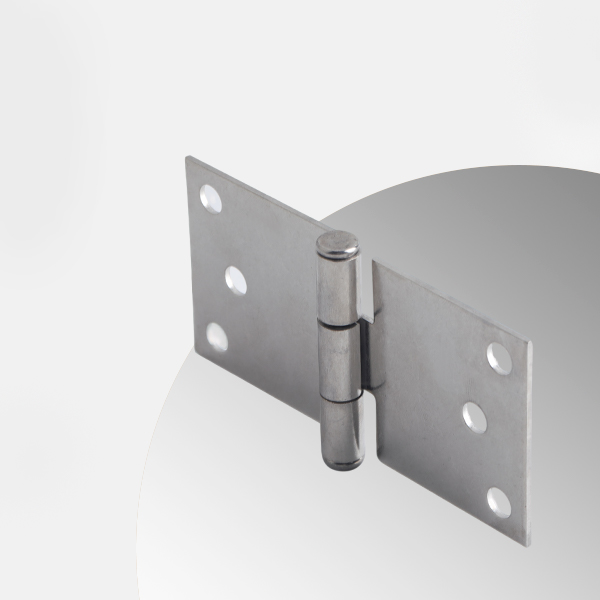
Industrial Hinges
Before selecting industrial hinges, you must precisely measure the total weight of the door. This includes the door panel itself plus any additional components such as seals or viewing windows. If the door exceeds 50 kilograms, we recommend prioritizing heavy-duty industrial hinges. Estimate the weight of metal doors using the formula: weight = volume × density, with the density of common steel being 7.85 grams per cubic centimeter.
Static load capacity is only the foundation. In actual use, impacts or vibrations occur. We recommend multiplying the calculated door weight by a safety factor of at least 1.5. For example, if the door weighs 80 kilograms, the industrial hinge should support over 120 kilograms. For cabinet doors that open and close frequently, evaluate dynamic fatigue life as well. In such cases, pairing with an industrial cabinet lock helps share some of the lateral force.
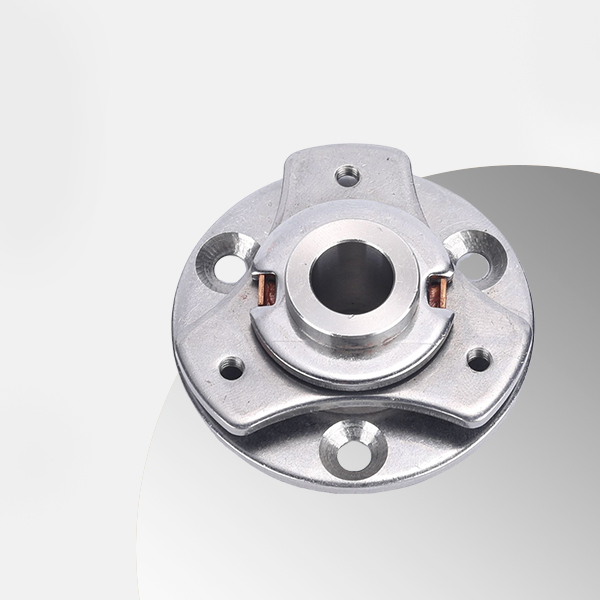
Industrial Hinges
Stainless steel industrial hinges offer strong corrosion resistance, but their tensile strength is generally lower than heat-treated carbon steel. 304 stainless steel has a yield strength of approximately 205 MPa, while quenched and tempered carbon steel can reach 400 MPa. In humid or outdoor environments, we recommend choosing stainless steel materials and increasing the number of hinges. For dry, heavy-load applications, carbon steel heavy-duty industrial hinges with zinc plating provide better cost performance.
The thicker the leaf and the wider the leaf size, the stronger the bending resistance of the industrial hinge. Common thickness levels include 2.5 millimeters, 4 millimeters, and 6 millimeters. For doors weighing over 100 kilograms, choose models with leaf thickness not less than 5 millimeters. Additionally, longer leaves distribute bolt stress points, preventing door frame deformation. Some designs combine industrial hinges with reinforcement ribs to further enhance overall rigidity.
The rated load of a single industrial hinge cannot simply be added together. Generally, use 2 hinges for door heights up to 1.2 meters, 3 hinges for heights between 1.2 and 2 meters, and 4 or more hinges for heights exceeding 2 meters. The recommended spacing is 150 to 200 millimeters from the hinge center to the top and bottom of the door. If mounted on the load-bearing side together with an industrial cabinet lock, the additional bending moment on the hinges can be reduced by 20 percent.
Industrial hinges with bolt mounts are easy to disassemble for maintenance, but bolt holes may deform under long-term heavy loads. For static loads exceeding 200 kilograms, welded heavy-duty industrial hinges offer better performance. If bolts must be used, select high-strength bolts of Grade 8.8 or higher and add spring washers. Note that for aluminum door frames, backing plates or rivet nuts are required to prevent thread stripping.
When ambient temperatures consistently exceed 80°C, the load capacity of standard industrial hinges decreases by approximately 30 percent. In such cases, choose high-temperature resistant alloys or bearing hinges with solid lubricants. In dusty environments, sealed bushings are more durable than ball bearings and require grease replenishment every 3 months. Combining industrial hinges with dust covers is also a practical approach.
Do not rely solely on the maximum static load stated by manufacturers. We recommend building a simple test rig and conducting 20 opening and closing cycles on the industrial hinge at 1.2 times the actual load. Check for unusual noises or permanent deformation. Request fatigue test reports from suppliers, especially when you plan to purchase heavy-duty industrial hinges for automated equipment. Also, verify whether the mounting holes of the hinge and the industrial cabinet lock interfere with each other.
Selecting industrial hinges based on load requirements involves four stages: calculating the load, determining the safety factor, selecting the appropriate material and size, and reasonably distributing the installation points. Remember: heavy-duty industrial hinges are suitable for doors exceeding 80 kilograms; stainless steel materials are preferred for humid environments; welding handles impact better than bolted connections; and prototype testing is essential for final verification. Also, pay attention to the interaction between industrial hinges and cabinet locks, which optimizes overall stress distribution. Correctly selected industrial hinges can increase equipment service life by over 50 percent and reduce the risk of unexpected downtime.
Previous:Industrial Hinge Models: A Complete Guide
Next:No More!