Views:129 Author: Dele-Heavy-Duty Industrial Hinge Manufacturers Publish Time:2026-03-18 Origin:Industrial hinge manufacturers
In this article, Dele explores the primary applications of heavy-duty industrial hinges, helping you understand where they are used across various industrial environments and providing expert guidance for selecting the right hinges for your equipment doors.
When examining where heavy-duty industrial hinges are used, the power infrastructure sector stands out as a core application area.
Switchgear cabinets, transformer enclosures, and distribution panel doors in substations often weigh several hundred kilograms. Standard electrical cabinet hinges cannot withstand the mechanical stress of repeated opening and closing. Heavy-duty industrial hinges feature thickened steel construction and reinforced pivot pins, with each hinge supporting over 200 kg, ensuring stable connections for large electrical equipment doors.
Outdoor substations face weather exposure and extreme temperature fluctuations. Heavy-duty cabinet hinges require corrosion-resistant coatings and the ability to function across wide temperature ranges. Some products include adjustable tension mechanisms that compensate for wear over time, maintaining door seals. These applications demand exceptional reliability, as industrial hinge failure could expose sensitive equipment to harsh environmental conditions.
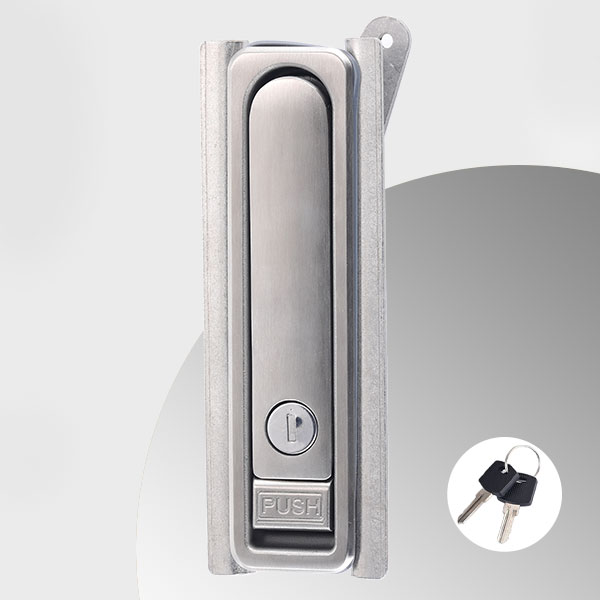
Heavy-Duty Industrial Hinge
Wind turbine tower doors and nacelle covers are typical examples of where heavy-duty industrial hinges are used in renewable energy.
Offshore wind installations must withstand high salt-spray corrosion and strong wind loads, requiring hinges made from 316 stainless steel or specialized alloys. Limited space inside nacelles means hinges must support wide opening angles for maintenance access.
Solar inverter enclosures and energy storage containers also depend on heavy-duty industrial hinges for structural integrity. Frequent opening cycles require heavy-duty hinges to have a mechanical life exceeding 100,000 operations, while maintaining proper lubrication in extreme cold or desert environments. These applications clearly demonstrate the critical value of industrial hinges in the renewable energy sector.
Subway cars, high-speed train bodies, and heavy-duty rail vehicles have urgent requirements for heavy-duty industrial hinges in their door systems.
The vibration and impact during operation are often too severe for standard hinges., making industrial hinges with damping and cushioning features essential. These products use specialized bearing structures and locking mechanisms to prevent doors from opening accidentally or creating noise at high speeds.
Weight reduction is also important in rail applications. High-strength alloy materials maintain load capacity while reducing overall weight. Fire safety standards require hinges to maintain structural integrity at high temperatures for specified periods, imposing strict requirements on material selection and manufacturing processes. These demanding conditions clearly illustrate where heavy-duty industrial hinges are needed.
Excavators, cranes, mining trucks, and other heavy equipment widely use heavy-duty industrial hinges on cab doors and engine hoods.
Dusty job sites require sealed hinge designs that prevent abrasive particles from entering moving parts and accelerating wear. Some hinges integrate position-holding features to prevent unnecessary door swinging when operating on slopes.
Specialty vehicles such as fire trucks and armored vehicles have heavier access panels that require quick opening. Quick-release industrial hinges allow complete door removal in emergencies. These applications prove that heavy-duty industrial hinges are indispensable in extreme operating conditions.
Heavy-duty industrial hinges are also used in high-end manufacturing equipment. Protective doors on gantry machining centers and large stamping presses can weigh several tons, requiring multi-point hinge systems to ensure smooth operation. Precision machine tools require hinges with micron-level installation accuracy—any deviation can affect machining precision.
Some heavy-duty industrial hinges are designed for flush mounting (also known as concealed hinges) to prevent chips and coolant from entering while maintaining a clean equipment appearance. Safety fence doors on automated production lines also need heavy-duty support to withstand accidental impacts without deforming.
Maintenance doors and fire exit doors in automated storage and retrieval systems represent important applications for heavy-duty industrial hinges.
High-frequency opening requirements demand self-lubricating hinge features to reduce maintenance downtime. Cold chain logistics centers use special hinges on insulated doors that remain flexible at low temperatures without compromising sealing performance.
Protective covers on port container cranes and large conveyor systems also depend on heavy-duty industrial hinges. Marine climate resistance and fatigue-resistant design are core requirements in these applications, ensuring reliable operation in all weather conditions.
This article has comprehensively explained where heavy-duty industrial hinges are used, covering four major sectors: energy and power, transportation, manufacturing, and warehouse logistics.
From substations to wind turbine towers, from rail vehicles to construction machinery, and from precision machine tools to automated warehouses, heavy-duty industrial hinges have become essential components of critical equipment door systems due to their exceptional load capacity, environmental adaptability, and durability.
Correctly identifying where heavy-duty industrial hinges are needed requires careful consideration of multiple factors including load characteristics, environmental conditions, usage frequency, and safety standards. As industrial equipment continues to become larger and smarter, performance requirements for industrial hinges will keep increasing.
We recommend that engineers and technicians thoroughly understand the specific requirements of each application, choose products that have undergone rigorous testing and certification, and follow proper installation and maintenance procedures. This approach ensures that heavy-duty industrial hinges deliver their full technical advantages, keeping industrial equipment operating safely and efficiently.
Previous:No More!