Views:106 Author: Dele-Heavy-Duty Industrial Hinge Manufacturers Publish Time:2026-06-03 Origin:Dele-Industrial cabinet lock manufacturer
This article provides a detailed analysis of the specific load capacity range for heavy-duty hinges, compares performance differences across various hinge types, and helps you make accurate selections.
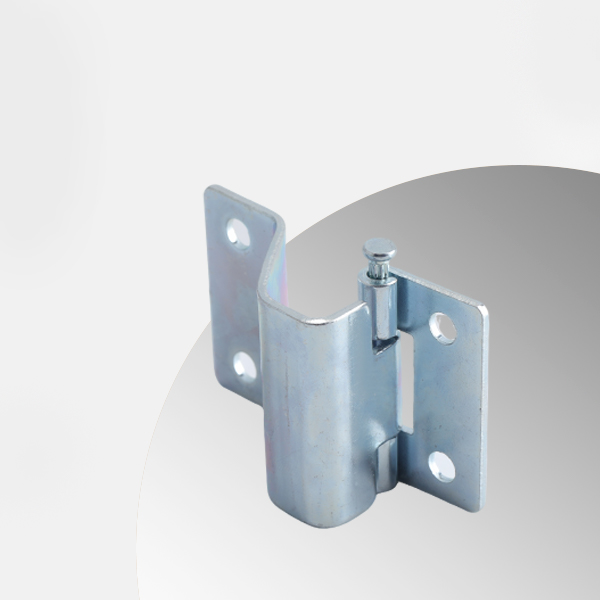
True heavy-duty hinges on the market typically support loads ranging from 100 kilograms to 300 kilograms per hinge.
This is the baseline standard for most industrial cabinets, large power distribution boxes, and heavy machinery access doors.
Products below this range are generally classified as medium-duty hinges and are not suitable for heavy-duty applications.
For general industrial equipment, selecting hinges with sufficient load capacity is essential for ensuring long-term stable operation.
For port equipment, mining machinery, or large press protective covers, specially made hinges can achieve load capacities of 500 kilograms to 1000 kilograms.
These products typically use widened leaves exceeding 40 millimeters and pivot shafts with diameters of 20 millimeters. In actual testing, high-quality hinges withstand 10,000 opening and closing cycles without damage at 1.5 times the rated load, which serves as a key indicator for measuring true ultra-heavy-duty hinges.
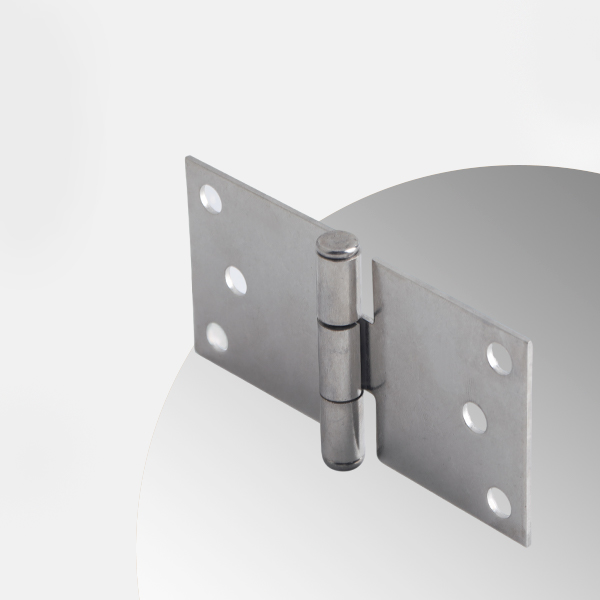
At the same specifications, heavy-duty hinges made of 304 stainless steel provide approximately 30 percent greater load capacity than ordinary cold-rolled steel.
When leaf thickness increases from 4 millimeters to 6 millimeters, bending strength can more than double. For corrosive environments, hinges with anti-rust treatment must be used instead of ordinary galvanized parts, because the actual load capacity of rusted materials decreases exponentially, typically decreasing to only 40 percent of the rated value after three years.
This is why more demanding environments require higher quality hinges.
The pivot shaft of heavy-duty hinges is the core load-bearing component. A solid shaft with a 10-millimeter diameter can handle up to 200 kilograms of load, while increasing to 16 millimeters raises capacity to 500 kilograms.
Additionally, the clearance between the shaft and sleeve should be controlled within 0.1 millimeters. Excessive clearance leads to localized stress concentration.
High-quality heavy-duty hinges incorporate self-lubricating bearings inside the sleeve, maintaining smooth rotation even under heavy loads.
Standard 19-inch server cabinets typically use two heavy-duty hinges per door, with a load capacity of 120 kilograms per hinge being sufficient for the combined weight of fully loaded hard drives and power supply modules.
However, if the cabinet requires frequent maintenance or the door panel has added heat sink arrays, we recommend increasing the load requirement to 200 kilograms per hinge.
Choosing higher-rated heavy-duty hinges at this stage addresses both load capacity and operational stability requirements, extending overall service life from five to fifteen years.
When selecting cabinet hinges, special attention must be paid to matching mounting hole spacing.
For outdoor charging station cabinets requiring enhanced security or a cleaner appearance, concealed hinges become the preferred solution.
These products are welded to the inside of the door frame, with no externally exposed pivot shaft, yet still achieving a load capacity of 120 kilograms.
However, it is important to note that the load capacity of concealed hinges is typically about 15 percent lower than that of exposed heavy-duty hinges of the same specifications, so additional margin should be reserved during selection.
When paired with similarly concealed cabinet locks, there are no removable external pivot points, greatly enhancing security.
Reputable manufacturers follow international standards for vertical load testing. The heavy-duty hinge is fixed, and the load is gradually increased to 1.5 times the rated value, maintained for one minute, with deformation not exceeding 0.5 millimeters. Additionally, durability testing requires 50,000 opening and closing cycles at 1.0 times the rated load,
with clearance increase after wear not exceeding 0.3 millimeters. Users can request third-party test reports from suppliers, paying particular attention to yield strength data.
High-quality heavy-duty industrial hinges perform far better than inexpensive alternatives in these tests.
When professional equipment is not available, the progressive load addition method can roughly verify Load Capacity Standards for Heavy-Duty Hinges.
Open the cabinet door to a horizontal position and gradually add sandbags or weights to 80 percent of the rated value, observing whether any visible deformation or unusual noise occurs at the leaf-to-cabinet connection.
High-quality hinges should exhibit no noticeable movement during this test, while inferior products exhibit noticeable sagging or shaft movement.
For welded heavy-duty hinges, pay special attention to micro-cracks around the weld points, which serve as early warning signs of impending failure.
The load capacity of heavy-duty hinges does not have a single fixed value but varies across a wide range based on material, pivot shaft diameter, leaf thickness, and application scenario.
For standard industrial applications, the recommended load capacity for a single heavy-duty hinge ranges from 100 to 300 kilograms. Ultra-heavy-duty applications may require 500 to 1000 kilograms.
When selecting, you must consider both static load and dynamic impact load. Static load is typically calculated as twice the door panel weight, while dynamic load requires a threefold margin.
For material selection, stainless steel hinges are suitable for corrosive environments.
For outdoor equipment with high aesthetic requirements, concealed hinges are an ideal choice, though their load capacity is slightly lower than exposed types, requiring additional margin.
Finally, always verify true load capacity through laboratory reports or on-site load testing to avoid door panel failure caused by insufficient load capacity selection. Proper load capacity calculation enables heavy-duty hinges to achieve a service life exceeding ten years under normal operating conditions.
Previous:What Are Heavy Duty Hinges? A Complete Guide
Next:No More!